

Audio By Carbonatix
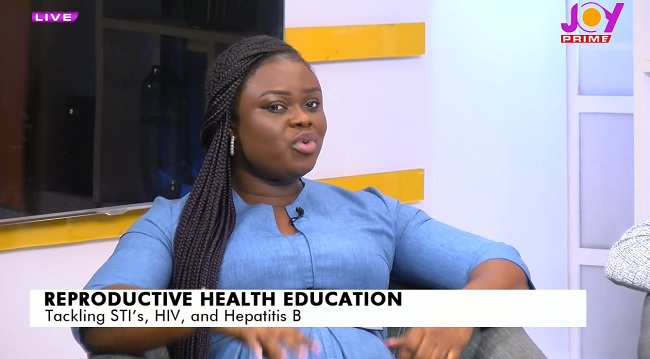
The Health Director of the Ayawaso West Municipality, Abena Yeboah, has advised the youth to change condoms after every round of sexual intercourse.
Condoms are contraceptives that help protect and prevent sexually transmitted diseases. However, she said the unsanitary use of it by some young people has changed its trajectory.
Speaking to Asieduwaa Akumia on Prime Morning on Tuesday, the senior medical doctor disclosed that using one condom multiple times exposes people to STIs, which can be detrimental to one’s health, hence the need to change condoms so as to protect one's self from diseases.
"Every condom has a probability of getting torn. This is because you are not supposed to use condoms for too long. Once you are done using it and you ejaculate, you take it off and throw it away. There is no time limit for wearing a condom, but after you climax, just take it off. After one round, use another condom for the next," Dr. Abena urged.
According to her, STI cases in the country are rapidly growing due to the unhealthy sexual practices people indulge in.
She further explained that it is important for people to pay close attention to the fact that all condoms have a probability of tearing during or after intercourse. Though there are a plethora of reasons condoms tear, a popular contributing factor is people using one condom for multiple ejaculations.
Dr. Abena Yeboah also mentioned that students are deprived of in-depth education about sex and the proper ways to protect themselves.
She stressed that adolescents these days learn about sex through social media and peers. This, according to her, is one of the reasons many young people suffer from sexually transmitted diseases.
She opined that the government should incorporate more reproductive health courses into the curriculum to help students with more insight about sex and how to use contraceptives to steer clear of STIs.
"Now that people see a lot of things on social media and they want to practice things like oral sex and a number of unsafe practices, we need to go out there and incorporate reproductive health education into our teachings," she mentioned.
In the aspect of religion, the medical expert called on religious leaders to educate their congregations on sex and encourage the use of contraceptives. This, she feels will go a long way towards helping sensitize the youth and save people.
Latest Stories
-
What Is Wrong With Us: The roads that keep counting our dead
3 minutes -
MTN condemns recent xenophobic attacks on Ghanaians in South Africa
7 minutes -
Philip Nai: What happens at your front desk can make or break your brand
19 minutes -
Ghana’s mining deaths fall sharply, but Chamber insists ‘three deaths are too many’
2 hours -
Tatale Sanguli officials destroy expired food products, warn traders
2 hours -
Police arrest two watchmen over alleged defilement of 14-year-old student
2 hours -
The woman behind General Mosquito: Could Ghana be meeting its next First Lady?
2 hours -
Court remands man over alleged Labone bank robbery attempt
2 hours -
Supreme Court to rule on injunction application on legal vacation today
2 hours -
Tamale Metropolitan Assembly distributes 10,000 bags of fertiliser to farmers
2 hours -
TUSAAG suspends strike, resumes work after renewed talks with government
2 hours -
PIAC marks 15 years of oil revenue accountability and transparency
2 hours -
Adongo calls for non-political interference in $1.46bn Heritage Fund review
2 hours -
FDA records GH¢70m surplus in 2025 amid concerns over ageing lab equipment
2 hours -
Arise Ghana demands stronger commitment to end galamsey
2 hours