

Audio By Carbonatix
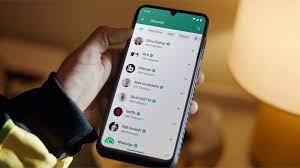
The Cyber Security Authority has cautioned users against disclosing their WhatsApp verification codes to persons posing as service providers.
According to the Authority, there has been an increase in the number of people unwittingly sharing their WhatsApp verification codes with malicious actors, leading to unauthorised access and account takeover.
The Authority reports that at least 64 of such cases have been reported since April of this year.
Elaborating on the modus operandi of the malicious actors, the Authority said they often infiltrate whatsapp groups and target members of the group to whom they send carefully crafted messages to persuade their victims to reveal their verification codes.

Some of these methods are:
- Notifying the victim through text messages about an ongoing upgrade on their group platforms and requesting the victim to share the code that will be sent to them.
- Calling the victim to inform them that a security code has been sent to prevent their account from being hacked and requesting the victim to share the code that will be sent to them.
- Informing the victim that they have received a mobile money transfer, and that they are required to reveal the code sent by the perpetrator to access the funds.
- Sharing URLs in WhatsApp groups and instructing group members to click on them to update their information by providing the code that will be sent to them.
According to the Authority, once the code is shared, the victim’s account is compromised “and the malicious actors may then go ahead to impersonate the victim and defraud their contacts resulting in reputational damage and monetary losses.”
The Cyber Security Authority has thus caution users against sharing their verification codes no matter the situation.
They urged that users enable two-step verification to add an extra layer of security to ones WhatsApp account, and also make sure to verify the unexpected requests through a different communication mode/platform before taking any action.
Again, the Authority called on users to raise awareness about the situation to prevent friends and family from falling victim.
Latest Stories
-
The 7-foot giant of Ngleshie Amanfro: Seven-foot Ghanaian Ephraim Saawa dreams of joining the national basketball team
12 minutes -
Government promises support for Kumasi Central Market fire victims
19 minutes -
Vibes The Movie: Big Ghun’s Ghanaian film earns five nominations at 2026 REFFA
49 minutes -
MamaCare CEO warns unresolved conflicts among health workers could undermine maternal and neonatal care
1 hour -
Health professionals urged to translate medical knowledge into practice to save mothers
1 hour -
Conflicts among care providers linked to maternal, neonatal deaths – Expert
3 hours -
GIS marks 10th TIME conference, champions improved teaching practices
3 hours -
BRICS Or Balance? What Ghana’s bid really means
3 hours -
GPRTU wants full TRAFFITECH-GH implementation to start in 2027
4 hours -
Mahama announces plans to import electric wheelchairs for PWDs
4 hours -
KGL U17 Colts 2026: Western beat Prempeh Elite Academy to set up final final with Greater Accra Region
4 hours -
Late Solanke strike salvages 10-man Spurs draw at Man United
4 hours -
Gender Ministry to monitor welfare of Nana Akua Addo’s children amid domestic violence case
4 hours -
Benedict Okyere Yeboah: Ghana’s football problem goes beyond sacking a coach
5 hours -
GPL 2026/27: Darkwah Wiafe’s winner sees All Blacks beat Kotoko
5 hours