

Audio By Carbonatix
The Pro Vice-Chancellor of the Kwame Nkrumah University of Science and Technology, Prof. Ellis Owusu-Dabo has expressed concerns about the poor state of orthodox medical practice in Ghana.
He believes the forcing of people into the health sector has resulted in substandard health delivery.
Prof. Owusu-Dabo who is also the principal investigator of the Mastercard Foundation Africa Higher Education Health Collaborative said this at the opening ceremony of the short course in community health entrepreneurship by the Collaborative in Kumasi.
“The already known traditional area in health which is known as orthodox medicine or medical practice is suffering in this country. And many people who have gotten into our profession were perhaps forced into the profession.
“We want a doctor, we want a nurse, we want this, and we want that. The consequences of these actions and the ramification thereof I promise you if we don’t change we are going to be seeing a lot of medicolegal issues in this country,” he said.
He also mentioned that the medical profession is losing what characterizes it as a noble profession.
“When we used to call the health profession a noble profession there were a lot of several things that characterized he health profession.
“Some of us have bleeding hearts because we are losing all those attributes that characterize the so called noble profession.
“Whether you are biomedical scientist, a nurse, a doctor or a physician assistant you apply yourself dutifully to certain attributes; those attributes I daresay we are losing them,” he said.
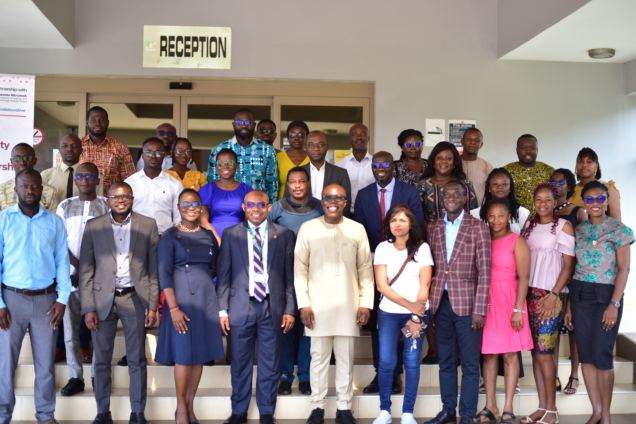
The community health entrepreneurship is a short course organized by the Mastercard Foundation Africa Higher Education Health Collaborative in partnership with the Kwame Nkrumah University of Science and Technology.
This course will equip 20 selected community health personnel from across the country with requisite skills in entrepreneurship to stem the brain drain menace.
The programme is under the health employment pillar of the MasterCard Foundation Africa Higher Education Health Collaborative.
The health employment pillar aims to expand and improve current capacities to train primary healthcare workers.
Provost of the College of Health Sciences, Prof. Christian Agyare mentioned that “there is huge opportunity for building and scaling human capital within the sector. To meet current market demands, health workers require differentiated competencies including tangible skills that can be marketed to prospective employers but also encourage self-employment when feasible.”
Latest Stories
-
Busuama MA Basic School in crisis: 120 KG pupils stranded as teacher deficit bites
7 minutes -
Churches are not exempt from paying music royalties – GHAMRO CEO
7 minutes -
Gender Ministry expresses condolences over death of child in Cantonments fire
8 minutes -
Nkrumah foresaw Africa’s vulnerability without unity – P.L.O. Lumumba
12 minutes -
Alhaji Faisal Abdullah Masud installed as Tema’s first Sariki Zongo
16 minutes -
Mahama’s UN address to mark 25th by a Ghanaian president
16 minutes -
AFCON 2027Q: J.E. Sarpong slams sidelining of GPL players in Black Stars call-up
17 minutes -
GRA’s ITAS and other digital platforms set to strengthen tax compliance
18 minutes -
How school support is helping parents in Ejura Sekyedumasi prepare children for senior high school
22 minutes -
Government to resume Dome–Kitase road works, targets completion by 2028
25 minutes -
‘Ghana Jollof’ Case: High Court adjourns Salomey Baffoe’s bail application hearing to Sept. 24
25 minutes -
Asafo Market baby theft: Police search for suspect after granting her bail; family wants answers
29 minutes -
AGN Chair outlines Africa’s strategic climate roadmap at CAHOSCC meeting ahead of COP31
32 minutes -
Kenyasi civilian attack: Family demands justice a week after alleged machete attack by prison officers, inmates
35 minutes -
Advance ruling to give importers certainty before goods arrive – GRA
43 minutes