

Audio By Carbonatix
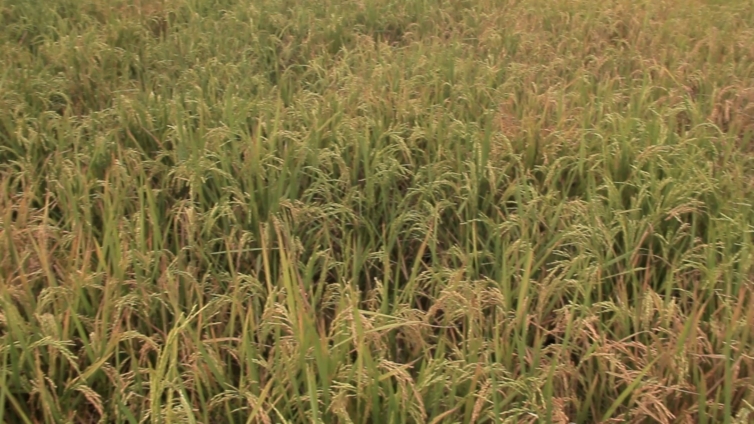
A recent study led by researchers from the Indian Council of Agricultural Research (ICAR) reveals concerning insights about the nutritional content of rice and wheat in the Indian diet.
The study indicates that the focus on breeding high-yield varieties over the years has resulted in a decline in the nutritional value of these staple grains.
JoyNews correspondent Mahmud Mohammed-Nurudeen participated in a Down To Earth Magazine webinar titled "Drain Grain," which discussed the study's findings, emphasizing that these grains are not only losing nutritional value but also accumulating harmful toxins.
Over the last five decades, India has rapidly introduced high-yielding varieties of rice and wheat in its pursuit of food security.
The investigation has evaluated the health implications of this significant alteration in the nutrient profiles of rice and wheat. It cautions that the diminished nutritional value of these essential grains could exacerbate the increasing burden of non-communicable diseases (NCDs) in the country.
The panel of experts featured Sovan Debnath, a Soil Scientist from ICAR-Central Agroforestry Research Institute, Jhansi, and the study's primary author; Biswapati Mandal, former Professor at Directorate of Research, Bidhan Chandra Krishi Viswavidyalaya, Kalyani, and co-author of the study; Ishi Khosla, a Clinical Nutritionist, Consultant, and Writer; and Shagun, Senior Correspondent at Down To Earth.
In the initial phase of the Green Revolution in India, the primary goal was to address the challenges of a rapidly expanding population and achieve self-sufficiency in food production. Consequently, agricultural scientists concentrated on enhancing crop yields. However, as highlighted in the webinar,
Dr. Mandal explains that a significant shift occurred in breeding strategies after the 1980s. The new focus aimed at developing crop varieties resilient to pests, diseases, and various environmental stresses, including salinity, moisture, and drought.
"They did not have the luxury of thinking whether the plants were taking in nutrients from the soil or not. Hence, over a period of time, what we are seeing is that plants have lost their capacity to take up nutrients from the soil.”
The 2023 research builds upon a previous study conducted by scientists from ICAR and Bidhan Chandra Krishi Viswavidyalaya in 2021. This earlier study aimed to uncover the causes of zinc and iron deficiencies in populations relying on a cereal-based diet. The findings indicated a decline in the grain density of zinc and iron in high-yielding varieties of rice and wheat.
Debnath, a key contributor to both studies, notes that their experiments demonstrated the reduced efficiency of modern-bred rice and wheat cultivars in absorbing nutrients like zinc and iron, despite the soil's ample availability of these elements.
"Our experiments showed that modern-bred cultivars of rice and wheat are less efficient in sequestering nutrients like zinc and iron, despite their availability in soil.”
The 2021 research also highlighted that the surge in the global population experiencing zinc and iron deficiencies in the last four decades coincided with the worldwide dissemination of high-yielding, input-responsive cereal cultivars introduced in the post-Green Revolution era.
According to Down To Earth's coverage of the study, essential nutrient concentrations such as zinc and iron in rice have witnessed a reduction of 33% and 27%, respectively, over the past 50 years. In wheat, the corresponding decreases are 30% for zinc and 19% for iron. Additionally, the concentration of arsenic, a toxic element, in rice has surged by 1,493%.
The magazine report suggests that not only are staple food grains becoming less nutritious, but they are also posing health risks.
"Amid continuous genetic tampering under the modern breeding programme, the plants have also lost their natural evolutionary defence mechanisms against toxins,” it says.
A reduced concentration of vital nutrients in staple grains may lead to an increased incidence of diseases associated with neurological, reproductive, and musculoskeletal systems. Shagun from Down To Earth highlighted that the agricultural practices influenced by the Green Revolution have frequently faced criticism for their environmental and food system effects. However, discussions have seldom extended beyond their impact on issues such as soil degradation, surface water pollution, groundwater depletion, and mono-cropping.
"This study has put the spotlight on the impact of the Green Revolution on the nutritional security of India."
There are notable endeavors in the country to enhance the nutritional content of food grains. Agricultural scientists are exploring landraces and wild species of cultivated varieties to address this concern. As part of a dedicated bio-fortification project initiated by the Union government, scientists from ICAR and other agricultural universities are engaged in germplasm exploration to identify donor varieties with high nutritional content. Up to now, ICAR-affiliated institutes have produced 142 bio-fortified varieties. However, Shagun notes that these varieties are yet to gain widespread popularity and adoption among farmers.
Latest Stories
-
We trust government to meet September deadline on teachers’ promotions – NAGRAT
1 minute -
“We dare not fail” – Gov’t promises to honour teachers’ promotion pay deal
7 minutes -
The GH¢19.8 billion mirage: Inside Ghana’s state enterprise turnaround
16 minutes -
Luv FM High School Debate: KNUST SHS and Osei Adutwum SHS set up thrilling final after dramatic semi-finals
23 minutes -
KNUST AI Coordinator urges structured adoption of AI in teacher education
36 minutes -
Nepal rescuers blast hillside in search of hydropower workers as families wait anxiously
53 minutes -
Teachers who pass promotional exam to get January 2026 start date after gov’t resolves promotion dispute – Dr Apaak assures
56 minutes -
NSMQ 2026: St. John’s School rally from slow start to book semi-final spot
56 minutes -
Promotion pay row: Gov’t gives teachers September to complete salary adjustments
1 hour -
Financial irregularities plummet by 62.9% as state tightens fiscal controls
1 hour -
DVLA to expand mobile services to underserved communities in Ghana’s Eastern Corridor of the Northern Region
1 hour -
GUTA urges GPHA to act swiftly to end Tema Port congestion to avert rising business costs
1 hour -
Port congestion could undermine 24-hour economy policy – GUTA
1 hour -
NSA opens three-day window to resolve national service biodata mismatches
2 hours -
Abu Jinapor highlights increased gold exports after Domestic Gold Purchase Programme
2 hours