

Audio By Carbonatix
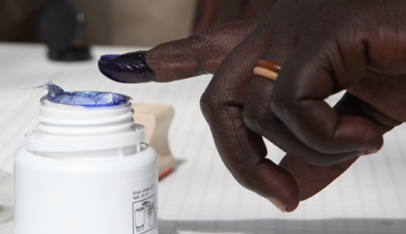
The Executive Secretary of the National Peace Council, George Amoh, believes the opposition of some Ghanaians to the Electoral Commission’s proposal to remove the use of the indelible ink from the 2024 general elections is due to the lack of trust in the institution.
According to him, earning the trust of the citizens will ensure that the EC receives their full support and cooperation.
“I don’t think that we have to have a problem with the institutions of the state when we are going into elections. No, why should that be the case if we all trust the system? The issue of thumbprinting and all those kinds of things will not be an issue.
“But it is because we have trust deficits, which I think we can use this opportunity to try to close the gap. So please let us do that,” he told the media at the inauguration of Denmark’s Support for Sustainable Development Goals (SDG) 13 and 16.
On December 18, 2023, the EC announced that in the 2024 elections and beyond, there would be no need for indelible ink.
Speaking at a press conference, EC chair, Jean Mensa, said this was part of measures by the Commission to improve the electoral process and ensure a robust identification system.
Subsequently, the Minority in Parliament asserted that the EC was acting in breach of the 1992 Constitution with its decision to abandon the use of indelible ink for public elections.
Meanwhile, the opposition NDC says the discontinuation of the use of indelible ink in Ghana's elections at this stage will open the floodgate for nefarious activities that will compromise the integrity of our election.
Reacting to the announcement at a press conference at the NDC headquarters, National Chairman, Mr Johnson Aseidu Nketia said "The NDC strongly opposes the removal of indelible ink because it is visibly, transparent and physically verifies voters in addition to biometric verification."
"Indelible ink marks and identifies voters in order to discourage and prevent them from engaging in multiple voting, particularly when there is apathy. Why do away with a multi-layered tried and tested verification system that adds additional credibility to Ghana's electoral process?" he questioned.
Mr. Johnson Aseidu Nketia explained that "in the event of a malfunction of the BVD, if a voter attempts to vote twice or more, the surest and quickest way to identify such a person is the stain of indelible ink on the person's finger."
Latest Stories
-
TUC demands overhaul of Council of State, wants presidential appointees capped at 5
11 minutes -
Health workers raise alarm over unpaid ’13th month salary’, staff shortages
13 minutes -
CSSPS doesn’t need overhaul, review policies behind system – Adutwum
15 minutes -
2026 U-20 WWC: Black Princesses beat South Korea to keep qualification hopes alive
19 minutes -
‘Corruption must be assassinated’ – Citizen Kofi calls for tougher punishment to reset Ghana’s culture
26 minutes -
Illicit political funding and vote buying: A threat to Ghana’s democracy
29 minutes -
Hill Tennis Club and Ghana Tennis Federation honor Professor Bannerman Richter
33 minutes -
Google to invest $15.1bn in Finland AI infrastructure, strike nuclear power deal
34 minutes -
TUC supports CRC call to make Ghanaians custodians of their lands
36 minutes -
With large crowds attending, Norway lays King Harald to rest
36 minutes -
Ghana Sports Fund board engage media over project
37 minutes -
Study hard, make your parents proud – Ahanta West MP tells 150 BECE candidates
37 minutes -
Let districts choose MMDCE candidates without central government interference – TUC
42 minutes -
Lawra MP restores ambulance, commissions modern laboratory at Domwine Health Centre
43 minutes -
UTAG-UG accuses GTEC of threatening academic freedom with faculty recruitment drive
43 minutes