

Audio By Carbonatix
Habitat for Humanity is calling on governments at all levels to prioritise locally-led adaptation actions that directly address the needs of the most vulnerable communities, in particular people living in informal settlements, while also pursuing mitigation efforts that are affordable and accessible to all.
The buildings and construction sector is currently responsible for 37 per cent of global CO2 emissions. Not only are low-income families and residents of informal settlements uniquely vulnerable to the ongoing and increasingly severe impacts of climate change, but also the ability to meet global climate targets depends on successful decarbonisation of this sector.
Roland Pearson, Vice President and Executive Director of Habitat for Humanity International’s Terwilliger Center for Innovation in Shelter, said global leaders are leaving the most vulnerable communities behind by under-investing in climate adaptation solutions and failing to mobilize mitigation investment from the private sector.
“To achieve net zero emissions by 2050, low-carbon investments in emerging markets must reach US$2 trillion annually by 2030 – a five-fold increase from 2020 – with 80% of these investments coming from the private sector. We must prioritize equitable housing solutions in these investments,” said Roland.
The Christian Housing organization has made commitments towards accelerating low-income families’ access to low-carbon, resilient housing solutions in recognition of housing’s critical role in climate mitigation and adaptation.
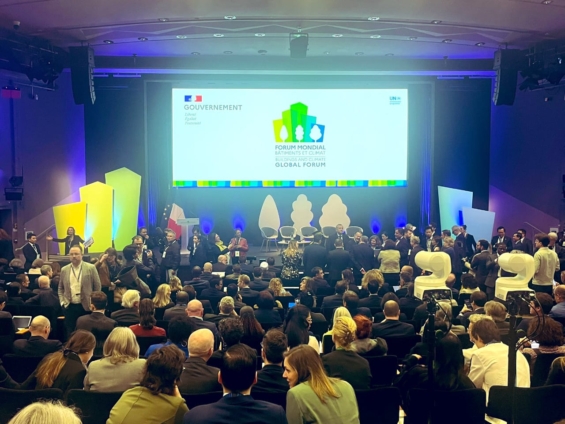
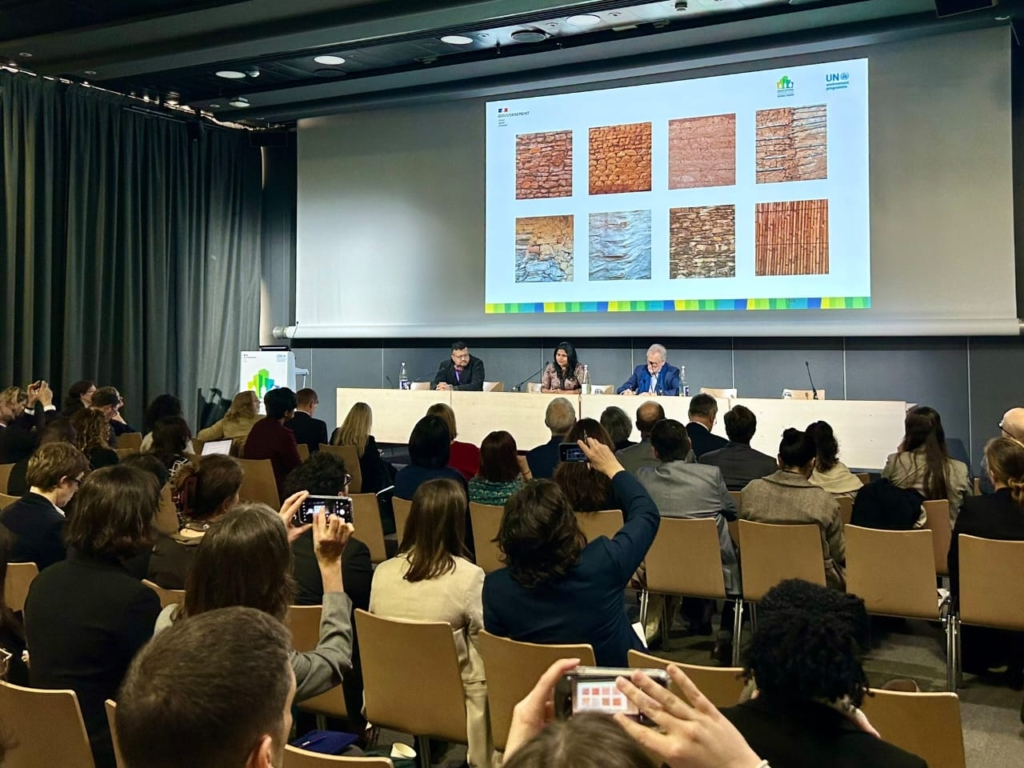
Earlier this month, the Buildings and Climate Global Forum in Paris, for the first time, gathered ministers and high-level representatives of key organizations to focus on decarbonizing the built environment, following the Conference of the Parties 28 (COP28).
In the joint declaration developed at the Forum, Habitat for Humanity urges member states to promote adaptation measures through housing for the most vulnerable, prioritising locally led adaptation actions that directly address the needs of the most vulnerable communities, mitigation solutions in the housing sector that are affordable and accessible for families, particularly in rapidly urbanizing cities around the world and housing and urban settlement transformation as a means of achieving inclusive climate action and resilience for, by and with vulnerable communities.
Habitat for Humanity joined fellow built environment sector stakeholders in making specific commitments to support the Forum’s ambition of a decarbonized construction future, including, enabling 300,000 households to secure financing to make climate-resilient and energy-efficient home improvements by 2035, tripling the number of housing-focused climate tech enterprises in our portfolio, and advancing policy changes to ensure 15 million people living in slums and other informal settlements have more equitable access to adequate housing.
These commitments are to build on Habitat’s longstanding efforts to promote safe, affordable and future-proof housing around the world – including the Residential Energy Efficiency for Low-Income Households project – as well as new research from Habitat for Humanity’s Terwilliger Center for Innovation in Shelter (PDF), analyzing how impact investors can leverage the dependencies between climate and housing targets to maximize impact.
Projections indicate that the world’s building stock will double by 2060, with almost 70 per cent of the world’s population likely living in urban areas. Already, 2.8 billion people lack adequate shelter. Acting on every chance to create green, sustainable and circular economies in the built environment will be the only successful way to achieve global climate targets as we build for our collective future.
Latest Stories
-
Aggrieved Gold Coast Fund Management Company customers to petition Mahama over locked-up funds
34 seconds -
NSMQ 2026: PRESEC, Legon dethrones defending champions Mfantsipim in thrilling battle to book semi-final spot
14 minutes -
Ghana’s cashew industry faces processing gap as Côte d’Ivoire moves to capture more value
25 minutes -
“Our greatest wealth is not in our soil but our people” — Upper West Minister
31 minutes -
Luex Healthcare launches children’s health education book series with Luey the Lion
43 minutes -
NAGRAT urges gov’t to communicate early if September deadline cannot be met
1 hour -
We trust government to meet September deadline on teachers’ promotions – NAGRAT
1 hour -
“We dare not fail” – Gov’t promises to honour teachers’ promotion pay deal
2 hours -
The GH¢19.8 billion mirage: Inside Ghana’s state enterprise turnaround
2 hours -
Luv FM High School Debate: KNUST SHS and Osei Adutwum SHS set up thrilling final after dramatic semi-finals
2 hours -
KNUST AI Coordinator urges structured adoption of AI in teacher education
2 hours -
Nepal rescuers blast hillside in search of hydropower workers as families wait anxiously
2 hours -
Teachers who pass promotional exam to get January 2026 start date after gov’t resolves promotion dispute – Dr Apaak assures
2 hours -
NSMQ 2026: St. John’s School rally from slow start to book semi-final spot
2 hours -
Promotion pay row: Gov’t gives teachers September 2026 to complete salary adjustments
3 hours