

Audio By Carbonatix
A public health epidemiologist, Dr. Nii Hanson-Nortey, has stated the vital role of journalists in tackling misinformation and disinformation during health crises.
In the wake of recurrent global health crises, he said the media had evolved into an effective tool for shaping public perceptions and behaviours, sometimes with life-changing implications.
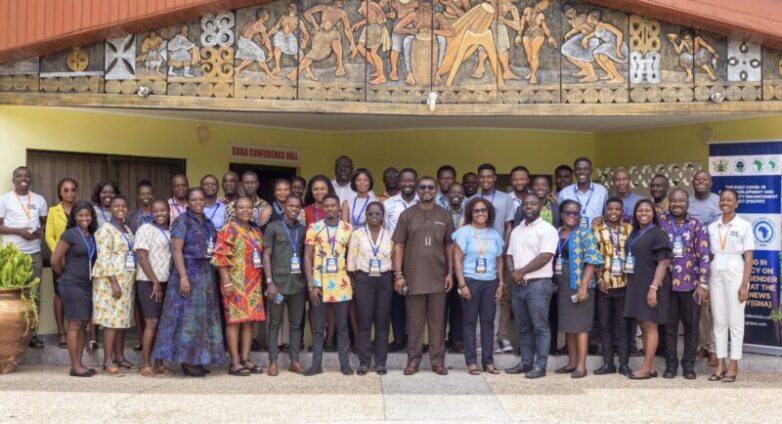
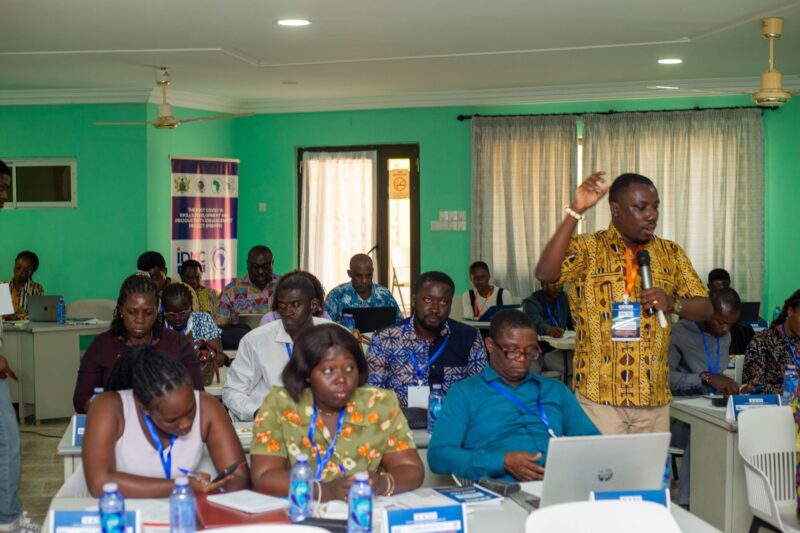
Dr. Hanson-Nortey was speaking on Health Communication and Infectious Diseases during a virtual presentation, as part of a four-day skills development training for journalists and editors of the Ghana News Agency (GNA) at Sogakope, Volta Region.
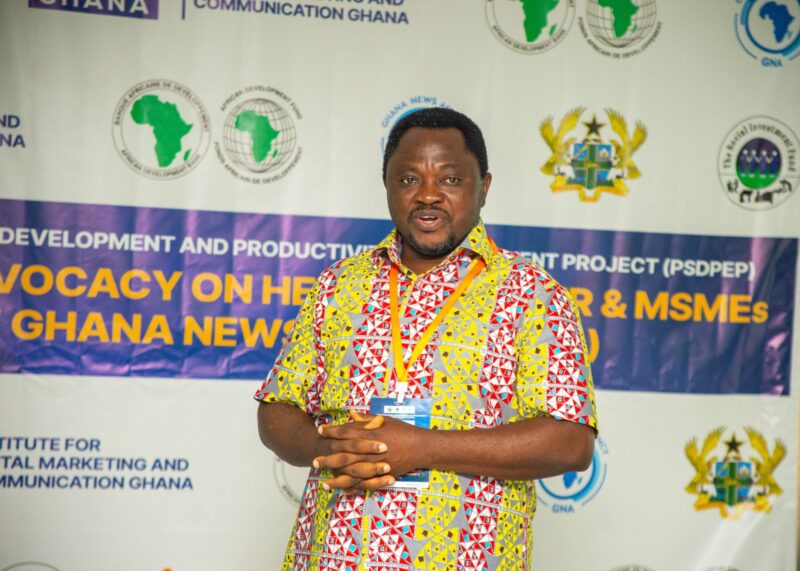
The training was facilitated by the Institute for Digital Marketing and Communication Ghana (IDMC-Ghana) and formed part of the Post-COVID-19 Skills Development and Productivity Enhancement Project (PSDPEP), being sponsored by the African Development Bank.
It would promote effective communication on issues of health, infectious disease, Micro, Small and Medium Enterprises, gender, digital storytelling and climate change.
Dr. Hanson-Nortey stated that the propagation of disinformation during infectious disease outbreaks not only aggravated public health issues, but also caused widespread panic.
He contended that, while the media could provide essential information, it could also serve as a conduit for misinformation.
According to Dr. Hanson-Nortey, disease outbreaks are more than just a public health problem; they are also “information crises.”
He said the stakes were now higher since epidemics could spread both physically and digitally, with print, posts, and videos frequently going ‘viral’ faster than the infection itself.
Dr Hanson-Nortey said the media had the onus to disseminate accurate, clear, and responsible information.
“Journalists have at times both built and undermined public trust, serving as both a constructive source of scientific facts and as a destructive source of rumour that tends to amplify panic,” he said.
Dr Hanson-Nortey observed that, given the potentially damaging implications of poor epidemic reporting, “journalism has a responsibility to contribute to enhanced public knowledge during times of pervasive fear.”
He noted that disinformation might have an impact not only on the general public, but also on health professionals, policymakers, and doctors, whose actions were sometimes influenced by the wave of popular opinion generated by media coverage.
He added that clear professional guidelines based on journalistic and healthcare ethics, as well as educational resources for reporters covering epidemics, were needed.
Mr. Charles Yao Mawusi, a consultant, urged journalists to use advocacy strategies to influence public opinion, create policy change, and address issues of inequality.
They must advocate for truth, public well-being, and social justice rather than simply reporting the news.
Latest Stories
-
Ronaldinho seeks 300th goal with comeback aged 46
5 hours -
Your voice, your future – Opare Addo opens National Youth Forum 2026
5 hours -
GRA pushes data-driven tax administration to boost revenue mobilisation
5 hours -
NSMQ 2026: Presby SHS, Bompata crushes Sacred Heart’s hopes of reaching one-eighth stage
5 hours -
Africa Golf Tourism Convention opens in South Africa to unlock opportunities
5 hours -
BOGISS alleged sexual assault: Dr Apaak demands protection for autism victim
5 hours -
GTEC trains tertiary officials on new affiliation quality assurance framework
5 hours -
Luv FM High School Debate: OKESS, OSASS silence K’Wey Gey and KASS in fierce round of 16
5 hours -
Alcaraz to play US Open after four months out
5 hours -
Even if all foreigners leave, South Africa’s problems will remain – Dr Yamson blames state failure
6 hours -
Mahama announces GH¢500m district housing programme; rollout to begin this year
6 hours -
Energy Committee yet to receive July 29 blackout report – Adomako-Mensah
6 hours -
Five in six Ghana health facilities fall short of basic sanitation standard – WHO/UNICEF
6 hours -
Mohammed Fuseini in talks over Troyes move from Union SG
6 hours -
‘Bear with the system’ – Energy Ministry says temporary power control room to be ready by September
7 hours