

Audio By Carbonatix
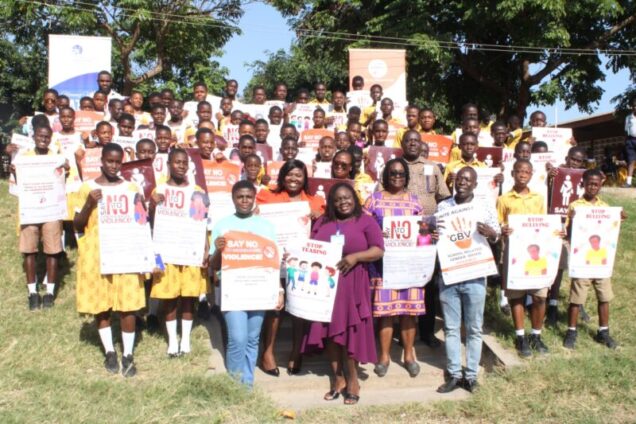
Over 50 students and teachers from St. Augustine R/C Basic School in Ashaiman have received crucial education on School-Related Gender-Based Violence (SRGBV) and its impact on their physical, emotional, and psychological well-being.
The educational session, held on the school’s premises, was facilitated by experts in gender-based violence (GBV), and forms part of the U.S. Department of State International Visitor Leadership Program (IVLP) Impact Project, spearheaded by Regina Asamoah, an IVLP alumna and founder of Missing Children Ghana.
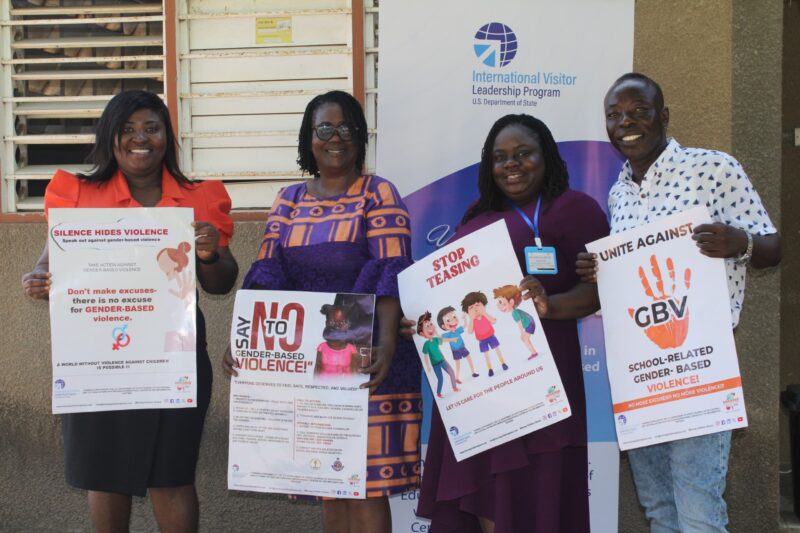
Madam Juliana Apaliyah, headmistress of St. Augustine R/C Basic School, welcomed the project team and expressed her delight in empowering her students on GBV.
She emphasised that such education would promote mutual respect among students, creating a safer environment for all.
Regina Asamoah explained that the project, titled Young Voices Matter: Empowering Boys and Girls in the Fight Against GBV, seeks to equip young students with the knowledge and skills necessary to prevent, recognise, and respond to GBV.
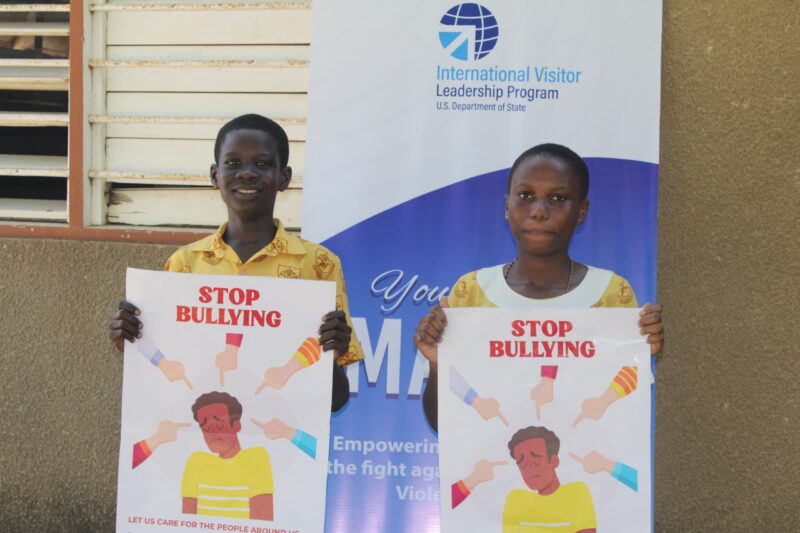
The initiative aims to create a generation of active change agents committed to ending GBV in schools. 100 students from two schools in the Greater Accra region are expected to benefit from these sessions, with 10 trained teachers leading efforts to extend this knowledge across other schools.
The project is funded by the U.S. Department of State’s Bureau of Educational and Cultural Affairs with Meridian International Center as the implementing partner.
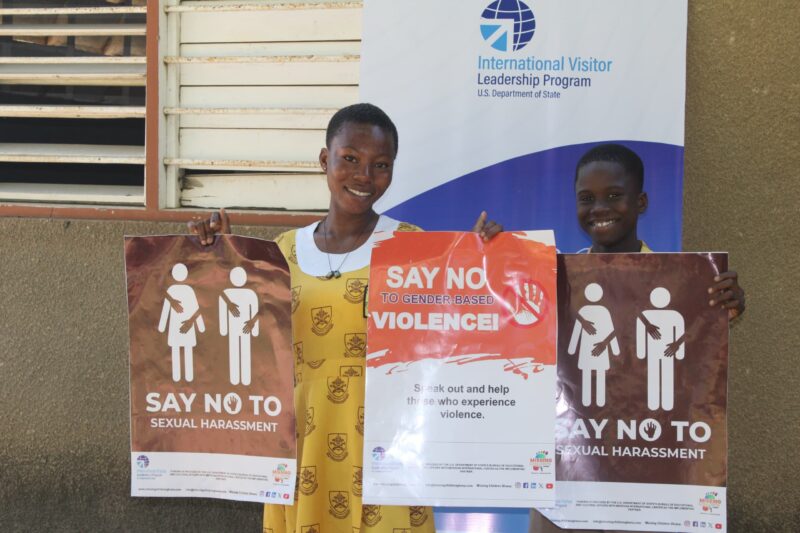
ACP (Rtd) Patience Ashorkor Quaye, U.S. Embassy Ghana GBV Champion and Fellow of Missing Children Ghana led a session on understanding SRGBV, highlighting the harmful effects of bullying, harassment, and teasing.
She emphasised that SRGBV can create a hostile learning environment, negatively affecting students' well-being and academic performance.
"Schools should be places where young minds are nurtured, not where they are torn down. We must act now to end all forms of gender-based violence and make our schools true sanctuaries of learning," she urged.
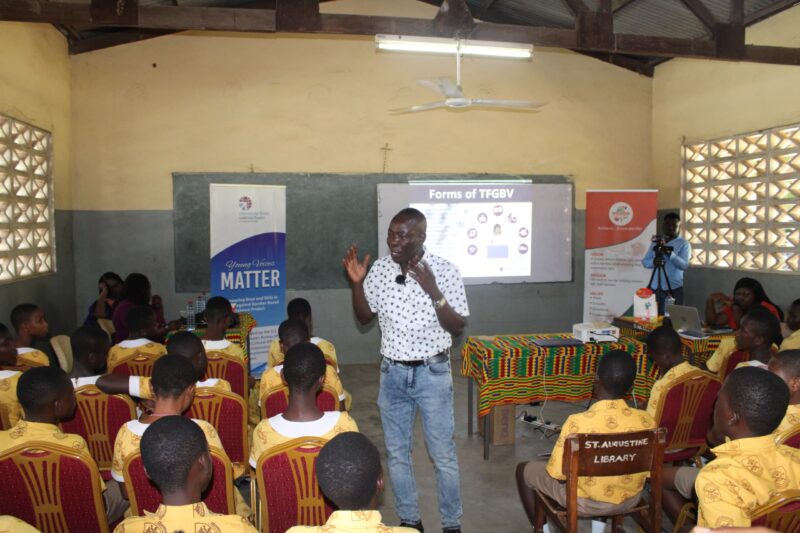
Clinical psychologist and University of Ghana Medical School lecturer, Dr. Dzifa Abra Attah, delved into the emotional trauma caused by bullying, harassment, and teasing, emphasising the long-term psychological impacts such as anxiety, loneliness, and poor academic performance.
"The scars left by bullying and harassment are often invisible, but they are just as deep. We need to understand that every act of cruelty can change a life forever," she cautioned while encouraging students to seek help, build confidence, and surround themselves with supportive peers and teachers.
Prof. Samuel Kojo Kwofie, Head of the Biomedical Engineering Department at the University of Ghana, spoke about Technology-Facilitated Gender-Based Violence, warning students about the dangers of cyberbullying.
He shared practical steps to prevent cyberbullying, including safeguarding personal information and avoiding inappropriate online content. "The internet can either be a tool for empowerment or a weapon for harm. Choose wisely what you post, because once it’s out there, it’s out of your control," he emphasised.
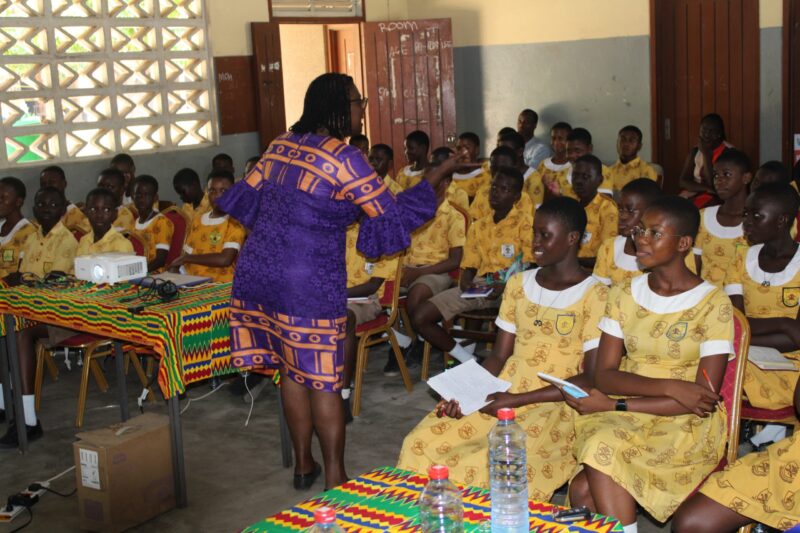
Students expressed their newfound awareness of the harmful effects of bullying, teasing, and harassment, with many pledging to promote a more respectful and supportive school environment.
"I have learned that teasing can have serious psychological effects, so I will no longer tease anyone and will encourage my friends to stop as well," one student remarked.
Another student stated, "I have come to know that we do not have to take nude pictures of ourselves and share them with our friends. Once it is out there, we will not have control over it, and we can be cyberbullied and blackmailed."
In his solidarity message, Mr. Clifford Heneku Budu, Ashaiman Municipal Education Director, commended the project team for selecting a school within the municipality and encouraged students to apply the knowledge gained to foster safer school environments.
Educational posters were distributed to students to be displayed in the school environment, helping to sustain conversations about SRGBV and other forms of violence in schools and beyond.
Latest Stories
-
He entered at eight. He is now 16: Ghana’s children growing up in prayer camps
20 minutes -
‘Development must not always begin from Accra’ — Anwelle Foundation launched in Jirapa
23 minutes -
PKO trio eye victories at Odwira Festival
3 hours -
346 Ghana Navy recruits pass out after 26 weeks of intensive training
3 hours -
Newsfile to discuss EOCO-MP arrest, drug trafficking, speech arrests and $235m water debt
4 hours -
JoyNews gets results as listeners raise GH¢40,000 to help 17-year-old student with cerebral palsy attend SHS
4 hours -
Vice President calls for stronger local pharmaceutical production to reduce medicine imports
4 hours -
The brewing tension at KNUST; Beware the Ides of October….
5 hours -
Health Ministry moves to integrate traditional medicine into mainstream healthcare
5 hours -
550 pupils in Kintampo South get educational lifeline as ‘Seeds of Hope’ reaches farming communities
5 hours -
Opoku Mensah urges Christian Council, House of Chiefs to speak up on democratic freedoms
6 hours -
Teacher unions’ strike: Minority demands immediate payment of teacher arrears, 20% deprived area allowance
6 hours -
The Accra-Kumasi Expressway: Building it right
6 hours -
Beyond gold exports: Building value and economic resilience from Ghana’s gold
6 hours -
2027 AFCONQ: Ghana under pressure as Gambia beat Somalia 2-1
6 hours