

Audio By Carbonatix
Many perishable food items on the market have been observed to be deteriorating at a faster rate than usual in recent times.
The alarming revelation has been attributed to the abuse and misuse of inorganic fertilizer applications.
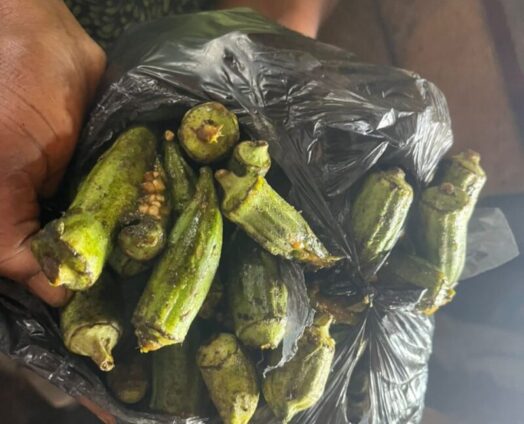
The situation is heavily impacting the marketing of such produce as traders bemoan post-harvest losses, particularly of vegetables such as okra and pepper.
At the Ayigya market in Kumasi, traders are noticing the declining quality of vegetables they purchase from various farming communities.
Felicity Osei, a trader at the market, indicated that her baskets of pepper lasted longer and only shrunk in size before rotting, but now they deteriorate within just three days.
She notes the vegetable barely changes colour or dry out as they did previously before perishing.
“In the past, you could see a color change before they spoiled. Nowadays, tomatoes are visibly coated with a lot of pesticides. The vegetables do not change in color before they rot, but earlier the vegetables would change in color before rotting. The visibility of weedicide on tomatoes is much,” she stated.
The traders fingered the excessive application of fertilizer on farms as the possible cause of the disturbing trend.
Causes of early deterioration
Scientists at the Crops Research Institute of the Council for Scientific and Industrial Research (CSIR-CRI) confirmed the situation, asserting that the pesticides are not the only contributing factor.
Weed Scientist, Dr. Stephen Arthur, explains the application of pesticides distort the biochemical structure of the crops, weakening their natural ability to withstand certain weather conditions or external factors.
“Any part of the plant where the herbicide touches their deterioration is. It destroys the cells and causes necrosis and general distraction of the plant,” he said.
He noted some herbicides like the paraquat, otherwise called Gramazone, are known to deteriorate the crop’s shelf life.
Dr. Arthur stated that the farmers do not go by the recommended dosage and time use.
“I observed farmers using paraquat on fruits today and harvesting them the following day for the market. In this situation, the fruit is still alive, so once it is picked, it begins to deteriorate,” he said.
Pathogens have also been identified to contribute to the early spoilage of the vegetables.
Plant pathologist, Dr. Akwasi Aidoo, observed pathogens aid the destruction of the crops after pesticide destroys the plant tissues, leading to premature aging and destruction of the plant's defense mechanism.
“This makes the plant more vulnerable to pathogens and disrupts the regulation of plant hormones, ultimately affecting respiration since the fruit is still alive,” he said.
Climate change is also not an overruled contributory factor as the warming climate and humid conditions are reported to aid in rapid deterioration.
The warning
Dr. Arthur is warning farmers against the use of the herbicide, paraquat, on any plant during fruit setting and/or flowering as they are said to have a carry-over effect – the transfer of unwanted materials to another organism.
He is advising farmers to observe the pre-harvest interval to avoid the deterioration and harmful exposure of the crops to chemicals.
“The whitish substance observed on fruits results from farmers not applying paraquat in a timely manner. In our interactions with some farmers, they said the market women are the ones asking to see the whitish substance on their vegetables; otherwise, they won't buy them at a reasonable price, which leads to losses for the farmers,” he said.
The condition not only affects the freshness and appeal of the produce, but also begs the question about food safety and the health implications for consumers.
How to store the crops
There are however ways both farmers and vegetable vendors can adopt to prevent their crops from deteriorating at a faster pace.
Farmers are advised to harvest at dawn and dusk when temperatures are lower as the higher degrees of heat can cause plant stress.
Abigail Amoa-Owusu, a Post Harvest Technologist, highlighted the essence of storing the harvested crops in a cool environment.
“Right after harvesting, the produce must be stored in a farmhouse or a very cool place to prevent heat from building up on the produce. Farmers should sort the produce by separating the leaves from the mother plant and distinguishing the ripe ones from the unripe ones.
“After separating, you should use a good packaging material like a plastic crate and place it in a truck, either a cool van or a truck with a white trampoline to reflect the heat from the produce,” she said.
However, for rapidly perishable vegetables like pepper and okra, storing them at around 8 to 10°C is optimum.
Onions, on the other hand, must be dried under the sun for 12 to 24 hours after being uprooted from the ground under the process known as field curing.
Ms. Amoa-Owusu explains the process prevents disease infestations, wounds, and maintains the colour of the onion ensuring it lasts for more than 6 months.
As an individual, storing these food items is crucial for healthy living.
The scientists advised washing of the vegetables in white vinegar and water to minimize pesticide residue.
“For pepper and tomato, they are high in ethylene, so you should not put them in one packaging material because it causes fast deterioration.
Amidst these prevailing challenges, the traders want stricter surveillance by the Food and Drugs Authority in ensuring the farmers adhere to the proper use of the fertilizers and other good farming practices.
“The food and drug authorities should do more research about the chemicals being used because humans’ beings are very wicked and would purchase the wrong products and sell them for a higher price,” said Mary Ahenkrah, a trader.
Latest Stories
-
UHAS halts semester exams over administrative, logistical issues
2 hours -
ECG announces planned maintenance outages in parts of Ashanti Region
2 hours -
Sexual harassment has no place in educational institutions – Education Ministry
3 hours -
The growing culture of vacation classes in Ghana: Should students rest or continue schoolwork?
3 hours -
E.P. Church secures radio frequency, prepares to launch Bremen Radio
4 hours -
Two dead and hundreds evacuated as twin fires break out on Greek island
4 hours -
EPCG clears over GH¢11.7m in debt as outgoing moderator calls for tighter controls on borrowing
4 hours -
Mövenpick Ambassador Hotel Accra marks 15 years of premium hospitality
4 hours -
T-bills auction: Government exceeds target by 88%, interest rates tumble
5 hours -
Western North: Confusion erupts over NPP chairmanship election results
5 hours -
Bawumia congratulates newly elected NPP regional executives
5 hours -
Bawumia urges unity after NPP regional elections ahead of 2028
6 hours -
Russia says at least seven killed in largest Ukrainian attack of 2026
6 hours -
Ghana and Netherlands sign pact to combat illicit drugs and drug markets
6 hours -
Akandoh warns Boards against interfering in day-to-day management of health institutions
6 hours