

Audio By Carbonatix
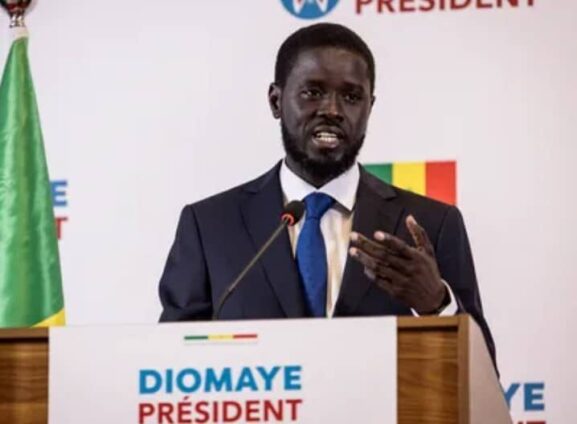
A likely absolute majority for President Bassirou Diomaye Faye's Pastef party in Senegal's legislative election would empower him to pursue his ambitious 25-year agenda, though his first challenge will be coming up with a budget amid a fiscal crisis.
Faye sought a clear parliamentary majority in Sunday's vote to implement the reform agenda that helped sweep him to power in a landslide election victory in March.
But analysts say creating a budget catering both to his voters' needs and to the International Monetary Fund (IMF), with which his government is currently in talks, will be challenging.
Former president Macky Sall, who headed an opposition coalition, on Monday congratulated Pastef on its win. Former prime minister Amadou Ba, who ran against Faye in the presidential election, also conceded defeat, as did other opposition leaders.
Senegal's sovereign debt rose in price on Monday, Tradeweb data showed, while most other African nations' bonds lost ground. The yield on its 2033 dollar bond was down about 10 basis points by 1145 GMT at 9.28%.
"If confirmed by the electoral bodies, Pastef's victory could give a free hand in passing budgets and implementing its programmatic reforms," said Wendyam Lankoande, a consultant at Africa Practice.
But, he noted, voters are "looking for quick solutions to unemployment, rising cost of living, and limited reach of public services in remote rural areas in the hinterland".
In September, a government audit revealed that Senegal's debt and budget deficit were much wider than the previous administration had reported. A $1.9 billion IMF programme agreed in June 2023 has been on hold since.
Negotiations with the IMF to restart disbursements could last until mid-2025.
"We see Pastef's majority as a positive development as it clears the path for President Faye and (Prime Minister Ousmane) Sonko to begin work on a budget for 2025 that aligns broadly with IMF requirements," said Leeuwner Esterhuysen, senior economist at Oxford Economics Africa.
"That said, some of these requirements won't necessarily go down well with Senegalese citizens."
He said the Fund was likely to show some leniency, as it appears to have good relations with the new administration.
"We think the government may be able to delay the implementation of harsh measures such as removing VAT exemptions on farming inputs or increasing household electricity prices, while energy subsidies will be phased out gradually to limit the impact on consumers," Esterhuysen said.
Latest Stories
-
President Mahama ends Resetting Ghana tour of Ahafo Region
2 minutes -
African negotiators seek delivery of climate commitments at COP31
3 minutes -
BoG develops AI rules for financial sector
6 minutes -
‘Big Push’: Government assures contractors of prompt payments
10 minutes -
Court fines miner for breaking into gold buying shop
20 minutes -
Tarkwa court jails labourer for three years over GH¢123,000 theft
1 hour -
GAEC must retain nuclear scientists for Ghana’s nuclear ambitions – Minister
2 hours -
Man reportedly mistaken for game and shot by hunter dead in forest
2 hours -
19-year-old mason jailed 15 years for defiling seven-year-old pupil
2 hours -
Ghana’s banking sector assets rise 20.47% to GH¢500.2bn – BoG Governor
2 hours -
22 injured as Sprinter bus overturns at Sege after tyre burst
2 hours -
UN housing expert urges Ghana to strengthen Rent Control Department amid housing affordability concerns
2 hours -
Delta-BCI partnership reaches 166,000 people with breast cancer education
2 hours -
Power restoration fault suspected in Kumasi Central Market fire
7 hours -
The 7-foot giant of Ngleshie Amanfro: Seven-foot Ghanaian Ephraim Saawa dreams of joining the national basketball team
8 hours