

Audio By Carbonatix
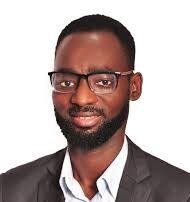
Founder of Centre for Alternative Politics and Security West Africa, Dr Muhammad Dan Suleiman, delivered a presentation during the "Beyond Electrocracy Webinar Series" organized by the organization, raising critical concerns about the state of democracy in Ghana and West Africa.
Speaking on the theme “Beyond Ghana's 2024 Election: Business as Usual or a New Pathway Towards People-Centered Politics?”, Dr Suleiman argued that Ghana’s democracy, often lauded as a model for Africa, faces significant contradictions that demand urgent reform.
“A democracy that cannot solve the conflicts it creates is a questionable democracy, and a democracy that closes its eyes to the suffering of its people is one that needs alternative politics,” Dr Suleiman stated. His remarks shed light on deep-seated issues plaguing Ghana and the region, from political violence to systemic disenfranchisement of citizens.
Dr Suleiman identified four key contradictions in West African governance, using examples from Mali, Niger, and Ghana to illustrate his points. He highlighted the fragility of democracy in the region, noting how countries once celebrated as bastions of democratic governance have succumbed to instability and authoritarianism. “Mali, which was seen as a beacon of democracy in the early 2000s, has since devolved into chaos,” he said.
Similarly, he pointed to the recent coup in Niger, a country previously regarded as a stable democracy, as evidence of the region’s volatile political landscape. “These examples underline the systemic failure of governance structures to address their own weaknesses,” he added.
Turning his attention to Ghana, Dr Suleiman critiqued the country’s democratic journey since the Fourth Republic began over three decades ago. While Ghana has conducted eight elections and transitioned power peacefully five times, he questioned the tangible outcomes of this democratic stability.
“We still experience election-related violence, with five fatalities in 2020 and rising incidents of electoral disputes,” he noted. Dr Suleiman also highlighted the rise of political militia groups, ritual killings, and high-profile assassinations, painting a grim picture of Ghana’s internal security. “These issues indicate a democracy struggling to address fundamental challenges,” he said.
The role of excessive force by security agencies also came under scrutiny. Dr Suleiman cited examples of police brutality and the increasing proliferation of arms, which he said exacerbate the sense of insecurity in the country.
Dr Suleiman emphasized the need to address the disconnect between citizens and political elites. “Politics has become transactional, erecting barriers that systematically disenfranchise ordinary Ghanaians,” he said.
He called for structural reforms to make politics more inclusive and people-centred, particularly for marginalized groups like women and youth. “We must remove the barriers that push people to the margins of politics,” he stressed, adding that Ghana’s traditions, communities, and indigenous practices should be integrated into governance to create a more participatory democracy.
To foster a more inclusive and effective democracy, Dr Suleiman outlined several initiatives championed by the Centre for Alternative Politics and Security West Africa. These include programmes like Mentoring Peace, which engages young Ghanaians to instil values of democracy and stability, and Parenting Peace, aimed at promoting peaceful values within families.
He also called for a re-imagining of politics to prioritize human security and indigenous practices. “We need to bring our traditions back into politics, not as a replacement for liberal ideals but as a complement to address their shortcomings,” he said.
Dr Suleiman concluded with a rallying cry for collective action. “If Ghana’s democracy is to thrive, it must address its contradictions, embrace alternative politics, and ensure that governance serves the people,” he said.
Latest Stories
-
Community leaders call for 24-hour operation of African Mall in Ejisu-Kwamo
4 minutes -
Bozoma Saint John wedding highlights Ghana’s untapped tourism dividend
6 minutes -
Brent crude oil rises above $100 a barrel as Middle East conflict intensifies
20 minutes -
59,300 students receive GH¢210m in enhanced student loans – SLTF
26 minutes -
Trump gave $45,000 cash gifts to close aide Natalie Harp and others
27 minutes -
Beauty Kabukie Apedoe appointed CEO of Inter Tourism Expo Accra
51 minutes -
New Ghanaian movie ‘Two’ to explore crime, faith and moral ambiguity
58 minutes -
Indo-Ghana begins local liquid oxygen supply
58 minutes -
Atwima-Techiman residents decry poultry farm nuisance as assembly sues farmer over siting of farm
1 hour -
Vice President urges Catholic youth to promote peace and prosperity across West Africa
1 hour -
Double-track was about demand, not lack of space in all schools – Adutwum
1 hour -
Adutwum proposes subject resits, transcript system for secondary schools
1 hour -
Teacher retraining needed to tackle social media jargon in WASSCE – Adutwum
2 hours -
Free SHS Secretariat official denies bribery allegations at Kumasi CSSPS Resolution centre
2 hours -
NPP Executive Elections: Full list of candidates and their ballot positions
2 hours