

Audio By Carbonatix
The Coups and Regime Changes
In recent years, the Sahel region has been shaken by a series of coups and shifts in governance that have significantly disrupted regional stability. These upheavals have sparked considerable global debate regarding international affairs, touching on themes such as geopolitical strategy, foreign direct investment, and humanitarian crises.
The overthrow of governments in Mali, Burkina Faso, and Niger has heightened concerns about the rise of extremist groups and the diminishing influence of Western powers, notably France.
As these developments pose socio-political and economic challenges not only for the affected nations but also for their neighbours like Ghana, which consistently champions democratic governance, it is essential to reflect on these issues deeply.
Ghana’s New Approach under the Leadership of President Mahama
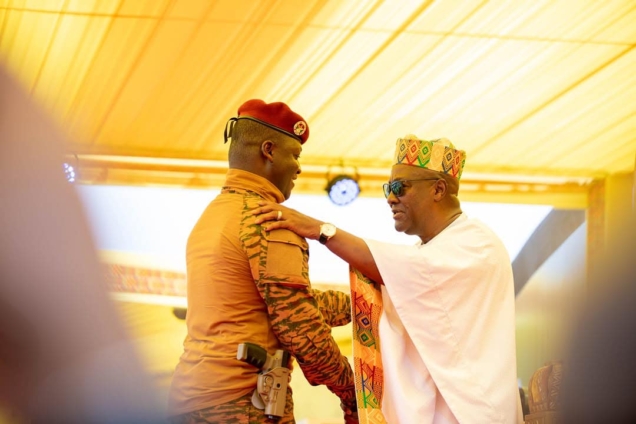
Amid these complexities, President John Mahama has emerged as a proactive leader, firmly committed to addressing the multifaceted challenges in the Sahel.
His decision to appoint a special envoy to the region underscores Ghana's strong stance and commitment to engaging with these pressing issues. This appointment reflects a recognition that the Sahel's role is pivotal in the broader struggle for freedom, peace and security across the continent.
Historically, the Sahel has been central to various liberation movements, promoting Pan-African ideals and sustaining alliances with Ghana since both pre-colonial and post-colonial times.
The narrative that suggests President Mahama’s approach represents a departure from Ghana's longstanding non-alignment is not only inaccurate but also distorts the reality of our nation’s foreign policy, rooted in the spirit of Pan-Africanism. As Nkrumah emphasised, we must move forward without being beholden to East or West, a mindset that resonates today amid ongoing geopolitical complexities.
ECOWAS Approach and Response
The Economic Community of West African States (ECOWAS) has played a crucial role in addressing the consequences of these coups, having a history of intervening in member states to maintain constitutional order.
However, the unique characteristics of the Sahel Problem necessitate a tailored strategy rather than a one-size-fits-all approach.
President Mahama's leadership and the strategic appointment of a special envoy signal Ghana’s dedication to redefining ECOWAS's role in the Sahel, reinforcing the need for trust and collaboration within the bloc. Ghana has actively participated in ECOWAS discussions, promoting a regional consensus for restoring democracy.
This scenario raises important questions about how to rebuild trust and mutual understanding among member states while respecting the voices of citizens across Africa and the diaspora.
Drawing from President Rawlings's insightful assertion that a coup can only succeed with the support of the people, it becomes vital to understand the aspirations of citizens versus the interests of specific factions.
Freedom must be authentically owned by the people, and regional leadership needs to acknowledge and empower citizen voices.
The Sanctions
In response to the coups, ECOWAS imposed sanctions targeted at prompting a return to civilian governance and dissuading other nations from following suit.
Ghana’s democratic principles backed these sanctions, aligning with a broader West African call for democracy and stability. However, isolating these countries may not prove beneficial when citizens find shared values with their leadership.
A wise approach, championed by President Mahama, revolves around addressing the core issues that lead to instability and pursuing a path towards a renewed constitutional order without resorting to force.
The call for dialogue and understanding from Ghana’s leadership is paramount, particularly in tackling the issues of extremism and expanding regional geopolitical complexities.
Formation of the Sahel Alliance and Its Emerging Interests
The establishment of the Sahel Alliance marks a pivotal development in the international community’s approach to the region.
This coalition aims to confront the multifaceted challenges the Sahel faces, encompassing security, development, and climate concerns. Ghana’s involvement in discussions surrounding this alliance highlights its commitment to collective efforts in addressing these pressing regional issues through the diplomatic channels encouraged by President Mahama.
Regional and Geopolitical Shift
The evolving security landscape in the Sahel has necessitated a strategic re-evaluation of traditional alliances and partnerships.
With increased involvement from U.S. and European nations countering terrorism, Ghana is astutely aware of these shifting dynamics.
President Mahama's proactive stance positions Ghana to seize both challenges and opportunities within this complex geopolitical environment, ensuring that national interests are balanced against external influences.
Exit from ECOWAS
Amid its commitment to ECOWAS, there have been calls within Ghana to reconsider the efficacy of the organization's interventions in the face of evolving security challenges.
Debates about necessary reforms or alternative security frameworks are emerging, and navigating these discussions will be crucial for Ghana as it affirms its commitment to regional cooperation while maintaining a strong foreign policy under President Mahama’s leadership.
Perspectives from the International Community
The international community has viewed Ghana as a beacon of stability and democratic governance within the ECOWAS framework.
Observers have noted the country's essential role in advocating for democracy and regional security.
As the Sahel continues to face intricate challenges, global partners expect Ghana, under President Mahama’s leadership, to maintain its position as a proactive leader in fostering cooperation among nations in the region, promoting peace, and supporting initiatives to combat terrorism.
In conclusion, Ghana's foreign policy regarding the Sahel highlights its dedication to democratic values, regional collaboration, and cooperative security efforts, particularly under President Mahama’s courageous leadership and his strategic decision to appoint a special envoy to the region.
Such moves not only reinforce Ghana’s commitment to addressing the complexities of the Sahel situation but also affirm its historical and contemporary role in the ongoing journey toward regional stability and freedom.
Latest Stories
-
Obuasi SHTS case: Eduwatch calls for sex offenders’ register and mandatory background checks for teachers
2 minutes -
GloMeF CEO urges intensified public education on new road traffic regulations
13 minutes -
‘Any tax on ChatGPT is an attack on education and innovation’- Akim Swedru, MP
17 minutes -
Obuasi SHTS sexual abuse scandal exposes systemic failure in child protection – Moving Masculinity
18 minutes -
Hubtel CEO calls for national data-sharing framework to boost AI development
20 minutes -
Twelve Golden Rules of real estate development in Ghana, Africa
25 minutes -
Five new telephony cell sites in Ashanti Region to be activated in October 2026 – Sam George
25 minutes -
Mahama cuts sod for Afienya Industrial Park, targets 120 enterprises
30 minutes -
Rush for fuel from accident tankers is stealing, punishable by law – NPA boss, Edudzi Tamakloe
36 minutes -
GhIG pushes for legislation to regulate geoscientists’ activities
42 minutes -
Mfantsipim @150: Ace Anan Ankomah leads project to preserve school’s musical heritage
45 minutes -
Gov’t launches rCOMSDEP in Ahanta West, Mpohor Fiase to promote responsible community mining
47 minutes -
AI is forcing professionals to rethink how they deliver value – Hubtel CEO
50 minutes -
Daily Insight for CEOs: Strengthening the CEO’s Leadership Legacy
51 minutes -
Jimmy Aglah’s ‘When the River Testified’ approved by NaCCA as Supplementary Reader
60 minutes