

Audio By Carbonatix
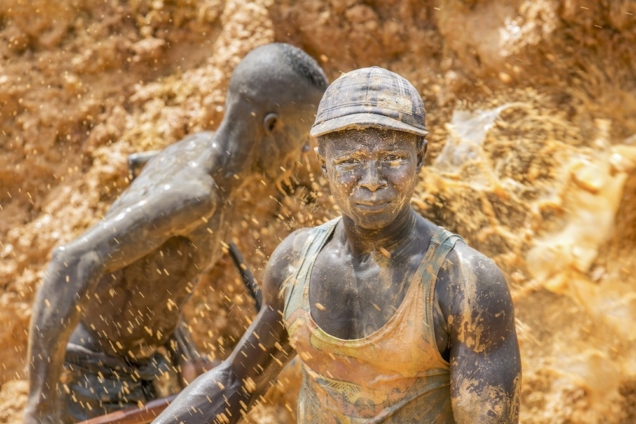
Research Fellow on Environmental Degradation, Charles Sedem, has stressed the urgent need for alternative livelihood programmes for illegal miners, commonly referred to as galamseyers, as efforts to curb illegal mining continue across the country.
Speaking on Joy FM’s Top Story on Thursday, April 3, Mr Sedem said that the failure to provide sustainable alternatives for people engaged in illegal mining has been a major gap in the government’s efforts to combat the menace.
“People have not been consulted enough. The stakeholders were not engaged enough. If my life depends on something illegal, but that is what feeds me and my family, it will be very difficult for you to tell me to stop without an alternative,” he explained.
According to him, the lack of alternative livelihoods creates resistance among those involved in illegal mining, making enforcement efforts ineffective.
He likened the situation to disarmament efforts in war-torn countries, where combatants are often provided with alternative means of survival in exchange for laying down their weapons.
“If you take a look at the Democratic Republic of Congo, for instance, the prolonged war has been fueled by diamonds. People were asked to exchange their weapons for something meaningful.
"If I get a job to do or capital to start something else, I wouldn’t go back there. But if you don’t provide that, it could escalate into a full-blown combative activity, which is not good for this country,” he warned.
Mr Sedem also highlighted the ripple effects of illegal mining on entire communities, where businesses and livelihoods revolve around the galamsey economy.
He called for a more inclusive approach, urging policymakers to involve the miners and community members who indirectly benefit from illegal mining.
Additionally, he urged the government to rethink its strategy and develop a comprehensive alternative livelihood programme to ensure lasting solutions to the galamsey crisis.
“In some of these galamsey areas, entire villages depend on selling food, renting houses, and providing services to illegal miners. If that is their only source of income, how do you expect them to support efforts to reclaim the land?” he questioned.
“This has been missing all this while, and now people have taken the law into their own hands. Unfortunately, we have reached this point,” he lamented.
Latest Stories
-
Ghana’s state-owned enterprises return to profit with GH¢19.8bn gain in 2025 — SIGA
6 minutes -
Fuel prices set to rise again from Sept 1; petrol could hit GH¢16.21 – COPEC
2 hours -
REGSEC restricts Akwasidae celebrations in Denkyira amid security concerns
2 hours -
Eric Adjei distributes free fertiliser to farmers in Jaman North
2 hours -
Akufo-Addo urges NPP factions to unite behind Bawumia for 2028 victory
2 hours -
NDC mourns Western Regional Elections Director Papa Assan
3 hours -
Minerals Commission warns against fake job recruitment schemes
3 hours -
10 recruits dismissed for defying phone ban – Interior Minister
3 hours -
IEAG commends GoldBod, BoG for improving forex stability
3 hours -
Bawumia donates GH¢50,000 to St Jude Catholic Church at Weija
3 hours -
Mahama calls for faster mobilisation of AU Peace Fund resources
3 hours -
Improved roads bring new vehicle options to Tumu-Bolga, Tumu-Tamale, Tumu-Wa routes
3 hours -
Cedi records 7.9% depreciation against US dollar in first half of 2026
3 hours -
GIS launches operation on anti-human trafficking and exploitative street begging
3 hours -
Awutu-Senya District Assembly organises clean-up ahead of Awubia Festival
4 hours