

Audio By Carbonatix
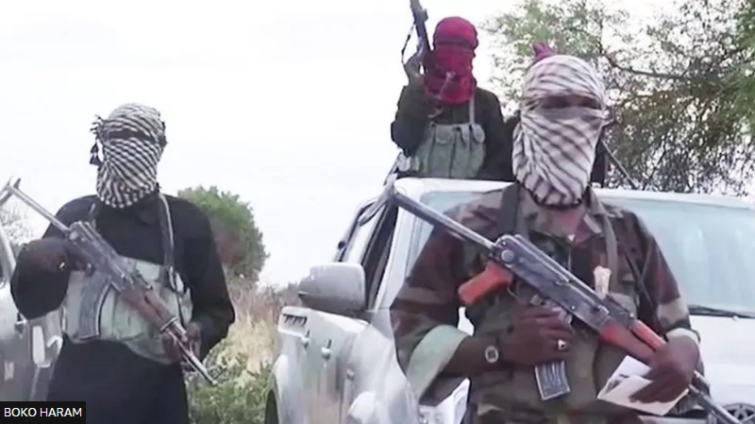
The governor of Nigeria's Borno state has warned that jihadist group Boko Haram is making a comeback after its fighters staged a series of attacks and seized control of some parts of the north-eastern state.
Babagana Zulum called for more military assistance for soldiers fighting the insurgency.
The Nigerian government has downplayed the governor's fears, saying security in the country has improved in the last 18 months.
Borno state has been at the centre of a 15-year insurgency by Boko Haram, which has forced more than two million people to flee their homes and killed more than 40,000.
At the height of its insurgency in 2015, Boko Haram controlled huge areas in Borno state before being beaten back.
The militant group gained international notoriety in April 2014 when it kidnapped more than 270 schoolgirls from the town of Chibok, also in Borno state.
Following a relative lull, the militants have been targeting army bases, police stations and rural communities.
In January, an ambush by the Boko Haram breakaway faction, Islamic State West Africa Province (Iswap), reportedly killed at least 20 Nigerian soldiers, while another attack in the same period left 40 farmers dead.
Governor Zulum said it was disheartening that the group now attacked and kidnapped people in many communities almost on a daily basis.
In a meeting with national security officials, he said that Borno State was "losing ground," against the jihadists.
Security analysts say the concentration of soldiers in north-western Nigeria to deal with banditry and kidnappings has led to a reduction in the number of troops on the frontline with Boko Haram in Borno and other parts of the north-east.
The fight against the militants became even more challenging after neighbouring Niger withdrew its troops from a regional force set up to tackle the jihadist group.
Another analyst, Hamisu Sani, told the BBC that it wouldn't be easy to defeat Boko Haram but it wasn't impossible.
"No matter how our military weaken them, they can always regroup and will remain a threat," he said.
"The solution would be to crush the fighters in their entirety - which is possible given the right support to our military."
Latest Stories
-
Green finance must deliver measurable benefits to Ghanaian farmers – Ecobank
8 seconds -
Today’s front pages: Wednesday, September 23, 2026
40 minutes -
Ghanaian pastor, Rev Emmanuel Boakye-Danquah on the run over alleged counterfeit currency syndicate
48 minutes -
Give Teshie Desalination to Kasapreko or Accra Brewery
55 minutes -
Absa Bank Ghana and IFC announce $50m facility to expand cocoa financing
1 hour -
Ghana’s economic revival: Turning financial stability into economic prosperity
1 hour -
AFCON 2027Q: Black Stars to depart Accra for Bouaké ahead of Ivory Coast clash
2 hours -
Who to allow into your home, who should come into your cyberspace? Trust is becoming unbecoming
2 hours -
At least 11 dead in mass shooting at house party in South Africa
2 hours -
MoMo Fintech Lab attracts close to 1K entries from innovators across, applications end on Sept 30
2 hours -
Black Stars face Ivorian test as injuries force major squad changes
2 hours -
Save Nations Foundation donates learning materials to Nooria Islamic Basic School, calls for more support
2 hours -
From selling food to solving problems: How Esther Owusu Nkwantabisah rethought entrepreneurship
3 hours -
Explained: Ghana’s water plant deal that produced a $235m judgment debt instead of water for 500,000 people
3 hours -
High Cost of Domestic Airline Fares: Can government do something about it?
3 hours