

Audio By Carbonatix
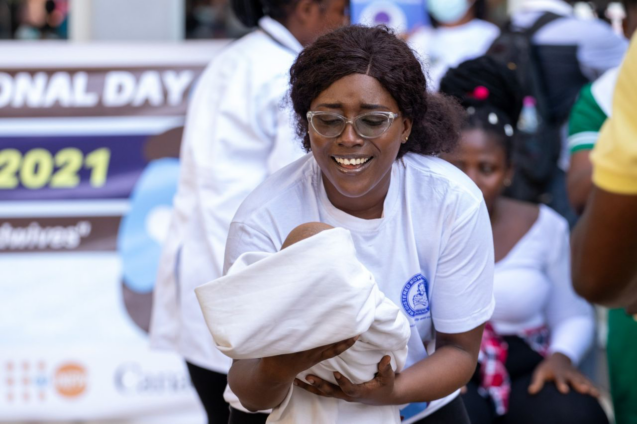
Midwives are one of the strongest pillars of any nation’s health system. They provide 90 per cent of essential sexual, reproductive, maternal, and newborn health services, including family planning. They also support survivors of gender-based violence.
Oftentimes, midwives put themselves at enormous risk when they venture out to provide care to women and girls in hard-to-reach homes and communities in crisis settings.
They often travel across the most remote and dangerous terrain, for instance, across rivers and water bodies on boats to ensure the provision of essential services that save lives and safeguard health and human rights.
Even when floods wash away roads and homes, where services are severed and infrastructure has collapsed, midwives are often the first responders and the last line of defence.
Effective deployment of midwives is one of the most cost-effective ways to reduce preventable maternal deaths and to respond during a crisis.
Yet, midwifery is still not always recognised as the vital health profession it is. In most decision-making structures and processes, the voice and representation of midwives are absent.
Chronic underinvestment in midwifery has translated to inadequate training, a lack of infrastructure and supplies, and low salaries, barriers that are present in times of stability and only grow worse in times of crisis.
Globally, there is a shortage of nearly 1 million midwives in the face of trying to end preventable maternal deaths once and for all.
Recent severe funding cuts to humanitarian assistance threaten to widen these gaps, with tragic impacts on women and girls in some of the world’s most challenging places.
Already, midwives are reporting rising death rates among women and newborns in conflict zones and fragile contexts – an ominous sign in settings where over 60 per cent of global maternal deaths are reported.
To promote quality midwifery education and bridge the gap between theory and practice in Ghana, the UNFPA Ghana is supporting the implementation of the Midwifery Centres of Excellence to equip selected midwifery schools and practice areas to attain international standards.
The Korle Bu Nursing and Midwifery Training College and the Kwame Nkrumah University of Science and Technology Midwifery Schools have been selected as the initial sites for the Centres of Excellence.
Again, UNFPA Ghana is supporting the sites with faculty capacity development, establishment of leadership and governance structures, and equipment this year.
Working with the Ministry of Health, UNFPA Ghana has supported the development, launch, and dissemination of the 3rd Nursing and Midwifery Strategic Plan (2024–2028), which outlines a comprehensive roadmap for the development of the nursing and midwifery professions over the coming years.
In 2024, UNFPA strengthened the capacity of 120 midwives in emergency obstetric and newborn care (EmONC), enhancing the quality of maternal and newborn services across the Networks of Practice.
UNFPA also strengthened technical and financial support towards the capacity development of 60 midwives and community health officers in Long-acting Reversible Contraceptives (LARC).
Dr. Wilfred Ochan, UNFPA Ghana Country Representative in Ghana, has highlighted the urgent need to strengthen midwifery to protect women, families, and communities from preventable maternal deaths.

“By investing in midwives, we make women and entire communities less vulnerable and better prepared to plan for their families and recover from crises,” he said.
He called on governments and development partners to join forces with UNFPA and its partners through the Midwifery Accelerator initiative.
“Together, we must increase financial and programmatic investments in midwives and the systems that support them, because every mother and newborn deserves a safe birth, and every investment we make today saves lives tomorrow,” Dr. Ochan added.
Midwives save lives. Let us work together to end the global shortage of nearly one million midwives and to ensure that we can end preventable maternal deaths once and for all. Let us work towards creating the space for the voice, representation, and participation of midwives on decision-making tables.
Let us work towards a common midwifery agenda by facilitating the unification of midwifery associations.
Latest Stories
-
Fameye marks birthday with orphans at Village of Hope
8 minutes -
Language barrier limiting opportunities for Ghanaian youth in Russia – Opare Addo
10 minutes -
Mr Isaac Baah Ashun
10 minutes -
Critical thinking essential to counter misinformation in AI era – Putin aide
18 minutes -
Princess Ocansey named among Top 100 Iconic Female World Leaders, set to be honoured at UNGA81 Powerlist reception
18 minutes -
William Plange recounts healing from depression in forest
19 minutes -
Trump seeks to rebuild support among 2024 voters in North Carolina
36 minutes -
Photos: IGP engages Okada riders on road safety, registration and crime prevention
1 hour -
NPA reviewing calls to cushion consumers amid petrol price hikes – Edudzi Tameklo
1 hour -
Astroturf Exposé: Edem Senanu calls for tougher laws to punish public officials
1 hour -
US limits visas for South African officials over alleged anti-white discrimination
1 hour -
Edem Senanu calls for OSP investigation into alleged astroturf procurement breaches
1 hour -
272 graduates with disabilities being formalised into GES – Gender Minister
1 hour -
Measure reforms by impact on motorists, not projects completed – Nikpe to DVLA
1 hour -
Russian drones hit Ukrainian bus and train, killing five, officials say
2 hours