

Audio By Carbonatix
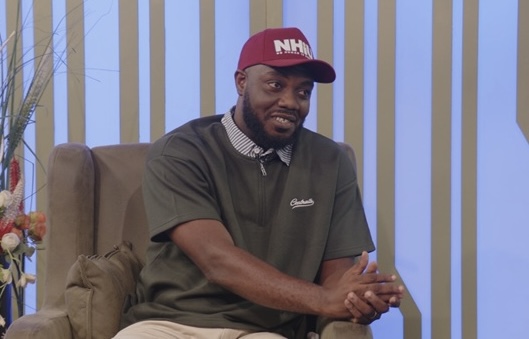
Humanitarian and Social Impact Advocate William Plange, who survived depression, has shared how he found healing in a forest while battling the condition.
Growing up in Tema, Mr Plange was a smart, vibrant and intelligent young boy. He performed well academically from basic school through high school and looked forward to a brighter future.
However, life took a different turn after he completed high school, causing him to sink into depression because he felt like a failure, especially as most of his colleagues whom he had outperformed academically were succeeding.
Mr Plange shared his experience in an interview on Joy Prime’s Changes show with Nikki Samonas on Monday, 14 September 2026.
“I grew up in a community where everybody would tell you to go to school and make sure you’re first in class, take your studies seriously and when you complete school, your life is going to be beautiful; you’ll get a good job and you can afford anything you’ll want to buy in life. So I grew up with that mindset. Growing up in Tema, my grandma owned a bar. So my daily routine was to go to school, come home and sell alcohol, do my homework and go to sleep. I completed school with good grades but I was struggling to get a job. I saw my friend who I was way better than in class who had landed good jobs, bought their cars, they’re living life and that’s when depression and sadness started with me. I was expecting to better well than them.”
“One day I was walking on a road and a colleague who had a car saw me and honked. I walked towards him and he asked what I was doing with my life. I told him I was still trying to find a job but he said ‘William this is not you; you better get a life, we’re all moving.’”
Being the firstborn of his parents, the statement from his colleague hit him hard and worsened the situation, as his family expected him to provide significant support, which he was unable to do.
These circumstances led him to move in with a family member in the forest to escape the chaos of the city and give himself an opportunity to heal.
Although he is still unable to figure out why he made that decision, he believes the move played a major role in his recovery, particularly because of some of the activities he engaged in while in the forest.
“Till date, I don’t know why I took that move but I wanted to just move away from seeing my friends doing well, me struggling and my family also barely noticing me. So I took that move by going to the thick forest. No electricity, no good drinking water; we drunk from a stream that looked green and when we wake up in the morning around 4am, we would walk like 4 to 5 hours into the deep farms. That was the best decision I took in my life,” he furthered.
According to him, the forest was a place where support and togetherness were prioritised rather than competition and the desire to be better than others, unlike in the city.
“I healed in the forest after a week,” he said.
He later received a signal to return to the city and start a business dubbed ‘Errand Boy’. Without fully understanding what it entailed, he did not hesitate to pursue it.
Life eventually began to improve for him until 2020, during the COVID-19 pandemic, when he was forced to move out of his grandmother’s house. According to him, his grandmother said she was struggling financially and felt that, at 30, he was mature enough to live on his own.
He rented a wooden structure to sustain himself while searching for a better job that could help him earn enough money to secure a better place to live. This period, however, brought back the severity of his depression, which he had battled for ten years.
Fortunately for him, a post he made on LinkedIn about his experience in the forest in 2014 caught the attention of a white man. This eventually changed the course of his life, as he received support to travel abroad and subsequently started his ‘No Human Is Useless’ initiative.
“I posted a picture I took in the forest and added that sometimes you need to go through pain and struggles to find the blessings that are hidden that we’re not paying attention to meanwhile I was crying indoors. Then this white man saw it, liked it and came to my DM and commended me saying he liked my story and asked if he could introduce me to some people in the U.S so you can share your story with them online. So I agreed and said I want to do it.”
His experience inspired him to write a book titled No Human Is Useless. He also decided to champion the campaign and help people who may be battling pain and depression through advocacy and the NHiU Conference, which is slated for 19 September at the British Council, Accra.
Latest Stories
-
4 injured, including baby, in multi-vehicle crash at Sofoline flyover in Kumasi
37 seconds -
GES should consider regional processing of teacher promotions – FWSC CEO
4 minutes -
Minerals Commission suspends reconnaissance license of Gold Coast GRC Ghana Limited
6 minutes -
Yusif Sulemana assures contractor of support to deliver Bole roads on schedule
14 minutes -
Mahama Ayariga engages World Bank on building sustainable, resilient cities
14 minutes -
‘We can build it ourselves’ – Ibrahim Mahama reaffirms belief in Ghanaian entrepreneurship
19 minutes -
Constitutional reforms must give citizens greater say in local decisions – Sophia Akuffo
20 minutes -
Don’t deal with unlicensed loan firms – BoG cautions public against 20 loan apps
43 minutes -
Photos: IGP Yohuno decorates 22 newly promoted DCOPs
45 minutes -
We didn’t deliberately delay negotiations with teacher unions – FWSC
45 minutes -
‘Go back to the drawing board’ – Polo urges Black Stars to find solutions
47 minutes -
Kaerbo For Africa hands over three-classroom block to Gomoa Nyanyano SHS
48 minutes -
KNUST students win Pan African AI Summit Hack-AI-Thon with cocoa waste solution
49 minutes -
Cocoa prices risen by 95% since March 2026, to average US$5,670 in 2026
1 hour -
British national arrested in connection with RAF Fairford incident
1 hour