

Audio By Carbonatix
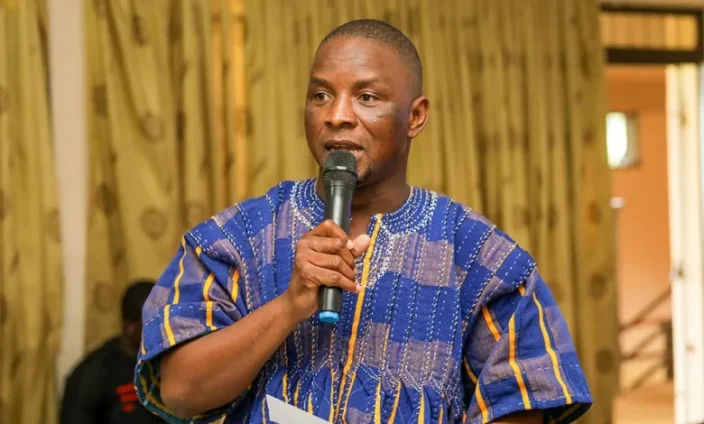
A beacon of hope has been rekindled in Tampion Kukuo, a peri-urban community in Ghana's Northern Region, as Professor Samuel Alhassan Issah, Dean of the Faculty of Ghanaian Languages Education at the University of Education, Winneba (UEW), personally intervened to revive a long-stalled school construction project.
His generous initiative aims to alleviate the severe educational infrastructure challenges that have plagued his hometown for years, a common plight in many underserved areas across northern Ghana.
The community's three-unit classroom block, a crucial project intended to mitigate chronic overcrowding in the local school, had languished incomplete for an extended period due to a critical lack of funding.
Witnessing the persistent struggle, Professor Issah mobilised a significant sum of GHC 15,000 from his personal network of friends and colleagues, specifically earmarked for the completion of the structure's roofing.
This act of philanthropy highlights the impactful role that diasporic and successful individuals can play in their hometowns.
The donation was formally presented to the project managers during a heartfelt ceremony, drawing together a diverse assembly of local chiefs, education officials, dedicated teachers, and grateful community members.
It was a moment of collective pride and renewed optimism for a community that has long yearned for improved learning conditions.
"This community shaped me. It is only right that I give back," Professor Issah stated, reflecting on his deep connection to Tampion Kukuo. "I sincerely thank all my friends and colleagues who contributed to making this possible."
His words underscored a philosophy of reciprocity and community investment, a call often echoed by development experts urging Ghanaians abroad or those who have achieved success to remember their roots.
Local education leaders welcomed Professor Issah's intervention with palpable enthusiasm. Mr. Issah Sulemana, the headteacher of the primary school, described the timely gesture as a "game-changer," painting a stark picture of the current learning environment.
"The lack of classroom space has been a major challenge," Mr. Sulemana emphasised. "This support will greatly improve our teaching environment."
He revealed that many pupils currently endure learning under trees or are crammed into severely overcrowded classrooms, conditions that significantly hinder effective teaching and learning.
The national pupil-to-classroom ratio in Ghana, particularly in rural and peri-urban areas, often exceeds the recommended standards, contributing to poor educational outcomes.
Similar sentiments were echoed by the Circuit Supervisor of the Ghana Education Service (GES) and other school heads present at the event, all stressing the urgent and dire need for more educational infrastructure in underserved communities across the country.
Data from the Ministry of Education often points to infrastructure deficits as a major barrier to quality education, particularly in the northern regions.
Further bolstering the community's educational prospects, Professor Gazali Issahaku, Principal of Bagabaga College of Education, who was also present at the ceremony, made a significant pledge.
He committed to posting teacher trainees from his institution to the school, providing much-needed additional teaching support and fresh pedagogical approaches to enhance learning efforts.
This collaboration between a tertiary institution and a basic school is a positive model for educational development.
Meanwhile, Madam Monica Issah, a staff member of the Ghana Education Service, utilised the occasion to raise a separate, yet pertinent, appeal.
She urged lactating teachers to seek childcare support outside of the classroom, citing concerns over potential distractions that could impact teaching quality.
Reflecting on his own childhood, Professor Issah shared personal anecdotes of walking several kilometres to school each day, experiences that profoundly underscored for him the critical importance of creating far better learning conditions for future generations.
This personal connection to the issue resonated deeply with the audience.
This impactful initiative by Professor Issah has not only brought immediate relief to Tampion Kukuo but has also reignited broader calls for other well-placed individuals and professionals to actively invest in the educational development of their hometowns.
Such acts of localised philanthropy are increasingly recognised as vital complements to government efforts, fostering community ownership and accelerating progress in Ghana's educational sector.
Latest Stories
-
TVET Service, Bank of Ghana explore partnership to boost skills development
40 minutes -
Ghana TVET Service, OR Foundation partner to promote sustainable fashion
53 minutes -
Achimota, Accra Academy, PRESEC Osu qualify for next stage of National Public Speaking Event
56 minutes -
NCPTA challenges GES directive on PTA dues, cites High Court injunction
59 minutes -
Majority opposes parliamentary probe into cocaine busts while investigations continue
1 hour -
Salomey Baffoe detention is a facade to divert attention from cocaine scandal – Weija-Gbawe MP
1 hour -
Francis-Xavier Sosu is doing well after GIMPA incident – Office
1 hour -
Deputy Minority Leader appeals to First Lady, Vice President over Salomey Baffoe’s detention
1 hour -
Ecobank Group commits US$2.6bn to women-led businesses and agribusinesses across Africa
2 hours -
Ghana to host high-level conference on scaling education initiatives in emergencies
2 hours -
Democracy must not be for sale: Who pays for Ghana’s politics, and how do we confront money, influence and accountability?
2 hours -
Aburi Amanfrom landowners appeal for government support for Atwapim development project
2 hours -
Cargill Ghana and International Cocoa Initiative celebrate 111 young graduates building skills for the future
3 hours -
Video: Madina MP Francis-Xavier Sosu collapses while addressing students at GIMPA
3 hours -
Hunnyboy reveals how social media landed him Shatta Wale feature
3 hours