

Audio By Carbonatix
Investigators have uncovered a chilling discovery in the preliminary investigation into the Air India Flight 171 crash which killed 260 people in June.
Just seconds after takeoff, both the 12-year-old Boeing 787 Dreamliner's fuel-control switches abruptly moved to the "cut-off" position, starving the engines of fuel and triggering total power loss. Switching to "cut-off" is a move typically done only after landing.
The cockpit voice recording captures one pilot asking the other why he "did the cut-off", to which the person replies that he didn't. The recording doesn't clarify who said what. At the time of takeoff, the co-pilot was flying the aircraft while the captain was monitoring.
The switches were returned to their normal inflight position, triggering automatic engine relight. At the time of the crash, one engine was regaining thrust while the other had relit but had not yet recovered power.
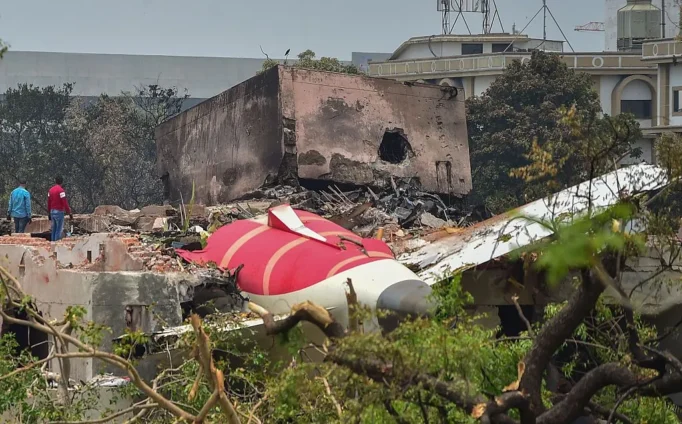
Air India Flight 171 was airborne for less than 40 seconds before crashing into a crowded neighbourhood in the western Indian city of Ahmedabad, marking one of India's most baffling aviation disasters.
Investigators are probing the wreckage and cockpit recorders to understand what went wrong just after takeoff. The Air India flight climbed to 625 feet in clear weather before losing location data 50 seconds in, per Flightradar24. Saturday's 15-page report offers early insights.
The investigation - led by Indian authorities with experts from Boeing, General Electric, Air India, Indian regulators, and participants from the US and UK - raises several questions.
Investigators say the lever-lock fuel switches are designed to prevent accidental activation - they must be pulled up to unlock before flipping, a safety feature dating back to the 1950s. Built to exacting standards, they're highly reliable. Protective guard brackets further shield them from accidental bumps.
"It would be almost impossible to pull both switches with a single movement of one hand, and this makes accidental deployment unlikely," a Canada-based air accidents investigator, who wanted to remain unnamed, told the BBC.
That's what makes the Air India case stand out.
Investigators have uncovered a chilling discovery in the preliminary investigation into the Air India Flight 171 crash which killed 260 people in June.
Just seconds after takeoff, both the 12-year-old Boeing 787 Dreamliner's fuel-control switches abruptly moved to the "cut-off" position, starving the engines of fuel and triggering total power loss. Switching to "cut-off" is a move typically done only after landing.
The cockpit voice recording captures one pilot asking the other why he "did the cut-off", to which the person replies that he didn't. The recording doesn't clarify who said what. At the time of takeoff, the co-pilot was flying the aircraft while the captain was monitoring.
The switches were returned to their normal inflight position, triggering automatic engine relight. At the time of the crash, one engine was regaining thrust while the other had relit but had not yet recovered power.
Air India Flight 171 was airborne for less than 40 seconds before crashing into a crowded neighbourhood in the western Indian city of Ahmedabad, marking one of India's most baffling aviation disasters.
Investigators are probing the wreckage and cockpit recorders to understand what went wrong just after takeoff. The Air India flight climbed to 625 feet in clear weather before losing location data 50 seconds in, per Flightradar24. Saturday's 15-page report offers early insights.
The investigation - led by Indian authorities with experts from Boeing, General Electric, Air India, Indian regulators, and participants from the US and UK - raises several questions.
Investigators say the lever-lock fuel switches are designed to prevent accidental activation - they must be pulled up to unlock before flipping, a safety feature dating back to the 1950s. Built to exacting standards, they're highly reliable. Protective guard brackets further shield them from accidental bumps.
"It would be almost impossible to pull both switches with a single movement of one hand, and this makes accidental deployment unlikely," a Canada-based air accidents investigator, who wanted to remain unnamed, told the BBC.
That's what makes the Air India case stand out.
Latest Stories
-
Okai Mintah outlines vision for NDC Youth Wing as he engages MMDCEs
3 minutes -
Mahama Ayariga leads renewed push for stronger local governance through partnerships
6 minutes -
NDC youth organiser aspirant Okai Mintah consults MMDCEs ahead of elections
7 minutes -
PHOTOS: Ayikuma Methodist Basic School wins National Juniors Challenge
10 minutes -
Silence has entered our homes : Salomey Awiti Bafoh and the chilling effect of free expression in Ghana
10 minutes -
UG Pro-VC calls for stronger research funding to curb brain drain
12 minutes -
Woman in critical condition after shooting at funeral grounds in Yeji
14 minutes -
Breast Cancer awareness must lead to action – Deputy Health Minister
17 minutes -
UK identified as leading destination for Ghana’s illicit cannabis exports – Report
19 minutes -
Drug money allegedly finances Ghana’s political parties and real estate – Global Organised Crime Index
24 minutes -
NSA outlines seven steps for successful posting and validation of national service personnel
25 minutes -
GPRTU taskforce clamps down on unapproved fares at Kasoa
26 minutes -
Prime Insight: Making room for meaningful national conversations on Joy Prime
37 minutes -
FABAG commends Ato Forson’s over removal of 20% excise duty on locally manufactured fruit juices
44 minutes -
HIV stigma discourages testing, prevention and treatment in Ghana – Ghana AIDS Commission
46 minutes