

Audio By Carbonatix
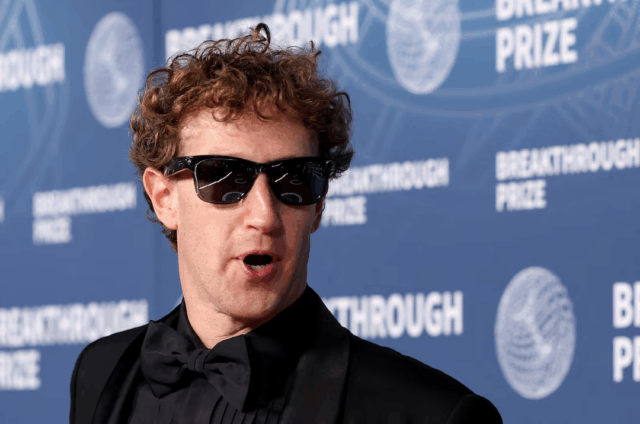
Mark Zuckerberg and current and former directors and officers of Meta Platforms agreed on Thursday to settle claims seeking $8 billion for the damage they allegedly caused the company by allowing repeated violations of Facebook users' privacy, a lawyer for the shareholders told a Delaware judge on Thursday.
The parties did not disclose details of the settlement, and defence lawyers did not address the judge, Kathaleen McCormick of the Delaware Court of Chancery. McCormick adjourned the trial just as it was to enter its second day, and she congratulated the parties.
The plaintiffs' lawyer, Sam Closic, said the agreement just came together quickly.
Billionaire venture capitalist Marc Andreessen, a defendant in the trial and a Meta director, was scheduled to testify on Thursday.
Shareholders of Meta sued Zuckerberg, Andreessen and other former company officials, including former Chief Operating Officer Sheryl Sandberg, in hopes of holding them liable for billions of dollars in fines and legal costs the company paid in recent years.
The Federal Trade Commission fined Facebook $5 billion in 2019 after finding that it failed to comply with a 2012 agreement with the regulator to protect users' data.
The shareholders wanted the 11 defendants to use their personal wealth to reimburse the company. The defendants denied the allegations, which they called "extreme claims."
Facebook changed its name to Meta in 2021. The company was not a defendant and declined to comment.
On its website, the company has said it has invested billions of dollars into protecting user privacy since 2019.
A lawyer for the defendants declined to comment.
“This settlement may bring relief to the parties involved, but it’s a missed opportunity for public accountability," said Jason Kint, the head of Digital Content Next, a trade group for content providers.
Zuckerberg was expected to take the stand on Monday, and Sandberg on Wednesday. The trial was scheduled to run through the end of next week.
The case was also expected to include testimony from former Facebook board members Peter Thiel, Palantir Technologies co-founder, and Reed Hastings, co-founder of Netflix.
By settling, Zuckerberg and other defendants avoid having to answer probing questions under oath. Sandberg was found during the litigation to have deleted what were likely her most sensitive emails, and she was sanctioned, making it harder for her to tell her side of the story in court.
The settlement allows plaintiffs to avoid trying a very difficult case. Meta investors alleged that former and current board members completely failed to oversee the company's compliance with the 2012 FTC agreement. The lawsuit also claimed that Zuckerberg and Sandberg knowingly ran Facebook as an illegal data harvesting operation.
The oversight allegations are known as Caremark claims, considered the most difficult to prove under Delaware corporate law. It was the first time Caremark claims went to trial, and even if the plaintiffs had gotten a judgment in their favour, the case would have been appealed to the Delaware Supreme Court. That court has reversed major shareholder victories in recent years.
The case followed revelations that data from millions of Facebook users was accessed by Cambridge Analytica, a now-defunct political consulting firm that worked for Donald Trump's successful U.S. presidential campaign in 2016. Those revelations led to the FTC fine, which was a record at the time.
On Wednesday, an expert witness for the plaintiffs testified about what he called "gaps and weaknesses" in Facebook's privacy policies but would not say if the company violated the 2012 agreement that Facebook reached with the FTC.
Jeffrey Zients, a former board member, testified on Wednesday that the company did not agree to the FTC fine to spare Zuckerberg legal liability, as shareholders alleged.
The defendants' legal team also showed the court notes that Zients had taken when he was on the board that seemed to show he was urging the board to make user privacy a top priority, which would undercut the plaintiffs' claims.
The trial settlement marks the second time Zuckerberg avoided testifying in court. In 2017, Facebook abandoned a plan to issue a new class of stock as a way for Zuckerberg to extend his control over the company while selling his shares.
The decision came a week before Zuckerberg was expected to testify in the Court of Chancery to defend the stock plan.
"Facebook has successfully remade the 'Cambridge Analytica' scandal about a few bad actors rather than an unravelling of its entire business model of surveillance capitalism and the reciprocal, unbridled sharing of personal data," Kint said. "That reckoning is now left unresolved."
Latest Stories
-
Compounded dilema of healthy and safe foods on our plates; any end in sight
2 minutes -
Nigeria urges AU action over xenophobic, Afrophobic attacks in South Africa
3 minutes -
Richmond Gyamfi to join Egersunds IK on loan from AGF
10 minutes -
ADB champions safer banking as GAB fraud awareness campaign climaxed
13 minutes -
Agyarko campaign denies rift with Bawumia, defends his record of service to NPP
17 minutes -
Ayariga inspects Kejetia Market Phase II, pledges push to complete project
21 minutes -
Chief Doli-Wura Zakaria wins GSA President’s Award for contribution to statistics and data science
24 minutes -
Government keeps GH¢2 diesel price cut for September
25 minutes -
2026 U20 WWC: 5 key Black Princesses players who will miss tournament
26 minutes -
CPS review of 9 years of Free SHS comes off tomorrow
27 minutes -
Djokovic in tears during US Open first-round exit
30 minutes -
Yusif Sulemana celebrates Gonja unity at Damba festival
31 minutes -
A Minister under watch: Zanetor’s burden of expectations
44 minutes -
Don’t make funding your starting point for green businesses – Entrepreneurs urged
51 minutes -
Skills gap in electric vehicles presents jobs opportunity for Ghanaian youth
57 minutes