

Audio By Carbonatix
Health advocates are calling for stronger financial support to sustain Ghana’s immunisation programmes and protect children from life-threatening diseases.
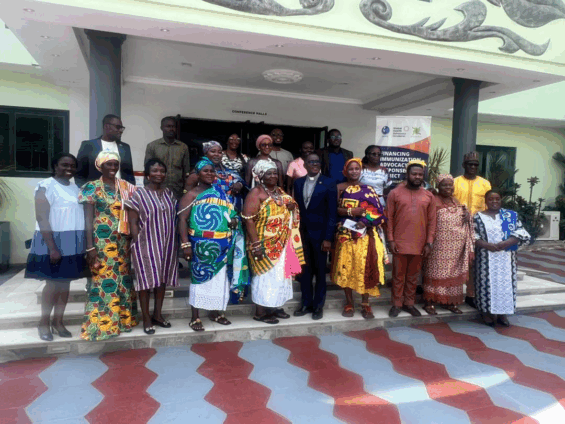
The call was made at a workshop organised by Hope for Future Generations (HFFG) in collaboration with the Global Health Advocacy Incubator (GHAI) and Gavi, the Vaccine Alliance.
Currently, Ghana’s immunisation drive is largely supported by donor funding, but this support is expected to cease by 2028.
HFFG Project Coordinator Sabina Morgan warned that the country risks setbacks in vaccine delivery if it fails to build local vaccine production capacity and strengthen its financing mechanisms.
She highlighted delays in the release of immunisation funds as a major threat, stressing the need for government to close gaps that undermine vaccine availability and the country’s ability to respond quickly during health emergencies.
“Timely and consistent financing for vaccines is not just a health imperative—it is a strategic investment that protects productivity and sustains economic growth,” she said.
GHAI Country Coordinator, Steven Atassige, also urged stronger citizen engagement and sustainable financing strategies in the 2026 national budget.
He commended government for improvements this year, noting that Ghana had already paid $24.6 million in co-financing for traditional vaccines before the end of the third quarter, a significant improvement from previous years.
“This is very encouraging. However, to sustain this progress, immunisation funding must be consistently prioritised in future budgets to prevent payment delays and avoid vaccine stockouts,” he added.
Representing the Ministry of Health, Principal Planner Kwaku Saffu-Mensah reaffirmed government’s commitment to sustaining immunisation programmes despite budgetary pressures and the recent withdrawal of support from the United States Agency for International Development (USAID).
He disclosed that the Ministry of Health, in collaboration with the Ministry of Finance, is exploring innovative financing measures, including public-private partnerships, to address the shortfall.
He further noted that the ministry has established a Resource Mobilisation Unit and an Intersectoral Collaboration Unit to improve efficiency and ensure resources are used for maximum impact.
Latest Stories
-
Conrad Z. Dumbah takes over as Director-General of Internal Audit Agency, bringing global financial leadership to Ghana’s public sector
1 minute -
After The Flood: Can Ghana prevent the next disaster?
13 minutes -
Flood waste to be recycled for farming, other uses – Local Government Minister
24 minutes -
Government will end tomato import dependence in four months – Eric Opoku
25 minutes -
Kukuom Traditional Council cracks down on sanitation offenders to curb littering and pollution
25 minutes -
Dementia in Ghana: Study finds 23.4% of adults over 40 at risk as experts call for national care policy
53 minutes -
Yaa Naa Mahama Abukari II, king who restored peace to Dagbon after 16-year dispute, dies
57 minutes -
Today’s Front pages: Monday, July 13, 2026
57 minutes -
When the waters came: A city shaken, a response begins
1 hour -
Sammi Awuku accuses NDC government of suppressing opposition dissent over EOCO arrest of Dennis Miracles Aboagye
1 hour -
Azamati, Rose Yeboah lead Ghana’s 40-member Commonwealth Games Team
1 hour -
Health experts warn Ghana’s floods are worsening chronic illnesses through disrupted healthcare
1 hour -
Floods leave a silent health crisis long after the waters recede, experts warn
1 hour -
Sam Neill, Jurassic Park star, dies at 78
1 hour -
Climate experts warn Ghana’s drainage infrastructure is struggling to cope with heavier rainfall
1 hour