

Audio By Carbonatix
The Ghana Water Company Limited (GWCL) has proposed a 280 per cent upward adjustment in water tariffs.
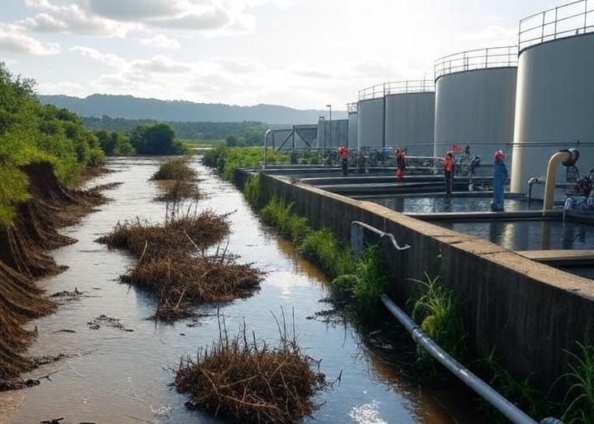
The company cited the devastating impact of illegal mining (galamsey) and pollution of water bodies as the main drivers behind the request.
The proposal, presented during the Public Utilities Regulatory Commission (PURC) stakeholder engagement for 2025, represents the highest tariff adjustment request among utility service providers, following the Electricity Company of Ghana’s (ECG) proposal.
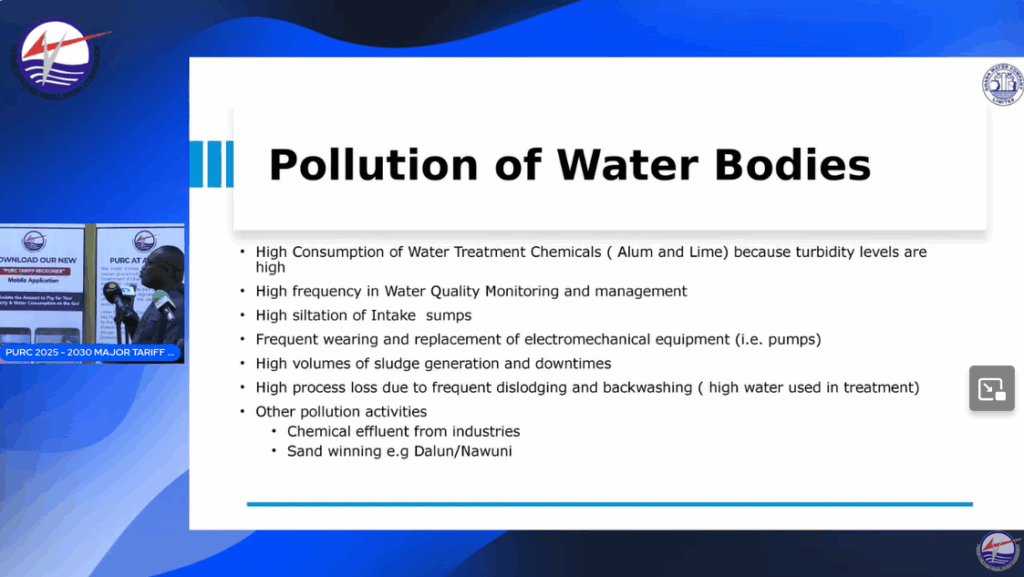
GWCL explained that rampant pollution of rivers and streams has significantly increased operational costs. The company now consumes unusually high volumes of treatment chemicals such as alum and lime because of rising turbidity.
Frequent siltation of intake sumps and high sludge generation are causing equipment damage and downtimes.
ECG's Chief Manager of Corporate Planning, Michael Klutse, also noted that industrial chemical effluents and sand winning activities in areas such as Dalun and Nawuni continue to worsen the situation.
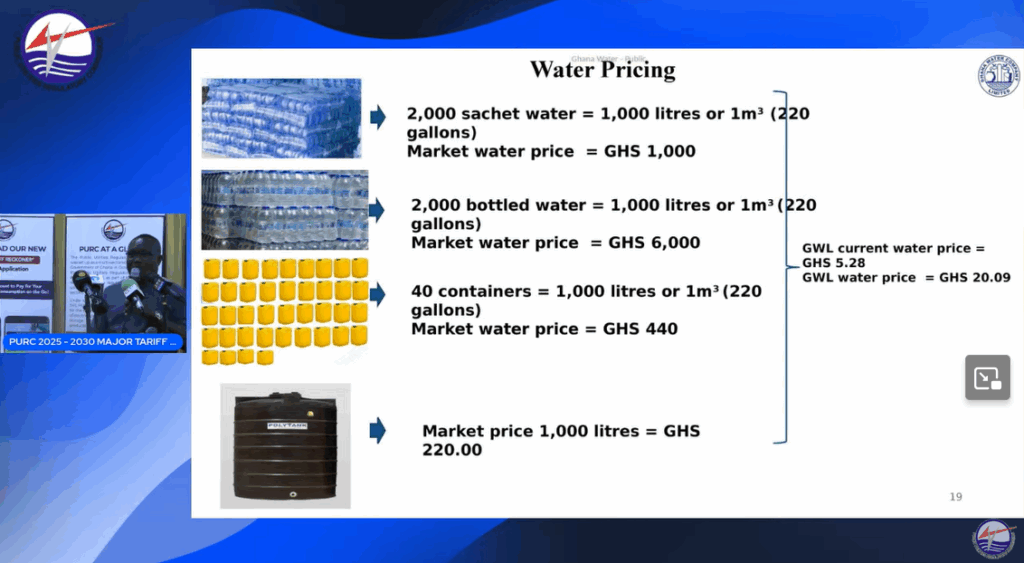
In a comparative analysis, GWCL highlighted that the market price of water far exceeds the current utility tariff.
A thousand litres of sachet water costs around GHS 1,000, while bottled water of the same quantity costs about GHS 6,000.
The same volume sold in containers costs roughly GHS 440. By contrast, GWCL’s current tariff is just GHS 5.28 per 1,000 litres, far below market prices.
The company argues that the proposed adjustment is necessary to sustain operations, ensure water quality, and replace worn-out electromechanical equipment.
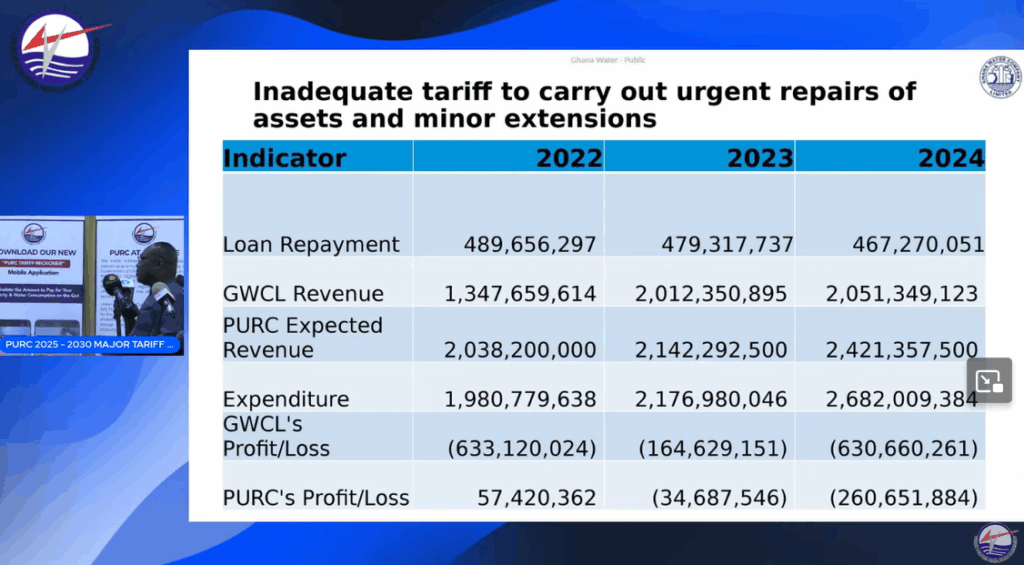
The PURC is expected to review GWCL’s proposal alongside other submissions before announcing approved tariff adjustments for the 2025–2030 major tariff period.
Already, ECG has submitted a proposal to the PURC for a steep 225% increase in its Distribution Service Charge (DSC1).
The power company says the huge rise is necessary to avert financial collapse and ensure a reliable power supply.
The proposed new charge would see the DSC1 rise from its current GHp19.0384/kWh to GHp61.8028/kWh for the period 2025–2029.
The company, which serves over 73% of Ghana’s population and 4.87 million customers, argues that the current tariff is unsustainable.
According to ECG, the DSC1 constitutes only 11% of the total electricity value chain cost, far below the global benchmark of 30-33%.
This deficit, coupled with the Ghana cedi’s depreciation of about 74% between 2022 and 2024, has reduced the real value of the company’s revenue by 45%.
To counter these challenges and address the public's persistent complaints about service quality, ECG has presented a detailed plan to invest the new revenue in critical infrastructure.
Latest Stories
-
NSMQ Final: St Augustine’s get GH¢110,000 motivational package from old boys
16 minutes -
AFCON 2027: Ghana has no business doing football if we can’t beat Somalia and The Gambia to qualify – George Afriyie
34 minutes -
Starlets to face Togo on October 10 in U-17 AFCON qualifying campaign
45 minutes -
FIFA U-20 World Cup: Princesses showed character-Head Coach
50 minutes -
PBee releases new single ‘Lose My Mind’ featuring SIICIE today
1 hour -
Many have been dismissed – Interior Minister exposes forged WASSCE results in security recruitment
1 hour -
NCA clears MTN, Telecel, Goal for next stage of 5G spectrum licensing
1 hour -
Father demands probe into death of Central University student in motorway crash
2 hours -
Transport Minister orders urgent action to tackle surge in port congestion
2 hours -
NPP national executive election: Here are the ballot positions
2 hours -
Court orders police to file disclosures in Labone robbery case
2 hours -
Central Regional Minister lauds Gomoa Central Assembly for effective utilisation of Common Fund
2 hours -
What must gov’ts do to make food systems drive job creation in Africa? – Fareeda Mustapha asks Rwanda’s Kagame
2 hours -
Gender Minister calls for equitable gender roles to support girls’ development
2 hours -
Prioritise rural businesses in Women’s Bank – NETRIGHT urges gov’t
2 hours