

Audio By Carbonatix
Ghana is taking a major step toward strengthening its business recovery framework with the introduction of the Corporate Insolvency and Restructuring Act (CIRA), a landmark law expected to protect vulnerable companies and promote fairer, more transparent business practices.
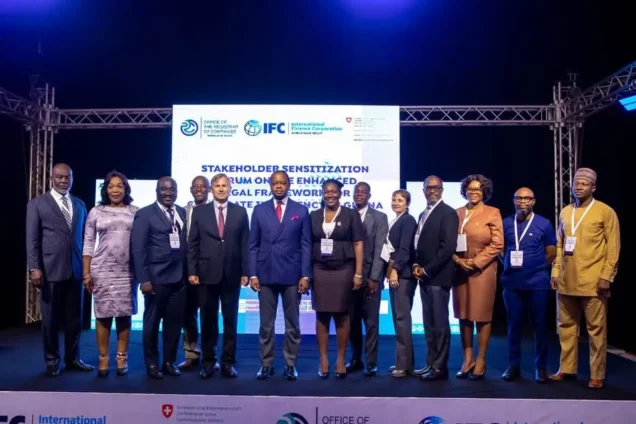
Maame Samma Peprah, acting Registrar of the Office of the Registrar of Companies (ORC), said the new law has the potential to breathe new life into struggling businesses by allowing them to restructure and recover instead of simply shutting down.
“Ghana is shifting to a more forward-thinking approach to insolvency,” Peprah said at a stakeholder forum in Accra on October 8, 2025. “CIRA will empower businesses to recover and operate on a level playing field, while encouraging responsible, transparent business conduct.”
The forum, aimed at sensitising stakeholders to the enhanced legal framework, brought together key figures including Dr Justice Srem-Sai, Deputy Attorney General and Deputy Minister of Justice, and Kyle Kelhofer, Senior Country Manager for Ghana and Liberia at the International Finance Corporation (IFC).
Dr Srem-Sai described the Act as a vital tool for restoring investor confidence and safeguarding local businesses. He said that rather than forcing companies into liquidation, the law provides structured pathways for restructuring, helping businesses stay afloat while protecting creditors.
“When companies face insolvency, the law steps in with mechanisms that allow for restructuring. This not only saves jobs but also reassures creditors that their investments won’t vanish,” Dr Srem-Sai noted.
A key feature of the new law is its ability to eliminate fraudulent middlemen, commonly referred to as goro boys, who previously exploited loopholes in the insolvency system. Under CIRA, only trained and certified professionals will be permitted to manage distressed companies, ensuring a more transparent and credible process.
“The law introduces professionalism into the insolvency space,” DDrSrem-Sai added. “No one can handle a collapsed business unless they’ve been properly trained and have demonstrated experience. This eliminates the unscrupulous individuals who have previously exploited the system.”
Kyle Kelhofer of the IFC praised the Act, saying it would enhance Ghana’s economic competitiveness and improve access to finance. He described the new framework as “modern and predictable,” offering businesses a much-needed second chance through orderly restructuring.
“The next critical step is making the law operational so that businesses and lenders can begin using it effectively,” Kelhofer said.
With CIRA now in force, Ghana’s approach to corporate insolvency is set to become a model for business recovery in the region, offering struggling companies a clear path to stability, growth, and renewed investor confidence.
Latest Stories
-
Power restoration fault suspected in Kumasi Central Market fire
4 hours -
The 7-foot giant of Ngleshie Amanfro: Seven-foot Ghanaian Ephraim Saawa dreams of joining the national basketball team
4 hours -
Government promises support for Kumasi Central Market fire victims
5 hours -
Vibes The Movie: Big Ghun’s Ghanaian film earns five nominations at 2026 REFFA
5 hours -
MamaCare CEO warns unresolved conflicts among health workers could undermine maternal and neonatal care
5 hours -
Health professionals urged to translate medical knowledge into practice to save mothers
6 hours -
Conflicts among care providers linked to maternal, neonatal deaths – Expert
7 hours -
GIS marks 10th TIME conference, champions improved teaching practices
7 hours -
BRICS Or Balance? What Ghana’s bid really means
8 hours -
GPRTU wants full TRAFFITECH-GH implementation to start in 2027
8 hours -
Mahama announces plans to import electric wheelchairs for PWDs
8 hours -
KGL U17 Colts 2026: Western beat Prempeh Elite Academy to set up final final with Greater Accra Region
8 hours -
Late Solanke strike salvages 10-man Spurs draw at Man United
9 hours -
Gender Ministry to monitor welfare of Nana Akua Addo’s children amid domestic violence case
9 hours -
Benedict Okyere Yeboah: Ghana’s football problem goes beyond sacking a coach
9 hours