

Audio By Carbonatix
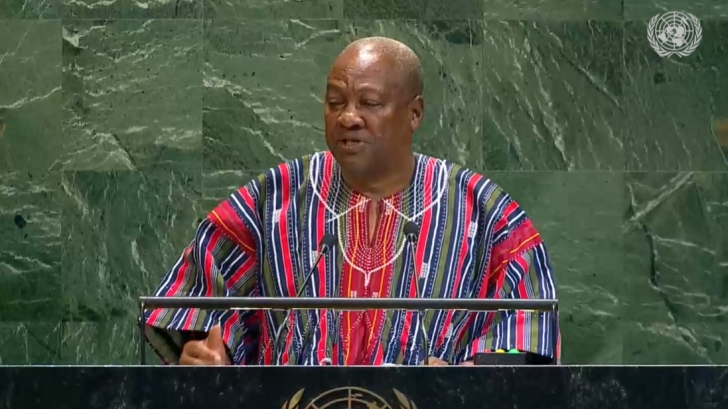
In his speech at the 80th Session of the UN General Assembly, Thursday, September 25, 2025, President Mahama of Ghana eloquently restated what we all now know as the central theme of the past two centuries: “The slave trade must be recognised as the greatest crime against humanity. More than twelve and a half million Africans were forcibly taken against their will and transported to create wealth for the powerful Western nations.”
President Mahama then made a demand for reparations, a declaration within the frame of the speech his predecessor, President Akuffo-Addo, had made at the UN in 2023: “We must demand reparations for the enslavement of our people and the colonisation of our land that resulted in the theft of natural resources, as well as the looting of artefacts and other items of cultural heritage that have yet to be returned in total. We recognise the value of our land and the value of our lives. As did our coloniser, as well as the governments that happily paid reparations to former slave owners as compensation for the loss of their “property”—that “property” for which compensation was paid referred to enslaved people who had been freed.”
The demand for reparations for colonisation writ large and the return of looted items must be carefully itemised in terms of time frame and the costs to specific groups. For instance, in Ghana, historians would carefully begin to demarcate the beginning of the extractive systems of the colonisers after the first encounters. The political scientists would determine to what extent certain groups were under the control of the colonisers; economists would calculate the scope of the costs of these transactional relationships. This demand is categorically separate and different from the demand for reparations for the slave trade.
The genuine effort to understand the Transatlantic Slave Trade for its system of brutality, depth of inhumanity, and to study its long-lasting effects is undermined by the uncritical view that Africans must also receive reparations. Let’s be clear: reparations are due to the victims of the evil trade, and these are the descendants of the enslaved (I would highlight people of African descent in Haiti, the United States, in Central and South America, the Caribbean Islands and all the lands where the enslaved suffered brutality and inhumanity). While the effect of the slave trade is diffuse because it is bolstered by the fake science of race and racial superiority, actual reparations for slavery are not due to the descendants of the people in Africa, in Ghana.
The history of the slavery in many ethnic groups in modern Ghana predates the arrival of the Europeans and accommodation of the exchange of ‘socially dead’ human beings as slaves was a cultural weakness, a fault within the social structure and cultural philosophy that was gravely exploited by the Christian English (British), the French, the Dutch, the Portuguese, the Danish, the Swedish. The history is clear on this: along the stretch of space called the Gold Coast, the Asante Kingdom, and the Fante confederacy in Anomabo, Cape Coast, and Elmina were complicit, however limited the involvement, in facilitating and supporting this trade with the European slave traders for more than 100 years. There are historical accounts of prisoners of war sold to the Europeans, sold into slavery by the Asante, and there are accounts of victims of war sold to the Europeans, sold into slavery by the Fante. The moral argument for reparations to Ghana for slavery is specious.
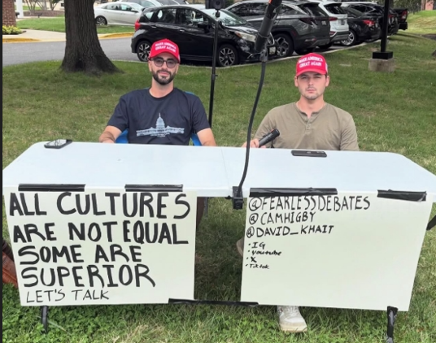
The Africans, the Asante and Fante, were, of course, not aware of the emergent pseudo-scientific ideas at the time (during the 18th and 19th centuries) about race that placed Africans at the bottom of the hierarchy of human types; perhaps, if they had known, the Kings and Chiefs of Asante and Fante would not have done what they did. Were the Africans aware of the magnitude of the brutality of the system of slavery practised by the Europeans? They did not. We do not need to be reminded here that the European systems of enslavement created racially subordinate unequal groups; a social system of oppression that survived in various dimensions in the South of the United States after the Civil War, in the form of lynchings, racially motivated killings of African Americans, discriminatory practices in voting, and a cultural celebration of a militarily defeated Confederacy that believed in the cultural subjugation of Africans (so-called ‘blacks’). The language of racial superiority is rife in the United States and in the world, and the primitive belief in human types and the rank-order of culture persists.
The idea to create a ‘Global Reparation Fund’ was the culmination of the Accra Reparation Conference in 2023, sponsored by the Akuffo-Addo government and the African Union. Two years after its creation, it is not clear how this fund in Africa would work to repair the damage of the slave trade and how it will go about identifying the descendants of the estimated 12 and a half million Africans who were victims. Reparatory justice for the victims of the evil slave trade is long overdue, as African Americans have been demanding since the failures of the Reconstruction era. And the Africans, the Asante and Fante, need atonement rituals during their annual festivals to acknowledge their own failures of judgment and will, to ease the long shadow of the “greatest crime against humanity.” Perhaps the Global Reparatory Fund can be used to create appropriate monuments in Ghana for the victims of the evil trade, as the Legacy Museum in Montgomery has done, to take on this necessary task of repairing the “greatest crime against humanity.”
Latest Stories
-
Ghana woos Australian investors into critical minerals
9 minutes -
Akufo-Addo’s former legal counsel Kow Essuman, writes to Finance Minister to demand his ex-gratia payment
15 minutes -
NSMQ Final: St Augustine’s get GH¢110,000 motivational package from old boys
33 minutes -
AFCON 2027: Ghana has no business doing football if we can’t beat Somalia and The Gambia to qualify – George Afriyie
51 minutes -
Starlets to face Togo on October 10 in U-17 AFCON qualifying campaign
1 hour -
FIFA U-20 World Cup: Princesses showed character-Head Coach
1 hour -
PBee releases new single ‘Lose My Mind’ featuring SIICIE today
2 hours -
Many have been dismissed – Interior Minister exposes forged WASSCE results in security recruitment
2 hours -
NCA clears MTN, Telecel, Goal for next stage of 5G spectrum licensing
2 hours -
Father demands probe into death of Central University student in motorway crash
2 hours -
Transport Minister orders urgent action to tackle surge in port congestion
2 hours -
NPP national executive election: Here are the ballot positions
2 hours -
Court orders police to file disclosures in Labone robbery case
2 hours -
Central Regional Minister lauds Gomoa Central Assembly for effective utilisation of Common Fund
2 hours -
What must gov’ts do to make food systems drive job creation in Africa? – Fareeda Mustapha asks Rwanda’s Kagame
2 hours