

Audio By Carbonatix
The recent wave of sexual harassment cases in Ghana’s education sector, from the KNUST senior high school scandal to the Labone SHS French teacher charged with indecent assault, has rekindled an uncomfortable but vital conversation.
A longstanding pattern of abuse sustained by silence, weak enforcement and societal denial. Our schools, which are supposed to be spaces of knowledge acquisition, are increasingly becoming unsafe for students, especially young girls.
This article argues that the persistence of sexual harassment and assault in Ghana’s education system reflects deep institutional and societal failures. It examines how abuse of power, societal denial and weak accountability continue to endanger young girls. It also calls for decisive reform to prioritise student safety and dignity across all levels of education.
Ghana’s Criminal and Other Offences Act 1960 (Act 29) criminalises sexual harassment and assault. Termed as ‘indecent assault’ in section 103, a person commits this offence if, without the consent of the other person, that person forcibly makes a sexual bodily contact with the other person, or sexually violates the body of the other person, in a manner not amounting to carnal or unnatural carnal knowledge.
Yet, enforcement within the educational institutions is weak. Schools tend to respond with transfers, suspensions, or inaction rather than legal action. They often protect the institution’s image over the student’s welfare. Thereby, allowing predators to re-emerge in new classrooms with fresh titles.
In a teacher-student relationship, consent cannot be genuine when one party wields academic and disciplinary authority over the other. It is an abuse of authority that undermines the very principles education should uphold, which are safety, trust and respect. Victims are dissuaded from reporting, are accused of misunderstanding the teacher’s conduct or warned about running someone’s career.
The courts themselves reflect how fragile justice can be. In the case of Republic v. John Kenneth Arthur (2023), a chemistry teacher at Aggrey Memorial SHS was charged with indecent assault after a student alleged that he had fondled her breasts and inserted his fingers into her private part. The court acquitted and discharged him, ruling that the evidence was “circumstantially so weak and based on hearsay”.
While the legal reasoning aligned with the principle of proving guilt beyond a reasonable doubt, it revealed the systemic difficulty victims face. That sexual harassment often escapes punishment, not necessarily because the offence did not occur, but because victims are unable to meet the burden of proof threshold, which is expected in a system built around physical evidence and witnesses that rarely exist.
The failure, however, extends beyond the law. It is social. It is in how society speaks or refuses to speak about harassment. It is in how victims are blamed and questioned on their behaviour and moral standards. Public reactions to the KNUST SHS incident, for instance, included jokes and attempts to rationalise harassment. This casualness stems from years of downplaying misconduct as ‘temptation’ or ‘manly weakness’.
Perhaps, the most striking reflection of this culture came from the President of the Ghana National Association of Teachers, Rev. Isaac Owusu, who said on national television, that “if you [male teachers] want to do the 'thing', we have beautiful female teachers who are single”.
This remark shows the misunderstanding surrounding sexual harassment. It reduces a criminal issue to misplaced attraction. It suggests that sexual misconduct results from unmet desires rather than a violation of ethics, boundaries and human dignity. When a national education leader treats sexual harassment as a matter of choice of partner, and even with that, suggesting female co-workers as new objects for male sexual attention and satisfaction, it trivialises the suffering of victims and reinforces impunity among perpetrators.
The way forward requires structural change and accountability. The Ghana Education Service must set up independent complaint desks in every school, backed by counsellors and legal support for victims. Teachers found guilty of harassment should face permanent disqualification from the profession. Schools should mainstream education on consent, gender respect and professional ethics to prevent abuse before it occurs. As long as school systems lack independent reporting mechanisms and transparent sanctions, misconduct will continue unchecked.
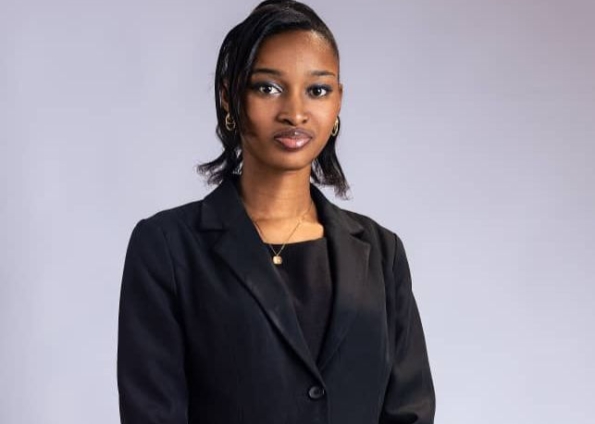
The author, Emmanuella Kwatia, is an LLB Candidate, UPSA Law School. She can be reached via email: ellakwatia233@gmail.com
Latest Stories
-
Oil prices extend losses as fears of Middle East supply disruptions ease
2 hours -
12th FASU Games: University of Ghana win 23 medals in Cairo
2 hours -
GPCC president says National Cathedral idea is not dead
4 hours -
Part-human part-mouse brain developed in science breakthrough
4 hours -
COVID funds audit has glaring gaps, Parliament may go back for forensic probe – Dafeamekpor
4 hours -
Dafeamekpor flags gaps in audit of GH¢775m approved for Transport, Local Gov’t and Education ministries
4 hours -
Jordan Ayew, Yirenkyi feature as Ghanaian trio exit Carabao Cup
5 hours -
Parliament has been bludgeoned from behind – Dafeamekpor demands forensic audit on Covid spending
5 hours -
Snapchat ‘willing to implement’ daily time limits for teens, boss tells BBC
5 hours -
Microsoft says AI rival Anthropic could have ‘disastrous impact’ on humanity
5 hours -
De la Fuente extends Spain contract to 2032
6 hours -
Raphinha hat trick in Barcelona’s 7-goal rout of Santander
6 hours -
Carabao Cup fourth-round draw: Liverpool to host Chelsea as Arsenal drawn away to League Two Fleetwood
6 hours -
Mbappe, Vini and Konate obscure Real’s Ceuta message
6 hours -
Reggie Rockstone named Unichem Ghana brand ambassador
6 hours