

Audio By Carbonatix
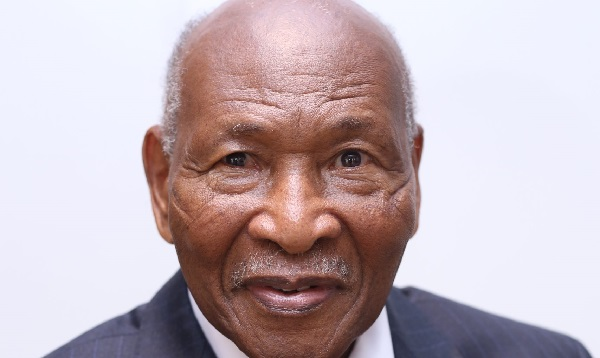
Former president of the Ghana Bar Association, Sam Okudzeto, has criticised the Office of the Special Prosecutor (OSP), describing its very foundation as a dangerous experiment that was never grounded in necessity.
Speaking on Joy News’ PM Express on December 8, he questioned the logic, purpose and effectiveness of the institution, insisting that Ghana did not need a parallel prosecutorial body in the first place.
Okudzeto said the big question Ghanaians must confront is simple: why was the OSP created and what has it achieved?
“Sometimes someone says it is not what you think you are entitled to, it is what you can give, but it should be. So you’re asking me this question. The question is simply this: why was the institution set up? Has it achieved its purpose?”
When host Evans Mensah pressed him for an answer, he did not hesitate.
“I don’t think so. That is exactly the issue that I’m trying to drive here. He hasn’t achieved his purpose because the corruption is still on. I see it every day. Everywhere you turn in every institution, you see it openly.
"They don’t even… they are not even afraid. People are no longer even afraid. You go there, and they demand money from you to do this for you, when you already paid.”
To him, this alone shows the OSP has failed to justify its existence. And when asked whether scrapping it is the solution, he stood firm.
“Yeah, I’m saying that that institution is not achieving its purpose. Because look at it this way, you have an attorney general’s department. Is that not correct? Yes, in that department, they have a civil section, and then they have a prosecutorial section. This one is headed by the Director of Public Prosecutions. The other one is headed by the Solicitor General.”
He said the core functions already exist. “Now, what is the director of all prosecution supposed to do? He’s supposed to prosecute criminal offences which will include corruption, corruption-related.
"There is nothing which makes corruption anymore different from any other crime. We have direct or to public prosecution, that is his job. Why do you create another institution to do the same job? That’s the whole issue.”
Evans Mensah reminded him that the OSP was created as a special-purpose vehicle. But Okudzeto rejected the model Ghana adopted.
“You see, in other places where you have this special prosecutor, it means that there is a specific problem that has arisen, and you want that person to go there and solve that problem.
"You don’t create the whole institution for it, as we have done; if you like, you can go and search and ask where and where we have that kind of institution?”
He referenced international and local prosecutorial traditions to make his point.
“You see, the Prime Minister of England, you know what his position was before? You know how he got the knighthood? He was the director of public prosecution. Justice D. F. Anang, who became the Speaker of Parliament, was also Director of Public Prosecutions.”
For Okudzeto, the solution aligns with those calling for a return to the Attorney-General’s mandate.
“That is what should have been done. But I suspect that somebody thought that corruption was too rampant in the country, and, therefore, to create an institution for that purpose was a good idea.”
He warned that the OSP became centred on an individual rather than an institutional system.
“And then, of course, you appoint an individual. Don’t forget, it’s just an individual you’ve appointed. Then you are now trying to create an institution around that individual. What is the background of that? That’s the question I ask. What is his background of that individual?”
He added that the problem is not solved by simply naming someone to a new office. “If I am going to try and select one of the top legal luminaries and say that I’m giving him that just a different thing.”
His final warning was blunt and stark. “I’m just saying that when you don’t train people to do a job, you think that creating institutions, particularly when they think it’s just an individual, it’s dangerous….It’s very, very dangerous.”
Latest Stories
-
Air Pollution in Accra is not random; it is a burden carried by the poor
33 seconds -
GEXIM Bank grows loan portfolio to GH¢1.56bn as equity hits GH¢2.1bn in 2025 – SIGA Report
19 minutes -
Ghana Shippers’ Authority grows surplus by 272% as assets reach GH¢979.92m
26 minutes -
Government designates 13 blocked-out areas for small-scale mining to curb illegal mining
27 minutes -
Number of advertised jobs increased significantly in half-year 2026 – BoG
28 minutes -
GAFM demands retraction from GTEC over ‘unrecognised universities’ listing
34 minutes -
Saltpond residents renew call for return of Founders’ Day celebrations
37 minutes -
Consumer spending records mixed performance in 5-months of 2026, but manufacturing activities improved – BoG
40 minutes -
Passenger arrivals at airport increased by 3.7% in 5 months of 2026
45 minutes -
NSMQ 2026: St. Augustine’s College reach third straight semifinal after seeing off Aburi Girls, St. John’s Grammar
48 minutes -
Re: Mahama backs crackdown on airport workers begging visitors for tips
49 minutes -
Photos: 6th Akwasidae Festival in the U celebrates Asante heritage and Ghanaian unity
50 minutes -
Ghana, India explore armwrestling collaboration as Golden Arms prepare for World Armwrestling Championship in New Delhi
58 minutes -
What Is Wrong With Us: We sign off on value for money before we have even defined it
1 hour -
2026 U20 WWC: Black Princesses final squad for tournament revealed
1 hour