

Audio By Carbonatix
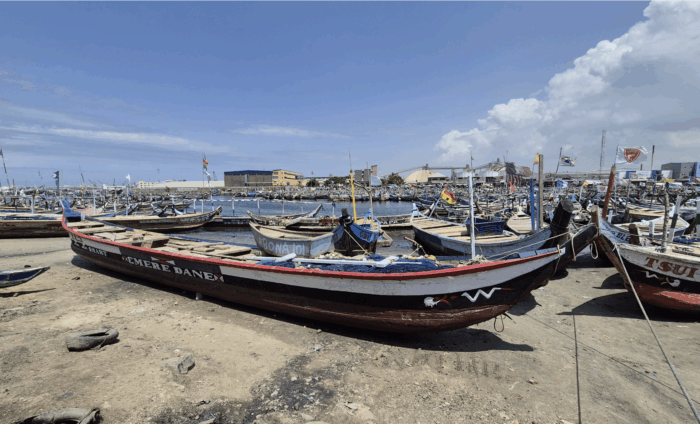
The annual July fishing closure season, intended to rebuild Ghana’s dwindling fish stocks, has intensified economic hardship for fishing households, particularly women and children, a new Sankofa research study reveals.
The Creating Synergies between Indigenous Practices and Scientific Knowledge (ISIPSK), popularly known as the Sankofa research project, was led by the University of St Andrews in Scotland in collaboration with Ghana’s Fisheries Commission and other stakeholders.
The study, conducted across eight major fishing communities in Ghana’s four coastal regions, found that although the closed season provides fisherfolk time to rest and repair gear, the suspension of fishing-related activities results in a complete halt to income for many households.
About 70 per cent of fisherfolk surveyed indicated that fishing was their sole source of livelihood, leaving families vulnerable during the one-month closure, the report said.
The economic strain, the study noted, translated into reduced household food security, increased school absenteeism among children, and rising social vices in coastal communities.
Women were found to bear a disproportionate burden during the period, as they assumed responsibility for household upkeep when male fishers were unable to provide income or fish for food.
“During the closed season, women carry the weight of feeding the family and managing household expenses,” the report stated, describing the impact as “distinctly gendered.”
The research further revealed that some youth migrated to illegal small-scale mining areas during the closure in search of income, a shift that worsened environmental degradation and exposed them to health risks.
The report called for livelihood diversification programmes and social protection measures to mitigate the impacts of the closed season on vulnerable fishing households.
The study showed that 82 per cent of fisherfolk agreed urgent action was needed to halt the decline in fish stocks, yet only 26 per cent believed a July closure was effective in rebuilding depleted resources.
Small pelagic species such as sardinella and anchovies – popularly referred to as “the people’s fish” – were reported to be on the brink of collapse, threatening food security for millions of Ghanaians.
Fishermen interviewed argued that July did not align with their indigenous ecological knowledge, which recognises May and June as a natural fishing lull due to rough sea conditions.
“The closed season is not a bad idea, but it would be better in June instead of July to align with the natural period the sea closes itself,” a fisher in the Greater Accra Region was quoted as saying.
The report noted that implementing the closure in July compelled some fishers to intensify fishing efforts before and after the period, sometimes resorting to illegal methods to recover lost income.
Researchers recommended that future fisheries management policies integrate indigenous knowledge with scientific data to improve compliance and sustainability.
Latest Stories
-
Power restoration fault suspected in Kumasi Central Market fire
4 hours -
The 7-foot giant of Ngleshie Amanfro: Seven-foot Ghanaian Ephraim Saawa dreams of joining the national basketball team
5 hours -
Government promises support for Kumasi Central Market fire victims
5 hours -
Vibes The Movie: Big Ghun’s Ghanaian film earns five nominations at 2026 REFFA
5 hours -
MamaCare CEO warns unresolved conflicts among health workers could undermine maternal and neonatal care
6 hours -
Health professionals urged to translate medical knowledge into practice to save mothers
6 hours -
Conflicts among care providers linked to maternal, neonatal deaths – Expert
7 hours -
GIS marks 10th TIME conference, champions improved teaching practices
7 hours -
BRICS Or Balance? What Ghana’s bid really means
8 hours -
GPRTU wants full TRAFFITECH-GH implementation to start in 2027
8 hours -
How 10-mile walks for basic education birthed a 50-year legal career for Justice Korbieh
8 hours -
Mahama announces plans to import electric wheelchairs for PWDs
8 hours -
KGL U17 Colts 2026: Western beat Prempeh Elite Academy to set up final final with Greater Accra Region
9 hours -
Late Solanke strike salvages 10-man Spurs draw at Man United
9 hours -
Gender Ministry to monitor welfare of Nana Akua Addo’s children amid domestic violence case
9 hours