

Audio By Carbonatix
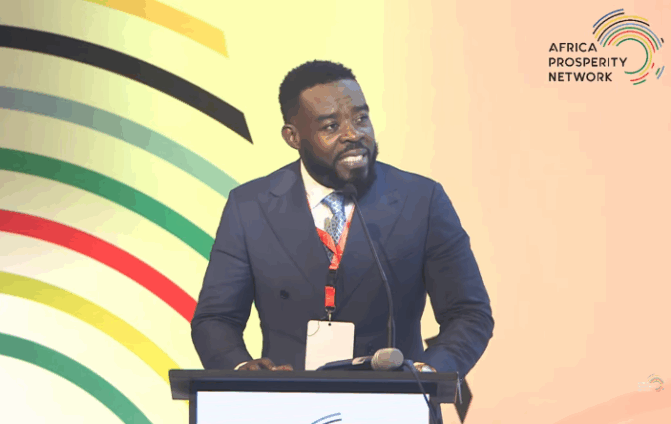
The Founding President of the RNAQ Foundation, Richard Nii Armah Quaye, has called on African businesses to treat youth investment as a core economic strategy rather than an act of corporate social responsibility.
Speaking at the Africa Prosperity Dialogue on Thursday, February 5, Mr Quaye argued that Africa’s long-term growth and business sustainability depend on deliberately integrating young people into productive economic systems.
“Investing in youth is not a social responsibility. It is the most strategic investment a business can make for long-term survival and growth,” he said.
He rejected the notion that Africa lacks talent, insisting the real challenge lies in the disconnect between education and employment.
According to him, the current system does not adequately prepare young people for the demands of modern economies.
“Africa does not have a talent shortage. Africa has a talent pipeline problem. The education-to-employment system, as it currently stands, is broken,” Mr Quaye stated.
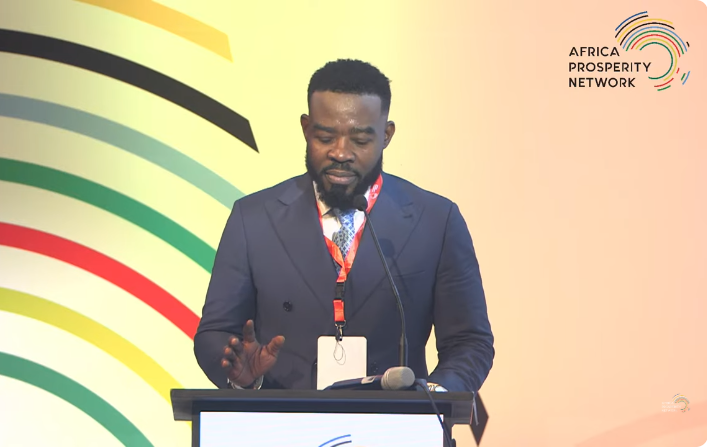
He noted that the operationalisation of the African Continental Free Trade Area (AfCFTA) has shifted the skills required across the continent, with economies now demanding practical competencies beyond academic certificates.
“Our economies now demand skills beyond certificates. We need digital literacy, cross-cultural competence, logistics and supply chain expertise, and export compliance skills,” he said, stressing that businesses can no longer remain passive observers in education reform.
Mr Quaye proposed what he described as a “new covenant” between industry and Africa’s youth, centred on structured pathways that link learning directly to employment opportunities.
He also called for closer collaboration between industry and educational institutions, urging businesses to co-design curricula with universities and training centres to ensure learning outcomes align with commercial and industrial needs.
According to him, aligning education with real economic outcomes is essential if Africa is to fully harness its youthful population and translate demographic potential into sustained prosperity.
Latest Stories
-
Government has improved sanitation in one-and-a-half years — Salaga South MP
3 hours -
Nkwanta North Assembly to appear before Parliament over DACF sanitation spending
3 hours -
Mourinho prints out ‘red card’ incidents after Real lose derby
3 hours -
Atletico beat 10-man Real in feisty Madrid derby
4 hours -
Twelve Tribes of Israel Ghana to mark 40 years with anniversary celebration
4 hours -
GPL 2026/27: Hearts held by Bechem as Kotoko, Samartex share spoils
4 hours -
My Story (Kwaku Antwi-Boasiako)
5 hours -
We expect growth rate to re-accelerate in second-half of 2026 – IC Insights
5 hours -
The ungodliness and unrighteousness underlying the National Cathedral mess!
5 hours -
T-bills auction: Government fails to achieve target; yield on 91-day-bill remains unchanged
5 hours -
It’s Ghana’s shame to denigrate Nkrumah when the whole world honours him as African of the Century – Asiedu Nketiah
5 hours -
No other nationalist can compare to Nkrumah – Asiedu Nketiah
5 hours -
Collateral Registry: Foreign banks accounted for GH¢19.9bn of secured credit in quarter 2, 2026
5 hours -
This government should expect scrutiny – Asiedu Nketiah
6 hours -
Two-year-old girl dies in domestic fire at Cantonments
6 hours