

Audio By Carbonatix
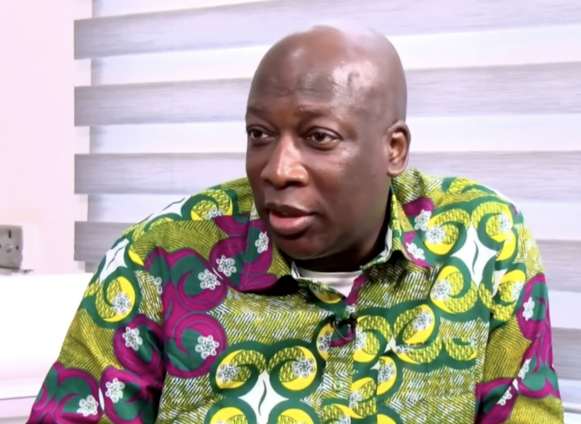
Business executive and former Unilever Executive Vice President Yaw Nsarkoh says the difference between order and chaos in society lies not in genetics but in consequences.
Speaking on Joy News’ PM Express on Tuesday, he used the example of taxi drivers in Accra and Singapore to illustrate his point.
“I often point out to people that we talk about chaos in our societies. Why is it that when you take the same people, take the taxi drivers of Accra, put them all on a ship, and ship them to Singapore, give them cars, and suddenly, they all obey the law.”
“Why? Because there are cameras. There’s a consequence. If you break the law, they know what the law is. It is communicated in ways that everybody understands, so they are not genetically disorderly.”
For him, the issue is the environment created by leadership and institutions.
“If you create a permissive environment in which there is impunity, then what happens?”
He cited everyday examples of what he describes as normalised lawlessness.
“I spoke about it yesterday, a pastor. I’m going to Kumasi. I know how long it is. Somebody says that he’s having an all-night service, and then he blocks the road for six hours, and there’s no impunity. There’s just total impunity.”
He questioned the absence of consequences.
“What was the consequence? You are the media people. You tell me it’s just gone. So next time another person does it, we do the same.”
He extended the argument to property rights and weak enforcement.
“Somebody is building a house. It gets broken down. You’re looking for somebody even to report it to.”
He recounted raising such concerns with a senior government official.
“You do as I have done before, to a very senior person in government at the time, says to me, this is a real problem. It’s happening everywhere. It even happened to my sister. That’s the end of the matter.”
Even the courts, he suggested, do not offer a timely remedy, stressing, “You take it to court. It stays there for seven years.”
For Mr Nsarkoh, these are not isolated incidents but structural failures. “So these are the fundamental issues, and we need bipartisan consensus.”
He argued that without political agreement on core national principles, reform will remain elusive.
“So my last point in terms of solution is that we cannot continue to run the Santa Claus democracy, with this over monetisation, with the political vehicles that are called political parties that are no longer truly accountable to the people of Ghana, these are elite enterprises now.”
Latest Stories
-
Ghana woos Australian investors into critical minerals
11 minutes -
Akufo-Addo’s former legal counsel Kow Essuman, writes to Finance Minister to demand his ex-gratia payment
17 minutes -
NSMQ Final: St Augustine’s get GH¢110,000 motivational package from old boys
35 minutes -
AFCON 2027: Ghana has no business doing football if we can’t beat Somalia and The Gambia to qualify – George Afriyie
53 minutes -
Starlets to face Togo on October 10 in U-17 AFCON qualifying campaign
1 hour -
FIFA U-20 World Cup: Princesses showed character-Head Coach
1 hour -
PBee releases new single ‘Lose My Mind’ featuring SIICIE today
2 hours -
Many have been dismissed – Interior Minister exposes forged WASSCE results in security recruitment
2 hours -
NCA clears MTN, Telecel, Goal for next stage of 5G spectrum licensing
2 hours -
Father demands probe into death of Central University student in motorway crash
2 hours -
Transport Minister orders urgent action to tackle surge in port congestion
2 hours -
NPP national executive election: Here are the ballot positions
2 hours -
Court orders police to file disclosures in Labone robbery case
2 hours -
Central Regional Minister lauds Gomoa Central Assembly for effective utilisation of Common Fund
2 hours -
What must gov’ts do to make food systems drive job creation in Africa? – Fareeda Mustapha asks Rwanda’s Kagame
2 hours