

Audio By Carbonatix
President John Dramani Mahama has placed science, technology, and innovation at the centre of Ghana’s development, urging scholars at home and abroad to prioritise research, enterprise, and intellectual leadership.
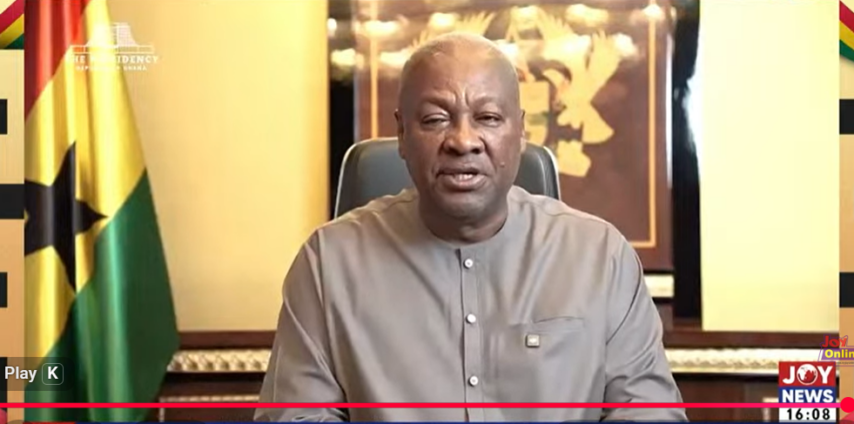
Speaking via webinar on Friday, March 6, at a Ghana Studies Association event themed Ghana in Uncertain Times, Mahama said the country’s competitiveness this century hinges on transforming ideas into businesses and research into revenue.
“Ghana's competitiveness this century hinges on turning ideas into enterprise, research into revenue, and innovation,” he said.
“Let us build a Ghana where our universities are centres of innovation, not just instruction.”
The President outlined a sweeping agenda to boost investment in STEM education, technical universities, and industry-academia partnerships, building on measures he announced in his 2026 State of the Nation Address to Parliament on February 27.
During that address, Mahama unveiled plans to establish three new technical universities to bridge skills gaps, tackle youth unemployment, and serve as hubs for innovation and industrial collaboration.
According to Africa Education Watch, only 2% of deprived basic schools in Ghana have functioning ICT labs, compared with 8% in better-endowed schools — a gap that limits access to STEM pathways for children in rural and underserved communities.
On the funding side, the government has already allocated resources to digital and technological initiatives.
Ghana’s 2026 National Budget provided GH¢70 million for Digital Youth Hubs and GH¢100 million for the One Million CODERS initiative, reflecting a deliberate effort to build a future-ready workforce capable of competing in global digital markets.
The Ghana STEM Network, a coalition of over 200 stakeholders, has long advocated for a national STEM Education Strategy with long-term goals spanning 5 to 20 years.
The network has also called for the creation of science museums, education parks, and maker spaces across all 16 regions of Ghana, developed in partnership with the private sector.
He urged scholars to commit to “intellectual sovereignty”, where Ghana not only consumes knowledge but produces it, leads research, and shapes global thought.
“Let us commit to intellectual sovereignty, in which Ghana produces knowledge, leads research, and shapes global thought,” he added, signalling a push to redefine the country’s intellectual identity as part of its broader development agenda.
Latest Stories
-
Pragya and tipper truck head-on collision claims teacher’s life at Asante Mampong
3 minutes -
10 illegal miners remanded into prison custody for mining under ECG high-tension poles
25 minutes -
House of Chiefs urges Ghanaian workers to commit to environmental protection
47 minutes -
OSP saga: A legal analysis demonstrating that A-G authorization was long granted
58 minutes -
Fifth unit at Akosombo goes live as grid recovery nears final stages
1 hour -
WAJESHA condemns SA xenophobic attacks, warns of growing public and mental health crisis
1 hour -
The human face of digital finance and its hidden cost
1 hour -
PRESEC-Legon 2020 NSMQ star Benjamin Nketsiah wins award for breast cancer detection project
1 hour -
Banksy confirms he’s behind statue in central London
1 hour -
Capital access takes centre stage at 3rd women in business dialogue in Kumasi
2 hours -
Dr Zanetor Agyeman-Rawlings elected 2nd Deputy President of Pan African Parliament in South Africa
2 hours -
Atwima Nwabiagya, GAYO sign MoU to cut reliance on Oti landfill
2 hours -
Aboakyer Festival reflects unity, heritage and enduring leadership – MTN
2 hours -
Former GWL MD begins constituency tour ahead of Savannah NPP chairmanship race
2 hours -
YEA leadership engages Central Region staff, reaffirms commitment to youth empowerment and staff welfare
2 hours