

Audio By Carbonatix
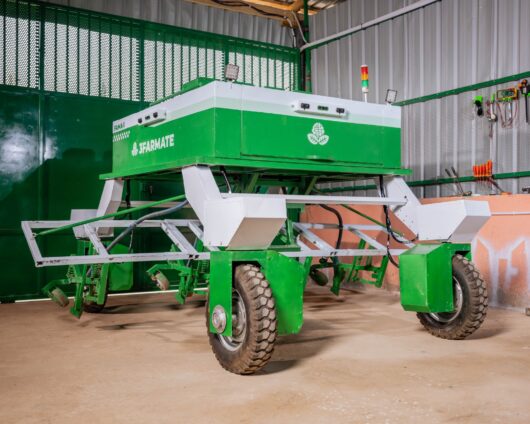
Ghanaian Agritech startup 3Farmate is poised to transform the country's agricultural sector with its innovative autonomous farming robot, FAMA, which promises to address longstanding challenges in farming while boosting productivity, reducing costs, and enhancing food security.
Founded in 2021 by Clinton Anani and Elijah Ocupualor, both Computer Engineering graduates from the Kwame Nkrumah University of Science and Technology (KNUST), 3Farmate began as a humble dorm-room project.
The founders constructed early prototypes using simple materials like wood, plastic, and metal pipes.
After four years of development and eight iterations, FAMA has evolved into a sophisticated, full-scale autonomous robot engineered, designed, and assembled entirely in Ghana.
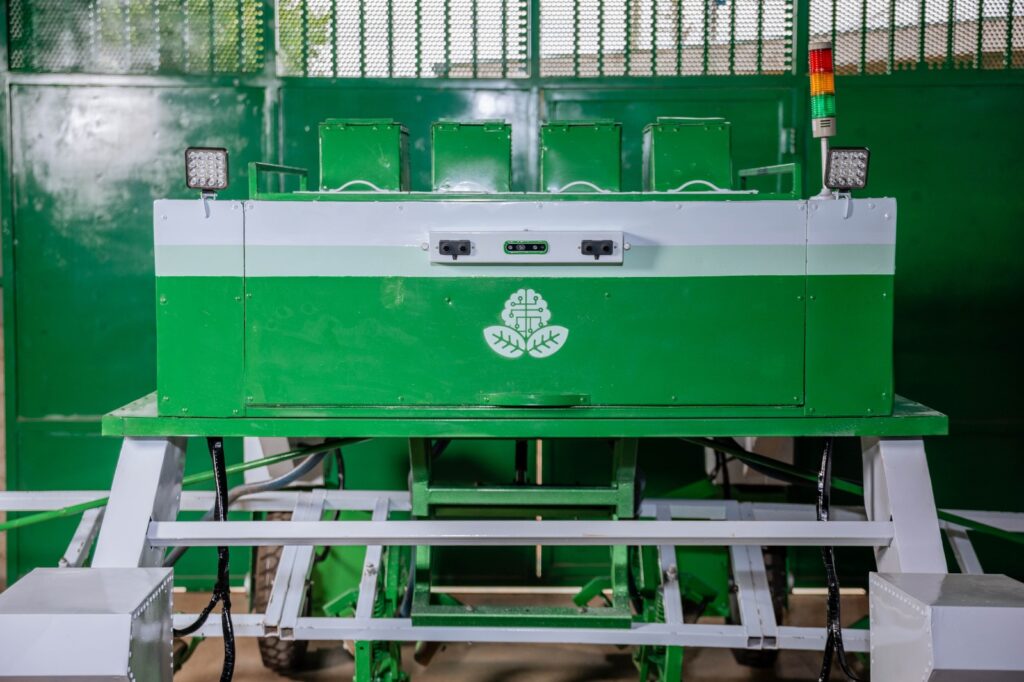
FAMA stands out for its AI-powered computer vision navigation, eliminating reliance on GPS systems that can falter in rural or variable terrains.
The solar-powered, battery-operated robot autonomously performs critical tasks: planting seeds with sub-85mm precision, applying fertilizer, weeding, and spraying crops.
The robot covers an impressive 27 to 35 acres per day and requires only one operator to supervise multiple units, making it highly scalable for large-scale operations.
The company has conducted over 60 test runs across more than 100 acres under real farm conditions, with positive results. 3Farmate is now in discussions with over 70 farmers as it prepares for commercial rollout.

Operating on a service-based model charging farmers per acre serviced FAMA targets up to 60% cost reduction compared to traditional manual or semi-mechanized planting and maintenance methods.
FAMA will automate labor-intensive tasks, reducing dependency on scarce manual workers, minimizing input waste through precise application, and enabling faster, more consistent operations even in challenging conditions.
A widespread adoption of FAMA could significantly increase overall agricultural output, strengthen food security amid a growing population, lower food production costs to make staples more affordable, and create a ripple effect in the Ghanaian local economy.
Latest Stories
-
Ghana Immigration Service intensifies education on exploitation, abuse and trafficking in Aflao
8 minutes -
Supreme Court should have no cap on number of judges – Anthony Forson Jnr
9 minutes -
African journalists urged to frame, tell African stories positively
9 minutes -
Poor treatment of public servants affects quality of service – Former Civil Service chief
9 minutes -
Suspects detained beyond 48 hours can sue police for redress – Justice Amoako Asante
10 minutes -
Convicted Bosnian Serb war criminal Mladić dies aged 84
14 minutes -
Ga Mantse boosts Sacred Crown Awards, names Princess Duncan as CEO to drive global push
14 minutes -
At least 12 dead, 54 injured as wildfires sweep through northern Algeria
15 minutes -
AI cannot replace lawyers and judges – Justice Asante
21 minutes -
PURC intervention restores power to Abofour-Dumasua community
22 minutes -
Africa needs 35% more to recruit health workers as 1 in 5 health dollars is wasted – WHO
23 minutes -
African Pension Funds shift more capital into private equity
25 minutes -
PURC engages Abofour-Dumasua residents over quality-of-service concerns amid faulty transformer
27 minutes -
AES, Ghanaian youth to confront debt, reparations at Accra forum
39 minutes -
Domestic Gold Purchase Programme: ‘US$1.7bn loss is largely a book issue’ — IEA
40 minutes