

Audio By Carbonatix
The President of Imperial College London, Prof. Hugh Brady, has called for deeper global collaboration in science, technology and innovation, stressing that the future of research depends on convergence science, international partnerships and stronger links with Africa’s growing innovation ecosystem.
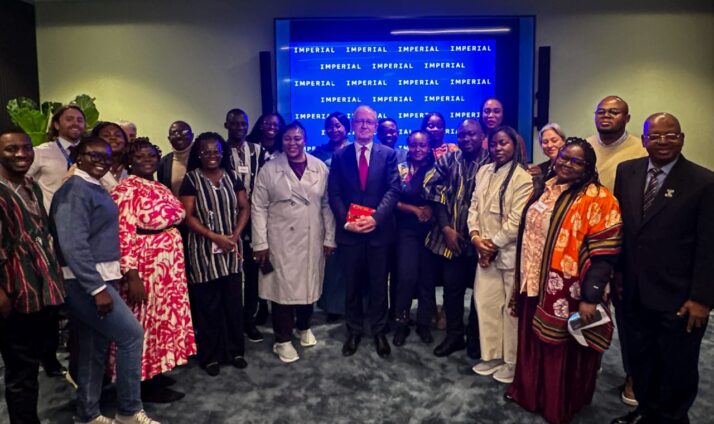
Speaking during an interaction with selected journalists from Ghana and Nigeria under a Science, Technology and Innovation (STI) Journalism Training Programme, Prof. Brady shared insights from his academic journey across leading institutions, including University College Dublin, Harvard Medical School and the University of Bristol, as well as his clinical training in Toronto.
He explained that his career in academic medicine was inspired by early exposure to clinical research integration during a 1981 student elective at Harvard, where he observed how scientific discoveries were rapidly translated from laboratories into clinical practice.
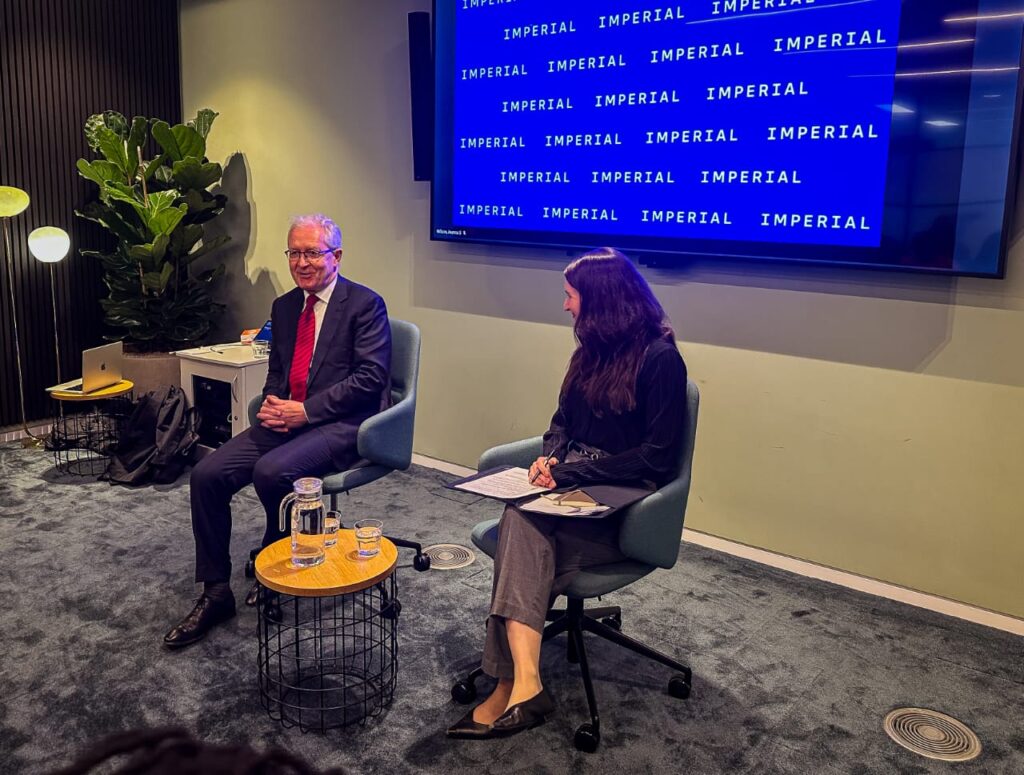
Prof. Brady noted that this “bench-to-bedside” model of innovation has shaped his leadership philosophy, which is now strongly embedded at Imperial College London.
He emphasised that Imperial’s identity is rooted in STEMB—science, technology, engineering, mathematics and business—arguing that this focus distinguishes the university from traditional comprehensive institutions.
“Imperial was founded to be useful,” he said, noting that the institution’s 1907 mission has evolved from serving industry to addressing global challenges such as climate change, health systems strengthening, energy transition and security.
He further highlighted Imperial’s strategic focus on “convergence science”, where multiple disciplines work together at scale to solve complex global problems that cannot be addressed in isolation.

Prof. Brady also underscored the importance of internationalisation, revealing that Imperial’s global hubs—including Accra, Singapore and San Francisco—are designed to strengthen two-way innovation flows between regions.
According to him, the West Africa hub has become particularly impactful, fostering collaboration in digital health, smart cities, enterprise education and research commercialisation.
He added that students from both Imperial and West Africa are increasingly thinking globally, with a strong entrepreneurial drive and a shared focus on translating research into economic impact.
Latest Stories
-
The 7-foot giant of Ngleshie Amanfro: Seven-foot Ghanaian Ephraim Saawa dreams of joining the national basketball team
56 seconds -
Government promises support for Kumasi Central Market fire victims
7 minutes -
Vibes The Movie: Big Ghun’s Ghanaian film earns five nominations at 2026 REFFA
38 minutes -
MamaCare CEO warns unresolved conflicts among health workers could undermine maternal and neonatal care
1 hour -
Health professionals urged to translate medical knowledge into practice to save mothers
1 hour -
Conflicts among care providers linked to maternal, neonatal deaths – Expert
3 hours -
GIS marks 10th TIME conference, champions improved teaching practices
3 hours -
BRICS Or Balance? What Ghana’s bid really means
3 hours -
GPRTU wants full TRAFFITECH-GH implementation to start in 2027
4 hours -
Mahama announces plans to import electric wheelchairs for PWDs
4 hours -
KGL U17 Colts 2026: Western beat Prempeh Elite Academy to set up final final with Greater Accra Region
4 hours -
Late Solanke strike salvages 10-man Spurs draw at Man United
4 hours -
Gender Ministry to monitor welfare of Nana Akua Addo’s children amid domestic violence case
4 hours -
Benedict Okyere Yeboah: Ghana’s football problem goes beyond sacking a coach
4 hours -
GPL 2026/27: Darkwah Wiafe’s winner sees All Blacks beat Kotoko
4 hours