

Audio By Carbonatix
As global economic uncertainties deepen and traditional aid flows face increasing strain, Africa is being forced to confront a familiar but urgent question: how does the continent build true financial resilience in a world that is rapidly turning inward?
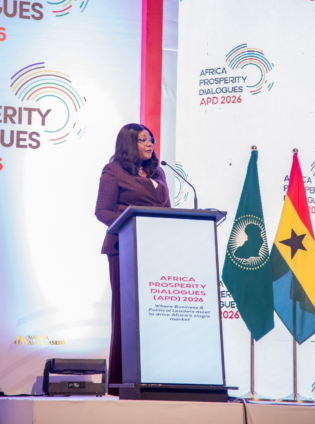
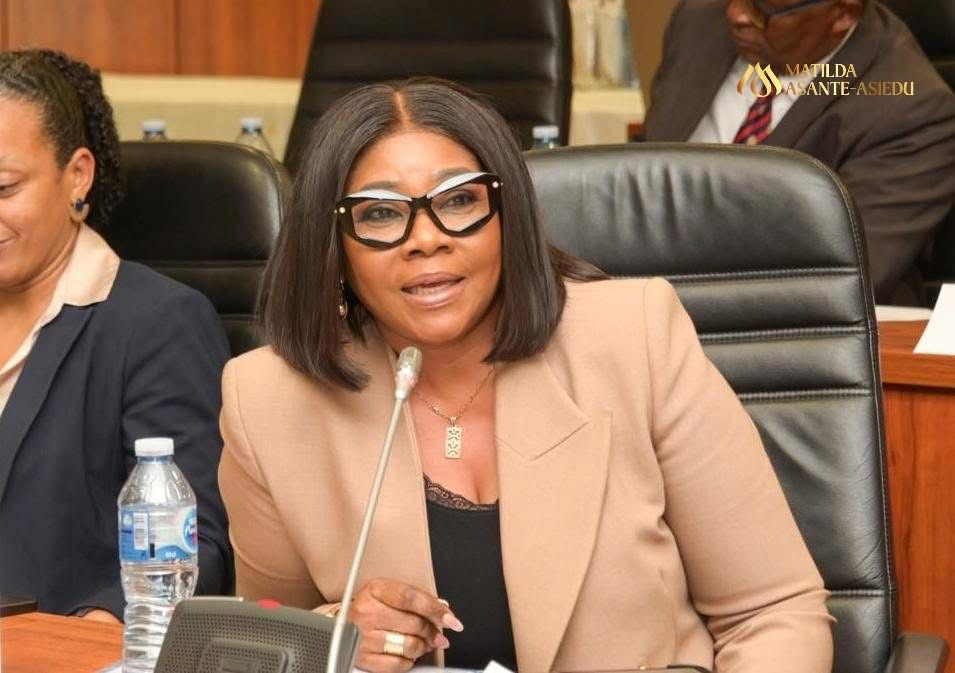
For Matilda Asante-Asiedu, Second Deputy Governor of the Central Bank of Ghana, the answer is neither external nor abstract. It is structural. And more importantly, internal.
“Just like human beings, resilience starts from within. So for Africa to build resilience, Africa will have to look inward.”
Her argument challenges one of the most persistent narratives about the continent, that Africa’s progress is largely dependent on external capital. Instead, she presents a counterpoint grounded in data and structural reality: Africa is not lacking in resources; it is lacking in coordination.
Across the continent, financial assets already exist at scale. Pension funds, capital markets, remittances, and savings collectively exceed one trillion dollars. Yet, according to Asante-Asiedu, these resources remain largely under-leveraged for long-term development.
“The only problem is that it hasn’t been properly channeled into long-term investments.”
This misalignment, she suggests, is not due to scarcity, but fragmentation.
Africa currently operates about 29 stock and bond markets, each functioning largely within national boundaries. The result is a financial ecosystem where capital is present, but mobility is constrained.
“From Ghana, I cannot go and borrow from the stock market in Kenya. But if we had a proper structure, I could borrow from them… the Kenyan investment will get returns, and the Ghanaian economy will also grow.”
At its core, this is a call for a rethinking of Africa’s financial architecture, one that prioritizes integration over isolation. The inability of capital to move seamlessly across borders represents not just a missed opportunity, but a systemic inefficiency that limits the continent’s growth potential.
Her framing is particularly significant at a time when global capital is becoming more selective, and geopolitical tensions are reshaping financial flows. In such a landscape, reliance on external systems becomes increasingly precarious.
Instead, Asante-Asiedu points to a future where Africa builds resilience through intra-continental financial collaboration. A system where capital raised within the continent is deployed across it, driving mutual growth.
But achieving this, she acknowledges, goes beyond financial instruments.
“It requires a lot of political will, but also economic actors leading the conversation.”
That dual responsibility, between policymakers and market participants, highlights a deeper truth: financial integration in Africa is as much a governance challenge as it is an economic one.
Her perspective aligns with a broader shift in thinking across the continent, where the focus is gradually moving from dependency to self-determination. Yet, what distinguishes her stance is its practicality. This is not a rhetorical call for unity, it is a blueprint rooted in existing assets, waiting to be structured.
In redefining resilience as something that must be built from within, Matilda Asante-Asiedu is not merely responding to current economic pressures. She is articulating a long-term vision, one where Africa’s strength lies not in access to external aid, but in its ability to mobilize and optimize its own capital.
And in that vision, the question is no longer whether Africa has the resources to transform its financial future.
It is whether it is ready to structure them.
Latest Stories
-
Bright Ofori writes: Who should hold Africa’s at least two permanent seats on a reformed UN Security council?
6 minutes -
BoG set to announce new policy rate amid Middle East pressures
11 minutes -
Alan Kyerematen warns Ghana’s youthful population could become economic burden without jobs
13 minutes -
Fund Accra-Kumasi Expressway with private capital, not state funds – Alan Kyerematen
17 minutes -
Climate finance bureaucracy hurting vulnerable countries – Sierra Leone Minority Leader
27 minutes -
Ghana–Yorkshire Trade & Investment Summit brings enterprise, culture and community together in Bradford
31 minutes -
ECOWAS must move beyond climate talk to concrete action – Sierra Leone Minority Leader
35 minutes -
ECOWAS must adopt common disaster-preparedness laws – Sierra Leone Minority Leader
38 minutes -
Augustine Boakye: the talent Ghanaians are waiting to see
1 hour -
KNUST launches Ghana Photonics and Optics Laboratory
2 hours -
Ghana’s reserve buffer shrinks to 4.2 months as BoG flags fresh external risks
2 hours -
Ghana, China reaffirm commitment to deepen strategic partnership
2 hours -
Mahama rings Nasdaq closing bell, declares Ghana ‘open for business’
2 hours -
Judge blocks Trump’s White House media ban, orders access to be restored
2 hours -
GNFS contains Dansoman, La fires and saves three adjoining buildings
2 hours