

Audio By Carbonatix
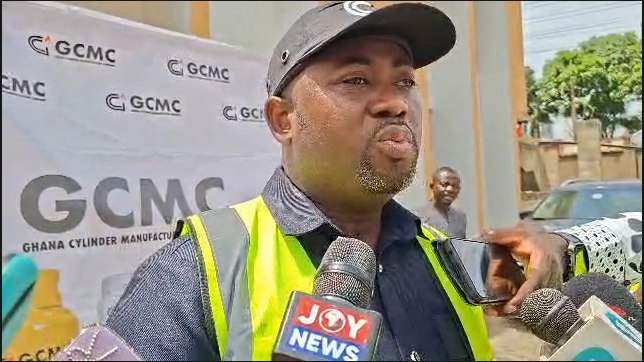
The Ghana Cylinder Manufacturing Company (GCMC) has reassured the public that its cylinder recirculation model remains fully active.
The response follows concerns about the programme's visibility and questions about the initiative's operation.
The Managing Director of GCMC, Abdul-Rahman Mankir, confirmed that the initiative is ongoing and continues to support efforts to improve the safety and management of domestic gas cylinders across the country.
Speaking in an interview with Joy News’ James Avedzi on Tuesday, April 21, he emphasised the company’s commitment to expanding the programme while encouraging greater public participation.
“We continue to encourage full participation, and also we plead with them if we can expand it to other regions,” he said. “Currently, it is being run in Accra, Kumasi, and Tema, and so if it is expanded to other regions, it is going to help a lot, especially in terms of keeping our cylinder.”
Mr. Mankir also revealed that plans were underway to deepen public engagement through collaboration with the National Petroleum Authority (NPA).
“Recirculation is still in existence, and in fact, very soon we are going to partner with NPA to do full-scale public education on cylinder recirculation,” he said.
He admitted that awareness levels remain low in some parts of the country, including sections of Accra, which has affected public understanding of the programme.
“One thing we've realised is that in some parts, even in Accra, some people don't even know about the CRM, and so when we do the full-scale public education, we are sure people are going to come on board,” he noted.
Mr. Mankir further highlighted safety concerns associated with cylinders collected under the programme, explaining that not all are fit for reuse after inspection and refurbishment.
“When you look at the cylinders that come here for the refurbishment, they usually come in batches,” he explained. “Sometimes they come, and about 30% of them that come are not good. They are not safe to go back into the market.”
He warned that without the recirculation model, many of these unsafe cylinders would remain in homes, posing potential dangers to users.
“If not because of the cylinder recirculation model, we will still have those cylinders sitting in people's homes, and that is jeopardising safety,” he said.
He stressed that the cylinder recirculation model remains a key national safety intervention that requires broader public awareness and stronger participation to achieve its full impact.
Latest Stories
-
President Mahama ends Resetting Ghana tour of Ahafo Region
2 hours -
African negotiators seek delivery of climate commitments at COP31
2 hours -
BoG develops AI rules for financial sector
2 hours -
‘Big Push’: Government assures contractors of prompt payments
2 hours -
Court fines miner for breaking into gold buying shop
2 hours -
Tarkwa court jails labourer for three years over GH¢123,000 theft
3 hours -
GAEC must retain nuclear scientists for Ghana’s nuclear ambitions – Minister
3 hours -
Man reportedly mistaken for game and shot by hunter dead in forest
3 hours -
19-year-old mason jailed 15 years for defiling seven-year-old pupil
3 hours -
Ghana’s banking sector assets rise 20.47% to GH¢500.2bn – BoG Governor
4 hours -
22 injured as Sprinter bus overturns at Sege after tyre burst
4 hours -
UN housing expert urges Ghana to strengthen Rent Control Department amid housing affordability concerns
4 hours -
Delta-BCI partnership reaches 166,000 people with breast cancer education
4 hours -
Power restoration fault suspected in Kumasi Central Market fire
9 hours -
The 7-foot giant of Ngleshie Amanfro: Seven-foot Ghanaian Ephraim Saawa dreams of joining the national basketball team
10 hours