

Audio By Carbonatix
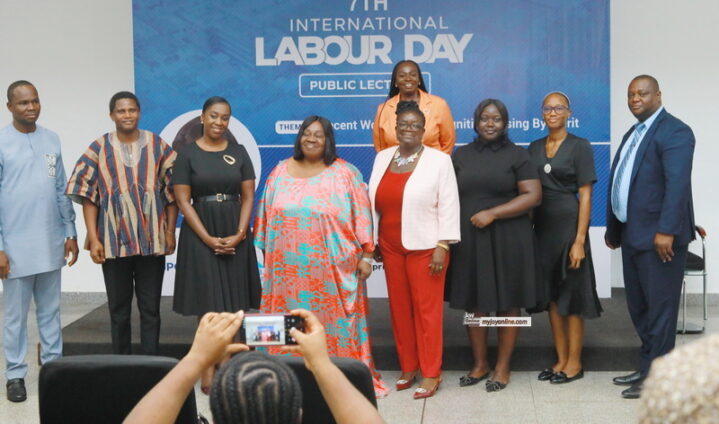
As part of activities marking International Labour Day on May 1, 2026, the University of Professional Studies, Accra (UPSA), Institute of Work, Employment and Society (IWES) hosted a high-level public lecture to advance harmonious labour practices in Ghana.
The lecture, themed “Decent Work, Real Recognition, and Merit-Based Advancement for All,” sought to sensitise workers, employers, and policymakers on building a labour environment grounded in fairness, dignity, and equitable opportunity across all sectors.

Delivering the keynote address, renowned local governance expert Dr Esther Ofei-Aboagye emphasised that the fair management of employer-employee relationships is non-negotiable for achieving a peaceful, productive, and stable work environment.
“When work is fair and rewarding, human capital strengthens, innovation grows, and individuals are motivated to give their best,” she said. “Such equitable opportunity builds national cohesion and makes progress a shared, attainable reality.
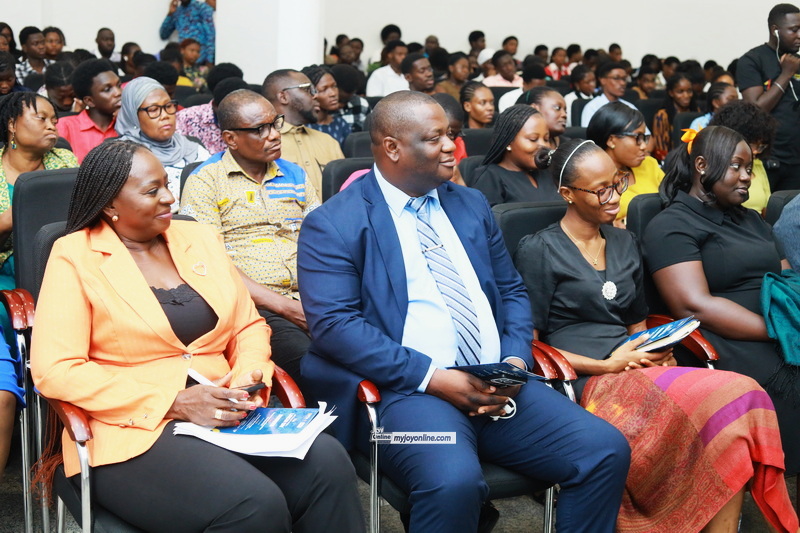
Ofei-Aboagye framed decent work as essential for national development, arguing that it directly strengthens productivity, competitiveness, and social cohesion. Yet she warned that the current labour landscape leaves many Ghanaians behind. Unemployment, underemployment, and precarious informal work remain widespread, often without contracts, social security, or basic workplace protections.
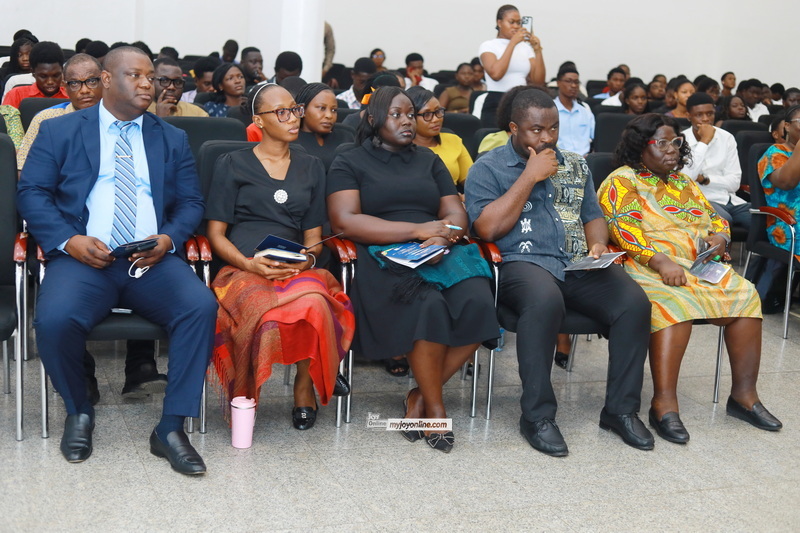
She expressed particular concern for young people who enter the labour market into insecure jobs without safeguards. Gender disparities, weak occupational safety systems, and workplace harassment continue to undermine dignity and fairness.
Citing the Labour Act, 2003 (Act 651), she outlined the minimum pillars of decent work: fair wages, safe workplaces, clear contracts, social protection, and freedom from harassment and discrimination.

She said recognition must be timely, equitable, and merit-based. Beyond legal protections, Dr Ofei-Aboagye argued that recognition is a core driver of workplace motivation and trust.
However, she cautioned that recognition becomes corrosive when it is based on proximity to authority, social ties, or mere visibility rather than actual contribution. “Distorted recognition undermines motivation and erodes institutional trust,” she noted. For Ghana to thrive, she explained, three elements must reinforce one another: decent work provides stability, real recognition fuels motivation, and merit ensures fair advancement.
At the centre of this framework is safeguarding; the active protection of people from harm, abuse, and exploitation in all work settings.
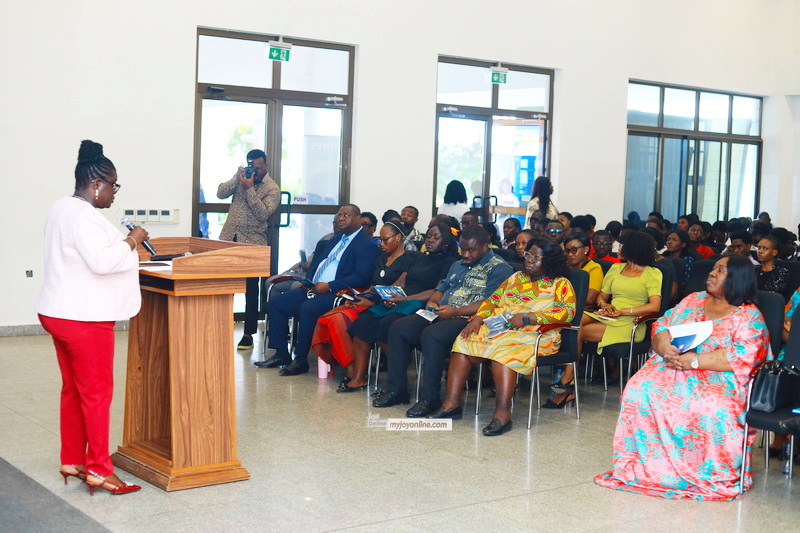
Setting the context for the lecture, acting Director of IWES, Dr Mrs. Erika Mamle Osae, said the event was designed to interrogate structural inequalities within Ghana’s labour market and to promote evidence-based dialogue on work, employment, and social protection. She stressed that academic research must inform policy and practice if Ghana is to achieve Sustainable Development Goal 8 on decent work and economic growth.

The lecture drew robust contributions from key stakeholders across academia, industry, and organised labour.
Professor Redeemer Krah of the University Teachers Association of Ghana (UPSA branch), underscored the role of universities in shaping the labour force.
He argued that tertiary institutions must produce graduates who are not only technically competent but also guided by ethical values and professional integrity. “The classroom must prepare students for both excellence and equity,” he said.

Dr Abena Asomaning, Head of the Sustainability and Strategic Impact Department at Ghana Export-Import Bank, on behalf of the bank’s CEO, Sylvester Adinam Mensah, called on institutions to build transparent systems that reward performance and support inclusive economic participation.
She noted that merit-based advancement is critical for retaining talent and driving competitiveness in both public and private sectors.
Mr Joshua Ansah, Secretary-General of the Trades Union Congress (TUC), demanded stronger protections for workers, especially those in the informal economy who make up over 80% of Ghana’s workforce.
He emphasised the urgent need for policies that uphold dignity, ensure workplace safety, and guarantee equitable compensation. “Decent work cannot be a slogan", he noted.
Participants agreed that Ghana’s economic transformation hinges on treating workers not as costs to be minimised, but as assets to be valued.

IWES pledged to continue convening dialogue and producing research to support evidence-based reforms. As International Labour Day approaches, the message from UPSA was clear: real recognition, merit-based advancement, and decent work for all are not luxuries — they are the foundation of a fair, productive, and cohesive Ghana.
Latest Stories
-
Analysis: Ghana’s yellow fever numbers reveal a gap between vaccination and protection
26 minutes -
Education Ministry welcomes suspension of teachers’ strike
38 minutes -
Vice Chancellors Ghana appeal to striking university administrators to resume work
53 minutes -
KNUST postpones 2026/2027 academic year reopening indefinitely amid GAUA strike
57 minutes -
Fire destroys mattress factory at Sokoban in Kumasi
1 hour -
ECOM-SMS Ghana launches ‘Agriculture Our Future Clubs’ to address threat of ageing farmer population
1 hour -
Nicholas Atsu Kumi
1 hour -
Cherif Sarr: Economic participation needs more pathways, not one prescribed route
1 hour -
Cyber Security Authority: Ghana led Operation Blackout, not FBI
1 hour -
GH¢800,000 goods destroyed as fire engulfs Kia Rhino truck on Apedwa-Kibi Road
2 hours -
Chief Justice calls for supportive workplaces to address mental health stigma
2 hours -
NVI CEO defends GH¢13m spending on training, workshops and conferences
2 hours -
Ghana targets first locally manufactured vaccine by 2027
2 hours -
Teachers suspend strike after reaching agreement with government
2 hours -
Council of State describes talks with striking teachers as fruitful
3 hours