

Audio By Carbonatix
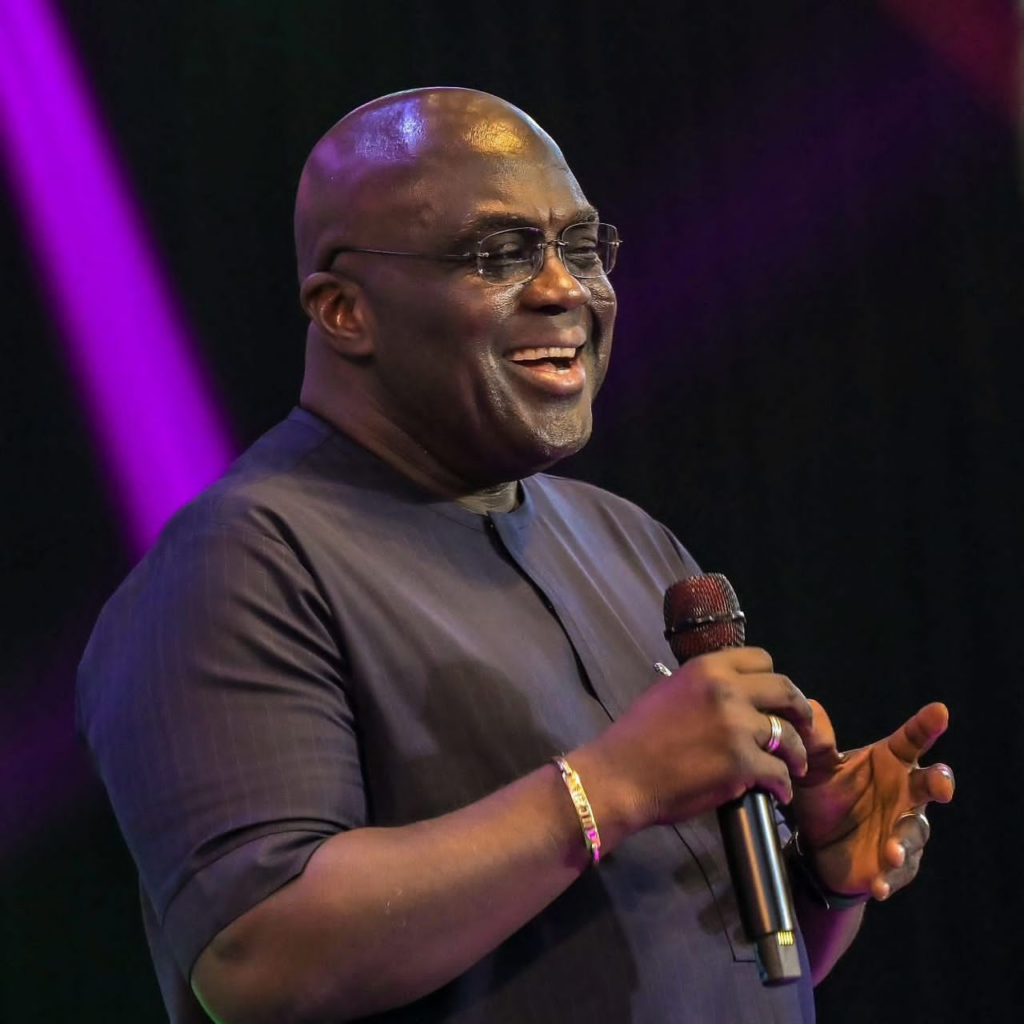
Today, we celebrate the life and service of Hon. Dr Samuel Julius Debrah—a man who turns 60 with a legacy that speaks louder than titles.
This is not merely a birthday salute; it is a tribute to a journey. A journey that began in a quiet village setting rose through discipline and learning and eventually climbed—step by step—into the nation’s highest places of responsibility.
Some people are born into influence. And then some people build influence—through character, work, and unwavering commitment. Dr Debrah belongs to the second category. His story is the kind that makes Ghanaians proud, because it reminds us that humility can lead to greatness, and consistency can lead to impact. Born April 24, 1966, in Akorabo near Suhum in the Eastern Region of Ghana, Dr Debrah’s early life carried the marks of deep family grounding and honest labour.
His father, James Debrah, worked in Cocoa services—first as a cocoa services officer and later retiring as the Regional Cocoa Officer for the Eastern Region.
His mother, Kate Opoku, was a trader who later ended up a transporter.
In that household, discipline was not theory—it was daily practice. Leadership was not something you claimed; it was something you demonstrated through responsibility. From childhood, Dr Debrah moved through schools that reflected structure and purpose—CRIG Primary A at Tafo, Wisdom Preparatory School at Koforidua, and later a return to Akorabo when his father retired in 1974.
He continued his education at Akorabo LA Primary A, then Amede Presby Middles School, proceeded to Mpraeso Secondary School for his O’ Level, and later to the illustrious Achimota School for his A’ Levels. Even at this stage, you could sense the hallmark of his life: he did not run away from effort.
He walked toward progress. But what truly makes Dr Debrah’s life inspiring is not only the path he followed; it is the depth of the path. He eventually progressed to the University of Ghana, where he earned his BA, MA, and PhD.
His academic journey—Archaeology and Sociology for his first degree; Archaeology and Heritage Studies with specialisation in Museums and Heritage for his Master's; and Heritage & Tourism Development in Kwahu for his Doctorate—shows a mind that does not only chase power, but pursues meaning.
He did not just learn to talk. He learned to understand systems, communities, history, culture, and the ways people build identity. And after so much education, he still returned to life’s practical disciplines. From Achimota, he went straight to Okaishie market to do business. That detail matters. It tells you that he did not remain an academic in theory—he embraced the real world.
He built a foundation through enterprise. He learned what it means to walk with the people, serve the people, and understand the everyday struggle that shapes the nation’s heart. By the time the year 2005 arrived, Dr Debrah had already lived multiple chapters—family responsibility, education, business, and the beginnings of political engagement. Yet, he still chose to advance. He went back to the UK for his undergraduate programme in 2005, a combined major in Archaeology & Sociology, further strengthening the intellectual backbone of his worldview.
Then came public service. Dr Debrah’s political journey is not the story of someone who woke up suddenly to ambition. It is a story of steadfast participation—a man who entered the political arena through party work, struggle, and dedication. He is known as a three-time parliamentary candidate for the NDC in Suhum—in 2000, 2004, and 2012. Three attempts are not a small thing. They reveal something essential: resilience. They reveal someone who remained present even when the results were not immediately theirs to celebrate.
Before his elevation, Dr Debrah served as the Eastern Regional Propaganda Secretary of the National Democratic Congress (NDC)—what we now call the Communication Officer. Those roles are not glamorous. They are demanding. They require clarity, discipline, and the ability to speak to people in a way that carries conviction. Yet, it was through that groundwork that he earned the trust that later placed him at the helm. In 2005, he became the party’s Eastern Regional Chairman, occupying that position until the NDC won the 2008 election—and after that victory, he was appointed CEO of the Ghana Tourism Board (now Ghana Tourism Authority).
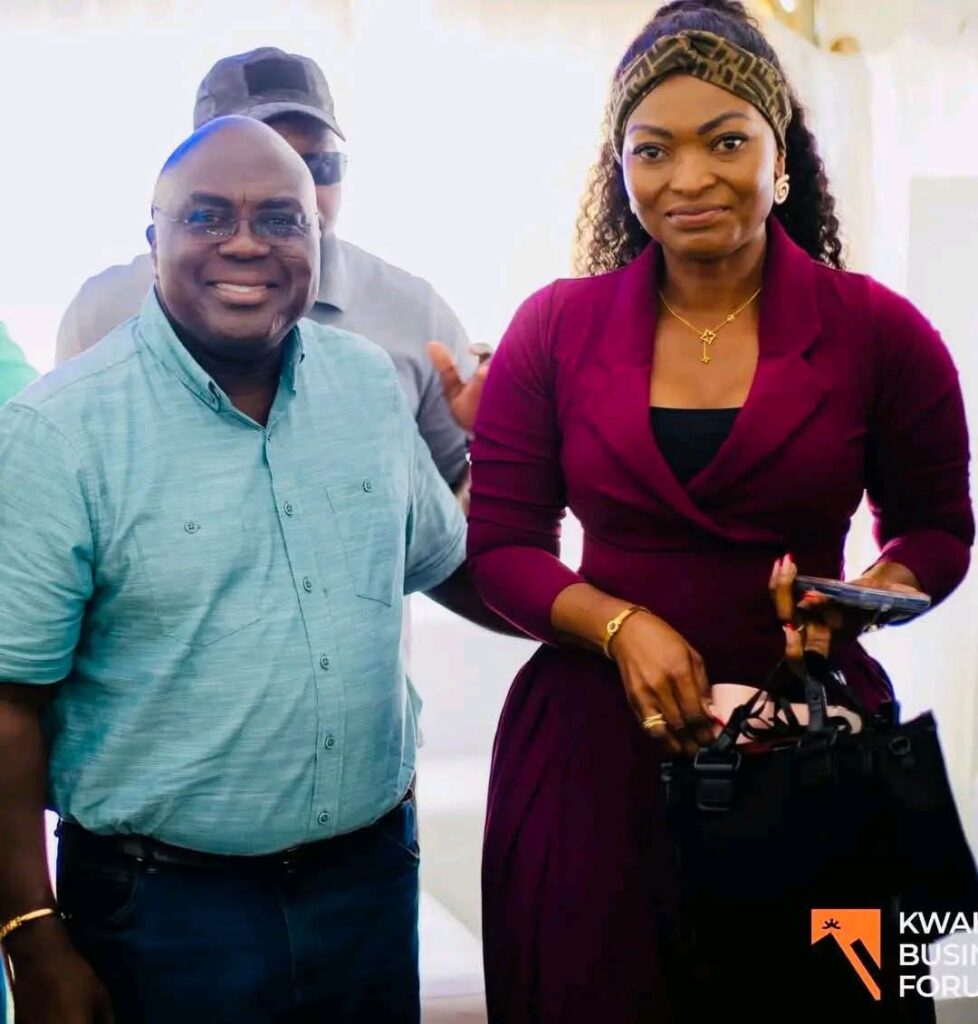
It is important to remember that during his tenure, the institution was elevated to an Authority. That is not a casual achievement. It reflects leadership, vision, and the ability to drive institutional transformation.
Dr Debrah’s competence was not confined to one region. His service took him into the national architecture of leadership. In February 2013, he was nominated by John Dramani Mahama to serve as Eastern Regional Minister. After about a month, he was moved to the Greater Accra as the Regional Minister, where he served for a year.
Those who watched his tenure noted his emphasis on local government involvement in nation-building—a philosophy built on the understanding that governance cannot be sustained without grassroots participation. He was not simply administering offices; he was championing belonging, inclusion, and the idea that citizens are not spectators in the nation’s development.
Then the responsibility grew even wider. Dr Debrah was appointed Minister in charge of Local Government and Rural Development—a move that experts described as ensuring massive involvement of local authorities and people in decision-making and nation-building. To be entrusted with that ministry is to be entrusted with the structure of development itself: the systems that determine how policies land on the ground and how communities benefit.
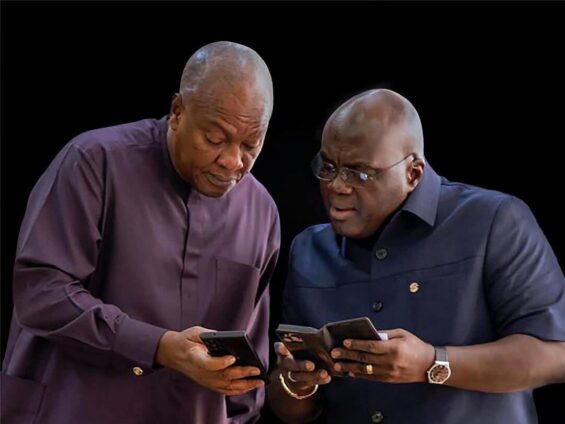
In February 2015, he was appointed Chief of Staff by President John Mahama, replacing Prosper Bani. Many saw this appointment as a reward for loyalty, competence, and a long record of service to the party and the President.
His appointment was received with joy by members of the NDC, not just because of what he would do, but because of who he was—steady, focused, and deeply committed. And when the time came again—in January 2025—after President Mahama was elected for his second term in 2024, Dr Julius Debrah was once more appointed Chief of Staff. That repetition is not ordinary. It is confirmation. It means the President did not only trust him once; he trusted him again, with renewed confidence. That is where Dr Debrah’s life becomes even more instructive: loyalty with substance. Because loyalty is often confused with empty agreement.
But with Dr Debrah, loyalty is described by those close to him as something deeper—loyalty that understands the mission, loyalty that defends principles, loyalty that speaks respectfully while still holding the line. Loyalty that is not performative, but practised. There is a reason people describe him as more than a colleague. They see him as a friend of the President, even a biological brother in spirit—and in Ghanaian politics, that kind of trust is a rare commodity.
When you find it, you protect it; when you benefit from it, you honour it; and when you see it lasting through the years, you recognise it as character. Today, as Dr Debrah celebrates sixty years, we also celebrate the man behind the uniform of service: a husband to Victoria Debrah and a father of four children.
The nation may know him for offices and decisions, but his family life reminds us of another truth—that a leader is shaped first at home, where integrity is tested quietly long before it is tested publicly. Dr Debrah hails from Kwahu-Obomeng in the Eastern Region. Yet his work has echoed far beyond Kwahu, because his values travel. His education strengthens his reasoning.
His business background adds practicality. His political experience brings maturity. And his service record—spanning regional roles, tourism authority, ministerial leadership, and chief-of-staff responsibilities—demonstrates a consistent pattern: he shows up, he delivers, and he earns trust.
As we speak about him today, we must also acknowledge what many believe about his future. Some see him as a potential flagbearer of the NDC. Others see him as one day leading the country as President of Ghana. These are not mere speculations about ambition—they are predictions based on track record. A person who has managed ministries, led authorities, coordinated party responsibilities, and supported a President through critical periods has already proven leadership capacity.
For any nation that values competence and loyalty, Dr Debrah’s profile fits the requirements. So today, we celebrate not only a birthday, but a milestone that calls us to reflect on what Ghana can achieve with men and women who rise from humility into service.
Dr Debrah’s life is a blueprint: from village beginnings to the heart of the state; from steady education to institutional transformation; from grassroots political effort to national leadership. In this celebration, we also honour the spirit behind the man: a clear mind, a clinical finisher, a communicator with purpose, and a leader who understands that governance is not about noise—it is about outcomes. Dr Debrah has been described as a “BLACK STAR” of Ghanaian enterprise—not because he is loud, but because he is bright in the way he contributes. He does not chase headlines; he chases results.
Therefore, as we mark his 60th birthday today, April 24, 2026, we offer him words of respect and appreciation. We say: thank you for your years of service. Thank you for remaining loyal when loyalty mattered most. Thank you for carrying the weight of leadership with dignity. Thank you for representing Kwahu, the Eastern Region, and the NDC with seriousness. May your next chapter bring even greater impact. May your strength remain firm.
May your wisdom deepen. And may your work continue to inspire young Ghanaians who are still dreaming in humble places. Happy Birthday, Dr Julius Debrah—Chief of Staff, loyal friend of President John Dramani Mahama, and a gift to Ghana’s political journey.
Latest Stories
-
GRA blames system failure for delay in issuing receipt over passenger’s customs duty
7 minutes -
Livestream: Newsfile discusses World Cup visa scandal, beach demolitions, education strikes, BRICS bid
11 minutes -
NC-PTAs welcomes end of teachers’ strike, urges parents to prepare children for Monday
21 minutes -
Government procures over 2,000 transformers as Ghana’s electricity access hits 89.13% – Energy Minister
47 minutes -
UTAG-UG threatens strike on October 19 over unpaid allowance
56 minutes -
Let The Constitution direct Chieftaincy to deliver “All Development Is Local”
2 hours -
John Jinapor outlines renewable energy, nuclear power priorities for 2027
3 hours -
Ghana explores centre of excellence for hearing, communication and cochlear implant care
4 hours -
Schizophrenia-related disorders lead mental health cases recorded in Ghana
4 hours -
Dutch authorities enlist Ghana in hunt for fugitive drug lord Bolle Jos
4 hours -
Ghana housing finance conference adopts communiqué to improve affordable housing access
9 hours -
Special Initiatives Minister urges Wa Technical Institute to enrol more girls as EU-backed solar training lab opens
9 hours -
In the matter of my first year at the Bar
9 hours -
ActionAid Ghana calls for an end to child marriage, greater investment in girls’ rights
9 hours -
Newsfile to tackle World Cup visa scandal, beach demolitions, education strikes, BRICS bid
10 hours