

Audio By Carbonatix
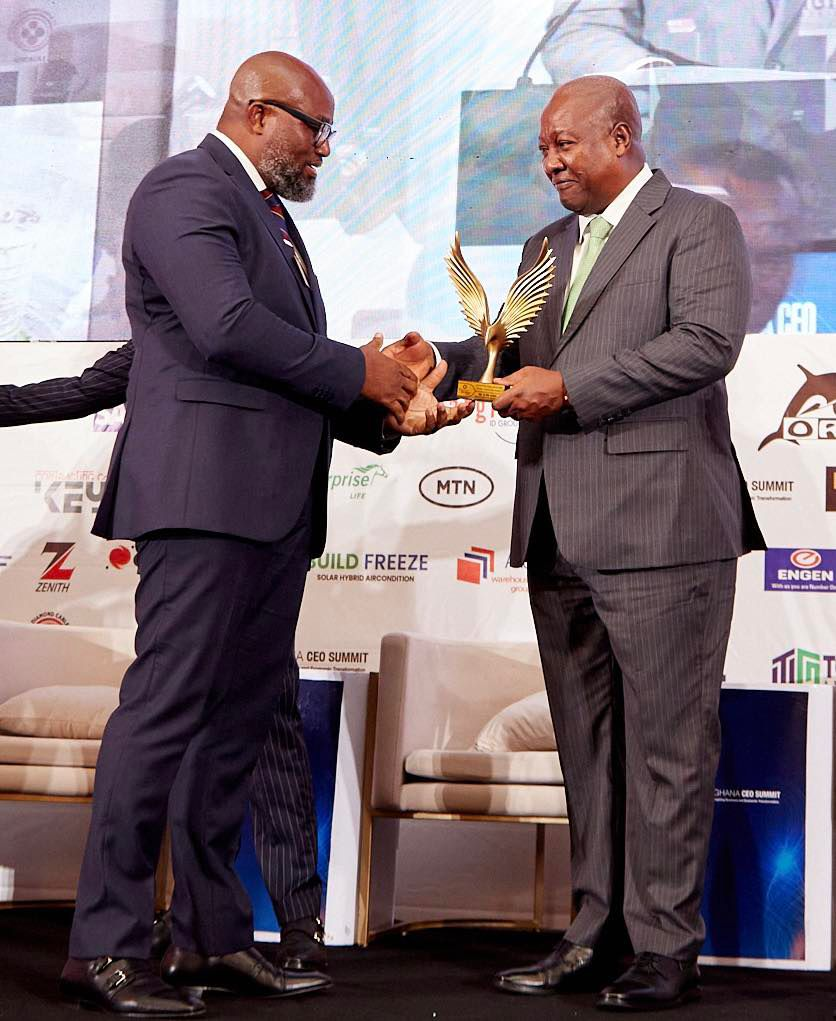
In resource-rich economies, recognition without reinforcement often yields symbolism without substance. The recent honour bestowed on Daniel McKorley at the Ghana CEO Summit offers a compelling entry point into Ghana’s broader industrialisation discourse.
This article interrogates the economic, institutional, and developmental implications of the rise of Electrochem Ghana Limited and argues that sustained and strategic backing from the Minerals Income Investment Fund (MIIF) is indispensable for unlocking the full potential of the salt industry.
Drawing on industrial policy theory, public–private partnership frameworks, and emerging evidence from Ghana’s extractive sector, the article concludes that aligning recognition with capital, policy consistency, and institutional collaboration is critical for achieving long-term national gains.
Introduction
Awards are comforting; balance sheets are convincing. Ghana’s industrial ambitions cannot thrive on ceremonial validation alone.
The recognition of Dr. McKorley by John Dramani Mahama signals confidence in local enterprise, yet it simultaneously exposes a deeper policy question: can Ghana translate symbolic endorsement into structural transformation?
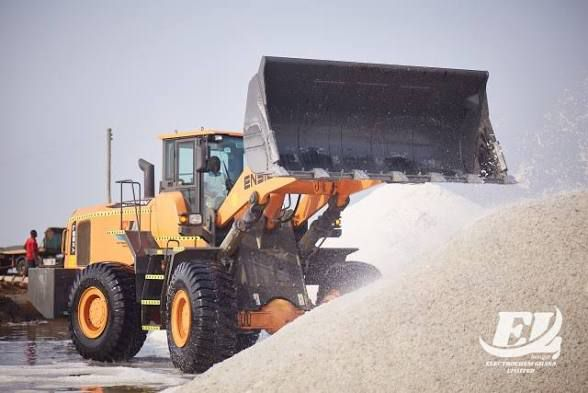
Electrochem’s trajectory reflects a broader shift toward indigenous-led industrialisation. However, the sustainability of this trajectory hinges on deliberate state support, particularly through institutions mandated to convert natural resource wealth into long-term economic value.
State–Private Synergy in Resource Industrialisation
Development literature consistently underscores the importance of strategic collaboration between the state and private sector in resource-based industrialisation.
The “developmental state” model, as observed in East Asia, emphasises targeted state support, coordinated investment, and long-term planning. In Ghana’s context, the Minerals Income Investment Fund represents a critical institutional mechanism designed to:
Maximise returns from mineral resources. Support indigenous companies. Catalyse value addition within extractive industries. However, the effectiveness of such institutions depends on their ability to move beyond passive investment toward active partnership.
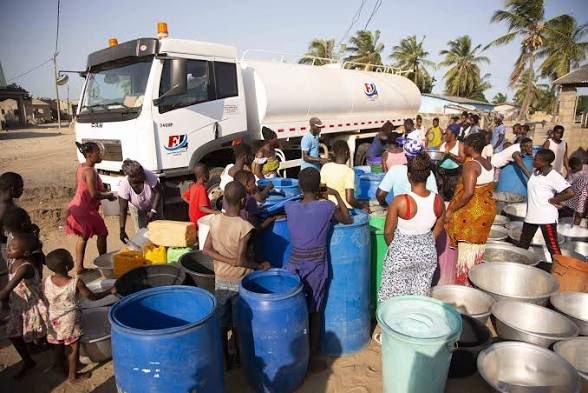
Electrochem’s Strategic Importance to Ghana’s Economy
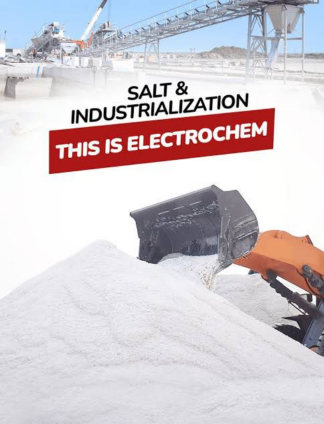
Ghana’s salt reserves, particularly within the Songor lagoon, have long been underutilised. Electrochem’s operations mark a significant departure, demonstrating the feasibility of large-scale production.
Salt is not merely a commodity; it is an industrial input with applications across: Chemical manufacturing. Food processing. Pharmaceuticals.
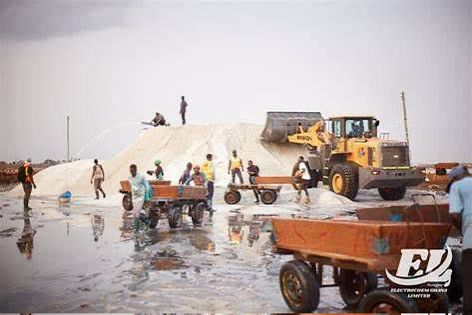
Thus, scaling salt production has multiplier effects across multiple sectors. Electrochem’s operations generate both direct and indirect employment, contributing to: Rural economic development. Expansion of local enterprise ecosystems. Reduction in regional inequalities.
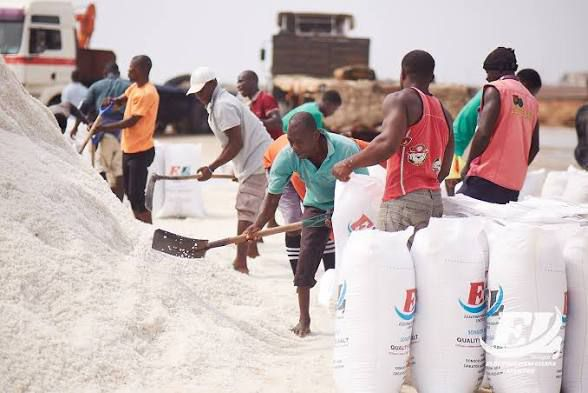
Empirical evidence from resource-based economies indicates that such multiplier effects are critical for inclusive growth. With production targets projected toward 7,000 metric tons, Electrochem is positioned to: Enhance export revenues. Reduce import dependency. Generate dividends for the state through MIIF participation
Yet, these outcomes remain contingent on sustained investment and operational scale.
Corporate Social Responsibility as Developmental Leverage
Corporate social responsibility (CSR) is increasingly recognised as a strategic asset in extractive industries, particularly within socially sensitive environments. Electrochem’s CSR initiatives illustrate this principle:
Community Infrastructure
Investments in roads, schools, and local facilities improve living standards and facilitate economic activity. Such interventions align with findings from development studies that infrastructure investment enhances productivity and social welfare.
Livelihood Restoration and Inclusion
By supporting alternative livelihoods and empowering women and youth, Electrochem mitigates the displacement effects often associated with large-scale resource extraction. This approach reflects best practices in inclusive development.
Environmental Management
Operating within an ecologically sensitive zone, Electrochem’s adherence to environmental standards and resource management practices is essential. Sustainable extraction not only preserves biodiversity but also ensures long-term operational viability.
Social Stability
Stakeholder engagement and conflict mitigation efforts reduce operational risks and foster trust—an often overlooked but critical component of successful industrial projects. Collectively, these CSR activities strengthen Electrochem’s case for enhanced state support, demonstrating both capacity and responsibility.
The Case for Enhanced MIIF Support
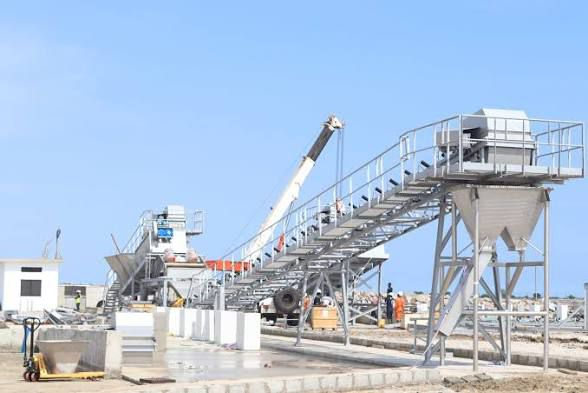
Industrial-scale salt production requires substantial capital investment in: Processing infrastructure. Logistics and transport networks. Technological upgrades.
The Minerals Income Investment Fund is uniquely positioned to provide patient capital aligned with long-term national objectives. To maximise impact, MIIF must adopt a more proactive role by: Engaging in joint strategic planning. Monitoring performance against production targets. Ensuring transparency and accountability.

Such an approach aligns with global best practices in sovereign investment management. Effective support requires coherence across: Industrial policy. Environmental regulation. Investment strategy
Without such alignment, even well-funded projects risk underperformance.
Political Economy Considerations
Resource-based projects often attract political contestation, reflecting competing interests and historical grievances. Electrochem is no exception. However, the recognition it has received underscores its legitimacy and potential.
From a political economy perspective: Stability and predictability are essential for investment. Excessive politicisation undermines long-term development. Constructive engagement offers a pathway to resolving tensions.
Thus, national interest must take precedence over short-term political considerations.
From Recognition to Realisation
The central argument of this article is that recognition must be matched with resources. The award conferred on Dr McKorley serves as a validation of progress, but it also creates an expectation of continued growth.
To meet this expectation: Government must provide enabling policies. MIIF must deepen its investment and engagement. Electrochem must sustain operational and social performance.
This tripartite alignment is essential for transforming potential into measurable outcomes.
Conclusion
Ghana has never lacked applause for ambition; what it has occasionally lacked is the capital to sustain it. Electrochem’s rise demonstrates what is possible when local enterprise meets opportunity. Yet, without deliberate reinforcement from institutions like the Minerals Income Investment Fund, that promise risks plateauing.
The lesson is straightforward: recognition is a signal, not a solution. If Ghana is serious about industrialisation, then support for Electrochem must move from rhetorical endorsement to strategic investment. Only then can the country convert its salt wealth into sustained economic value.
And perhaps, in the not-too-distant future, Ghana will not only celebrate awards—but also count the dividends they helped inspire.
Latest Stories
-
Fuel prices set to rise again from Sept 1; petrol could hit GH¢16.21 – COPEC
27 minutes -
REGSEC restricts Akwasidae celebrations in Denkyira amid security concerns
33 minutes -
Eric Adjei distributes free fertiliser to farmers in Jaman North
40 minutes -
Akufo-Addo urges NPP factions to unite behind Bawumia for 2028 victory
51 minutes -
NDC mourns Western Regional Elections Director Papa Assan
58 minutes -
Minerals Commission warns against fake job recruitment schemes
1 hour -
10 recruits dismissed for defying phone ban – Interior Minister
1 hour -
IEAG commends GoldBod, BoG for improving forex stability
1 hour -
Bawumia donates GH¢50,000 to St Jude Catholic Church at Weija
1 hour -
Mahama calls for faster mobilisation of AU Peace Fund resources
2 hours -
Improved roads bring new vehicle options to Tumu-Bolga, Tumu-Tamale, Tumu-Wa routes
2 hours -
Cedi records 7.9% depreciation against US dollar in first half of 2026
2 hours -
GIS launches operation on anti-human trafficking and exploitative street begging
2 hours -
Awutu-Senya District Assembly organises clean-up ahead of Awubia Festival
2 hours -
Vice President Opoku-Agyemang receives Democracy Cup
2 hours