

Audio By Carbonatix
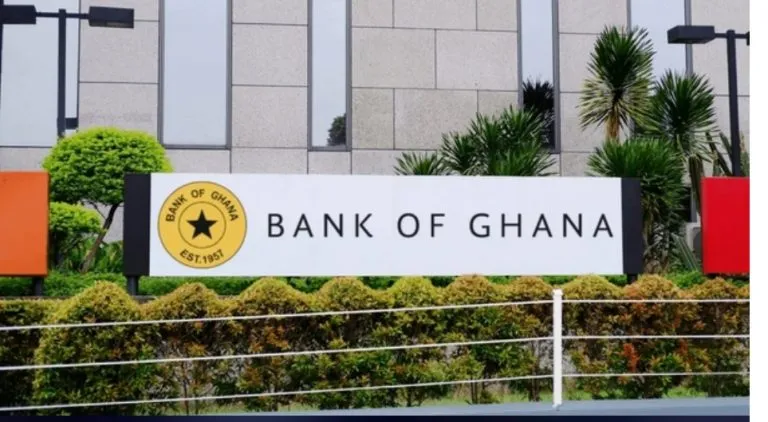
The Bank of Ghana has posted an operating loss of GH¢15.6 billion for 2025, up from GH¢9.4 billion in 2024.
This marks an increase of about GH¢6.2 billion, according to the Bank’s 2025 audited financial statements released on Friday.
Negative equity worsened significantly, rising from GH¢58.62 billion to GH¢93.82 billion.
Total assets grew to GH¢237 billion from GH¢215 billion in 2024. Total liabilities also surged from GH¢276 billion to GH¢333 billion.
What drove the 2025 losses
The spike in losses was largely driven by the cost of monetary policy operations.
Open Market Operations rose sharply by about 95% to GH¢16.7 billion. Sterilisation liabilities to commercial banks jumped 186% to GH¢93.6 billion, while money market liabilities more than doubled to GH¢93.8 billion.
The Bank said the Domestic Debt Exchange Programme reduced returns on government securities, leading to a sharp drop in interest income. Forgone income for 2025 is estimated to exceed GH¢12 billion.
Exchange rate movements also played a major role. The nearly 40% appreciation of the cedi triggered a GH¢23.6 billion revaluation loss on gold, Special Drawing Rights and foreign securities.
Combined with a GH¢7.99 billion reclassification of gains on gold disposal, total Other Comprehensive Income recorded a loss of GH¢19.9 billion, compared to a gain of GH¢13.8 billion in 2024.
The disposal of some gold reserves generated a GH¢9.57 billion gain, helping to offset part of an estimated GH¢9 billion net loss.
Government deposits at the Bank fell sharply from GH¢29.9 billion to GH¢12.1 billion, while bridge facilities declined to zero from GH¢4.55 billion.
The Bank reaffirmed compliance with the April 2023 zero-financing-of-budget agreement, with IMF-related liabilities also dropping from GH¢33.0 billion to GH¢21.8 billion.
Auditor’s position on negative equity
KPMG, the auditors, maintained that the Bank remains operational despite the losses.
“In the view of the Board of Directors and Management, the policy solvency outcome for 2025 is consistent… that the Bank will continue to operate efficiently and effectively on a going concern basis and achieve its policy mandates, despite the loss recorded,” the firm stated.
KPMG added that improving macroeconomic conditions could ease the pressure. “As macroeconomic conditions continue to improve and inflation declines… interest rates will continue to decline, and as a result, the cost of Open Market Operations will reduce.”
It also noted that easing inflation would support exchange rate stability, helping reduce major cost drivers.
Outlook for 2026
The Bank of Ghana does not expect a repeat of the 2025 losses.
It projects that tighter monetary policy, lower inflation, and improved liquidity in the banking sector will reduce the need for aggressive interventions.
Planned legal reforms to limit central bank financing of government are also expected to strengthen fiscal discipline.
However, risks remain. The Bank cited global oil price volatility, geopolitical tensions in the Middle East, and tighter external financing conditions as key threats to the outlook.
The central bank says it will continue to pursue policies aimed at anchoring inflation, stabilising the exchange rate, and restoring macroeconomic stability, while working to rebuild positive equity over the medium to long term.g term.
Latest Stories
-
GAUA to consult members before deciding whether to suspend two-month university strike
48 seconds -
Moody’s upgrades Ghana’s credit ratings to B3, but changes outlook to stable
7 minutes -
‘I want to raise well-rounded individuals, not just men’ – Kate Addo on parenting boys
11 minutes -
Yaa Konadu Agyeman’s ‘Exceptionally Yours’ is the perfect romance read for the holiday season
20 minutes -
‘You have to man up’ – Kobby Kyei on the hidden cost of silence for Ghana’s boys
24 minutes -
DVLA extends regional office hours to 10pm under 24-Hour Economy
28 minutes -
‘Ghanaians are becoming like Kweku Ananse’ – Agyinasare warns against culture of lies
29 minutes -
‘The nation failed us’ – Okada Riders’ PRO defends young riders caught between survival and the law
30 minutes -
DVLA plans demerit point system, real-time monitoring of testing stations
31 minutes -
Health Committee Chair lauds NHIA’s swift disbursement of insurance claims
31 minutes -
Okada Association says it’s preparing training centre as gov’t works on new regulations
32 minutes -
Imperial General Assurance backs Team Auto Racing Ghana ahead of historic Angola showrun
40 minutes -
Before they failed the BECE, did Ghana fail them?
41 minutes -
Photos: Mahama swears in Emelia Afi Agbenyo, Joseph Kwaku Asamoah as EC Deputy Commissioners
43 minutes -
Centre for CSR, West Africa partners with Climate x Culture Summit to champion corporate sustainability at Google AI Centre
49 minutes