

Audio By Carbonatix
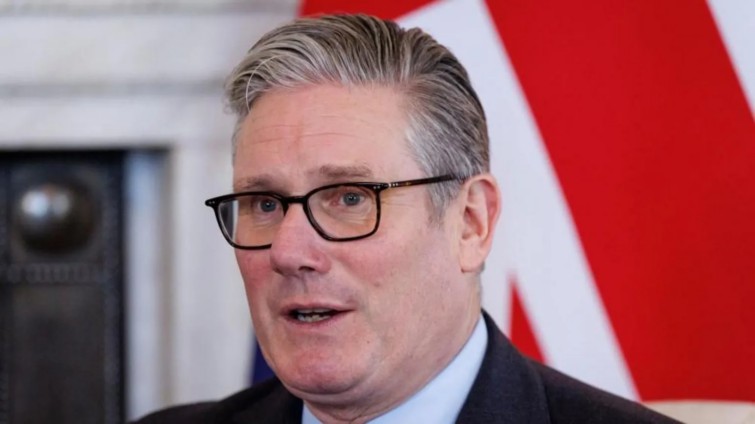
United Kingdom Prime Minister Keir Starmer issued a blunt challenge to his political rivals on Tuesday, doubling down on his refusal to resign despite a burgeoning rebellion within his Labour Party. Following a series of catastrophic election losses and mounting internal dissent, the Prime Minister signalled he would not be easily dislodged from 10 Downing Street.
“Take your best shot,” was the defiant message conveyed by Starmer’s camp as he faced his Cabinet during a high-stakes morning meeting. The Prime Minister is attempting to project an image of stability even as the foundations of his leadership tremble under the weight of a historic polling slump and a parliamentary mutiny.
A Gauntlet Thrown in Downing Street
Inside the Cabinet Room, Starmer confronted the reality of nearly 80 Labour lawmakers calling for his departure or a firm timetable for a transition of power. Despite the pressure, the Prime Minister remained immovable, shifting the burden of action onto his detractors.
“The country expects us to get on with governing. That is what I am doing and what we must do as a Cabinet,” Starmer said, according to his office. He pointedly noted that the formal mechanism for a leadership challenge—requiring the support of 20% of Labour’s 406 lawmakers—had yet to be activated. “That has not been triggered,” Starmer told his Cabinet, effectively daring his opponents to gather the 81 signatures necessary to oust him. “I take responsibility for these election results, and I take responsibility for delivering the change we promised,” he added.
First Ministerial Resignation Hits Government
The wall of Cabinet unity showed its first public crack when Miatta Fahnbulleh, the Minister for Devolution, Faith and Communities, resigned her post. In a letter to Starmer, she stated the government has not “acted with the vision, pace and ambition that our mandate for change demands of us.”
“The public does not believe that you can lead this change – and nor do I,” Fahnbulleh wrote, urging Starmer to “do the right thing for the country” and set a timetable for an orderly transition. While Home Secretary Shabana Mahmood reportedly joined the calls for a departure timetable, other senior figures maintained a front of loyalty.
Housing Secretary Steve Reed urged the party to “unite behind” the leader, stating, “This is not a game. This instability has consequences for people’s lives.” Business Secretary Peter Kyle described Starmer's leadership as “steadfast,” while Technology Secretary Liz Kendall affirmed, “The prime minister has my full support in this.” Defence Secretary John Healey also signalled his backing, noting that the public expects leadership through "looming global crises." "More instability is not in Britain’s interest," Healey wrote.
Global Echoes and the Diaspora Connection
The resignation of Miatta Fahnbulleh carries particular weight for audiences across Africa and the diaspora. As a prominent figure with West African heritage, her departure underscores the internal fractures within a Labour Party that many African nations historically viewed as a partner in development and progressive foreign policy. For Ghana and other Commonwealth partners, the spectacle of a sixth British Prime Minister in seven years raises concerns over diplomatic continuity and the stability of trade relations. The ongoing "political psychodrama" in Westminster is no longer just a domestic British issue; it signals a potential inward-looking shift in the UK that could impact visa policies, international aid, and the strategic attention paid to the Global South during a time of global economic volatility.
The Shadow of the Truss Premiership
In many ways, the current rebellion mirrors the collapse of Liz Truss in October 2022, the shortest-serving leader in British history. Like the Conservatives then, Labour lawmakers now fear their massive majority will be obliterated without a change at the top. However, analysts note a key distinction: while Truss fell after her unfunded tax cuts caused a violent spike in interest rates, the current bond market—though volatile—has not yet reached the level of terminal instability seen during her final weeks.
Electoral Humiliation and Policy Reversals
The current crisis was ignited by a "midterms-style" election last week that saw Labour lose more than 1,400 council seats and suffer heavy losses in the Welsh and Scottish parliaments. Voters moved toward the hard-right Reform UK party, led by Trump ally Nigel Farage, leaving Labour lawmakers terrified of a total collapse in the 2029 national election.
Critics point to a premiership defined by "unforced errors" and a dozen high-profile U-turns. Most damaging was the flip-flop on winter fuel payments for pensioners, which initially stripped subsidies from 10 million seniors before being reinstated. Starmer also seesawed on immigration, alienating progressives without halting Reform's surge. The short-lived appointment of Peter Mandelson as Ambassador to Washington, terminated after revelations regarding his ties to Jeffrey Epstein, further eroded Starmer’s reputation for "adult" judgment.
Economic Markets React to Political Instability
The political "psychodrama" is already spilling over into the British economy. On Tuesday, UK borrowing costs surged to their highest levels in nearly three decades. The yield on 30-year gilts hit 5.8%, while the pound dropped 0.7% against the dollar to $1.36.
“A leftwards lurch would raise hackles among bond vigilantes,” warned Neil Wilson, a strategist at Saxo Bank. Economists Ruth Gregory and Joe Maher of Capital Economics added that a successor might be “not as fiscally disciplined,” though they “doubt a new Prime Minister would be any more successful at boosting the economy’s medium-term growth rate.” Starmer used this as a shield, telling his Cabinet: “The past 48 hours have been destabilising for the government and that has a real economic cost for our country and for families.”
A Leader Digging In
For a man who won a landslide victory in June 2024, the fall has been precipitous. Tom Baldwin, a biographer who knows the Prime Minister well, told the media, “It’s looking very rocky at the moment” for the embattled leader. He described Starmer as “a very stubborn and proud man” who “won’t want to be forced out like this.”
“The prime minister feels a strong sense of duty that this is a really bad time for the party to be embarking on an inward-looking leadership election,” Baldwin said. He noted the context of potential recession, energy shortages, and war in the Middle East. “If Starmer goes, we will be on our seventh leader since Brexit,” Baldwin noted. “There’s nothing to like about this.”
The Mechanics of Mutiny and the Rulebook Defence
Starmer, a lawyer by training, is reportedly leaning on the fine print of the Labour Party rulebook to survive. While the number of dissenting lawmakers continues to creep higher, the rules dictate that critics must coalesce around a single alternative candidate to trigger a contest. So far, no rival has publicly declared itself, likely fearing the "political dagger" would make them appear disloyal to the party membership. This leaves Starmer with a set of unpalatable options: continue to defy the calls, set a resignation timetable that would turn him into a "lame duck," or make concessions—such as allowing Manchester Mayor Andy Burnham to return to Parliament via a special election.
Under Labour rules, the National Executive Committee would set the timeline for any contest if the 81-signature threshold is met. Potential successors like Manchester Mayor Andy Burnham or former deputy leader Angela Rayner wait in the wings, though Burnham would first need a seat in Parliament. While Health Secretary Wes Streeting made a "beeline for the exit" after the meeting without comment, Pensions Minister Pat McFadden insisted Starmer will "continue with his job, as he should."
The United Kingdom now stands at a familiar crossroads. Having seen five Conservative Prime Ministers—Cameron, May, Johnson, Truss, and Sunak—exit under varying degrees of pressure since 2016, the nation faces the prospect of yet another transition. Whether Starmer’s defiance can break the cycle of "regicide" that has defined British politics for a decade remains the central question haunting Westminster.
Latest Stories
-
Jordan Ayew, Yirenkyi feature as Ghanaian trio exit Carabao Cup
43 minutes -
Microsoft says AI rival Anthropic could have ‘disastrous impact’ on humanity
1 hour -
De la Fuente extends Spain contract to 2032
1 hour -
Raphinha hat trick in Barcelona’s 7-goal rout of Santander
1 hour -
Carabao Cup fourth-round draw: Liverpool to host Chelsea as Arsenal drawn away to League Two Fleetwood
2 hours -
Mbappe, Vini and Konate obscure Real’s Ceuta message
2 hours -
Reggie Rockstone named Unichem Ghana brand ambassador
2 hours -
Man United lose to Brighton from 2-0 up to end 50-year record
2 hours -
Man United lose to Brighton from 2-0 up to end 50-year record
2 hours -
Petrol and diesel price rises push UK inflation higher
2 hours -
City of David Foundation donates to Koforidua Hospital, Koforidua Prison
2 hours -
AMA says Konkomba traders were consulted ahead of Agbogbloshie 24-hour market project
3 hours -
Let’s pilot Chinese in public schools before scaling up – EduWatch
3 hours -
Ghanaian tech professionals develop SMS-based AI tool for non-smartphones
3 hours -
MTN@30: Three customers drive away brand-new Land Cruiser Prado in Kumasi
4 hours