

Audio By Carbonatix
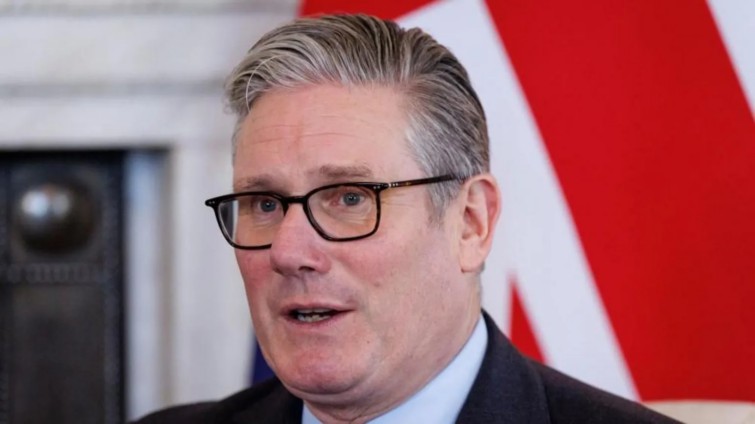
British Prime Minister Keir Starmer faced the most precarious moment of his premiership on Friday as early election results signalled a historic realignment of the British political landscape. With his Labour Party suffering sweeping losses across its traditional heartlands, a resurgent hard-right Reform UK and an ascending Green Party have shattered the long-standing dominance of the UK’s two establishment parties.
Despite what he characterised as “very tough” results, Starmer rejected immediate calls to resign. The electoral drubbing comes just two years after he led Labour to a landslide victory in 2024, highlighting a rapid erosion of public trust fueled by economic stagnation and controversial leadership decisions.
A Seismic Shift In Traditional Strongholds
The scale of the defeat was most visible in England’s industrial north. Reform UK, led by Trump ally and Brexit architect Nigel Farage, captured hundreds of local council seats, effectively wiping out Labour in former bastions like Hartlepool. Farage heralded the outcome as “a truly historic shift in British politics,” asserting that Labour was being “wiped out by Reform in many of their traditional areas.”
The fragmentation of the vote extended to the left as well. The Green Party celebrated a momentous night, highlighted by Zoë Garbett becoming the first directly-elected Green mayor in the former Labour stronghold of Hackney. Green leader Zack Polanski declared the era of the status quo over, stating, “Two-party politics isn’t dying. It’s dead, and it’s buried.”
Devolution And The End Of Dominance
The collapse of the Labour vote was not limited to England. In Wales, the party faced the prospect of failing to come first in a nationwide election for the first time in over a century. Projections suggested Labour could be beaten into third place by the pro-independence Plaid Cymru—which hopes to lead a coalition government—and Reform UK.
In Scotland, the Scottish National Party (SNP) appeared poised to remain the dominant force in the Holyrood parliament, though it remained unclear if it would secure an outright majority. Collectively, these results from 5,000 local contests and devolved legislatures suggest a nation turning toward insurgent parties. Polanski summarized the new landscape Friday morning, claiming, “It’s very clear that the new politics is the Green Party versus Reform.”
Internal Dissent And Leadership Challenges
The electoral "shellacking" has emboldened Starmer’s internal critics. Within his own ranks, backbench MPs are reportedly manoeuvring to force a leadership contest. Jonathan Brash, a Labour lawmaker from the decimated district of Hartlepool, was blunt in his assessment: “I don’t think Keir Starmer should survive these results. We have to be bolder, and we have to go further. And quite frankly, we need new leadership in order to achieve that.”
Speculation regarding successors has already centered on high-profile figures such as Health Secretary Wes Streeting, former Deputy Prime Minister Angela Rayner, and Greater Manchester Mayor Andy Burnham. Ben Ansell, a professor at the University of Oxford, noted the mounting pressures, stating, “Keir Starmer is playing existential problems buckaroo at the moment, as he stacks them on the back of his electoral donkey. Everything is happening at once.”
Economic Anxiety And Ethical Scandals
The Prime Minister’s unpopularity has been exacerbated by more than a dozen policy U-turns and a failure to ease the cost-of-living crisis. Furthermore, the decision to appoint Peter Mandelson as the ambassador to Washington—despite Mandelson’s past links to the late sex offender Jeffrey Epstein—has drawn widespread condemnation.
Starmer acknowledged that voters were unhappy with “the pace of change” but remained steadfast. “The results are tough, they are very tough, and there’s no sugarcoating it,” Starmer said. He dismissed calls to stand down, adding, “Tough days like this don’t weaken my resolve to deliver the change that I promised.” He further vowed he was “not going to walk away from those challenges and plunge the country into chaos.”
Markets React To Political Instability
The financial sector, which has recently been jittery over the prospect of a leadership vacuum, showed signs of cautious stabilisation. Yields on benchmark 10-year U.K. government bonds, known as gilts, were 4 basis points lower at 4.904% by Friday afternoon, moving downward in response to Starmer’s insistence that he would stay in post.
The Conservative Party, now led by Kemi Badenoch, also continued to shed votes following their 2024 defeat, though Badenoch insisted there were “signs of renewal everywhere that we are standing.” Investment analysts, including those at Deutsche Bank, noted that while the results were poor, they were not the immediate "catalyst for a change" that some bond vigilantes had feared.
The "Stagflation Trap" and Shifting Africa Ties
For observers in Ghana and across Africa, Starmer’s instability signals a potential pivot in UK foreign engagement. Foreign Secretary David Lammy has championed a "new approach" based on equal partnerships, yet the government’s domestic "Stagflation Trap"—with inflation rising toward 3.6%—is squeezing the African diaspora. Remittance flows are under pressure as families in the UK face an energy debt crisis and rising food costs. Furthermore, the rise of Reform UK has already pressured Labour into tightening borders, including the March 2026 "Visa Brake" on several nationalities and higher English requirements for settlement. As Starmer fights for survival, his government’s pledge to reorient from "donor to investor" in Africa faces its steepest challenge yet, with aid budgets already reduced to 0.3% of GNI.
A Premature Pilot Change Warned Against
As the pressure mounts, Starmer’s allies have begun a defensive pivot. Deputy Prime Minister David Lammy urged the party to maintain stability amid the crisis. Appealing for unity, Lammy cautioned his colleagues against a coup, stating, “You don’t change the pilot during the flight.”
While the full results will not be known until Saturday afternoon, the message from the electorate appears to be one of widespread antipathy toward the political establishment. By rejecting the traditional binary of Labour and the Conservatives, British voters have signaled that the post-war consensus has reached a breaking point, leaving Starmer to manage a fractured party and a restless nation.
Latest Stories
-
John Boadu can appeal across Ghana’s social groups – Prof Mike Oquaye
7 minutes -
‘Electing Kojo Bamba is backward politics’ – Mustapha Gbande
21 minutes -
Government must order payment of promoted teachers’ salaries – GNAT
30 minutes -
Meet Sethina Edem Sunu, the healthcare professional eyeing the NDC UK & Ireland deputy organiser role
34 minutes -
The myth of ‘sophisticated customer experience’ in the digital age
38 minutes -
What happened to lands reserved for sanitary sites? -WasteCare CEO calls for audit
39 minutes -
Manasseh Writes: The shift in the NPP
55 minutes -
The price of a seat: Financial barriers and the structural quality of Ghana’s Parliament
60 minutes -
Government targets October 16 for first tranche of teacher arrears – Haruna Iddrisu
1 hour -
Daily Insight for CEOs: The CEO’s role in driving innovation
1 hour -
Audit existing sanitary sites to address waste management land shortages – WasteCare CEO urges assemblies
1 hour -
Two-bin household waste system could support waste-to-energy in Ghana – Waste Care Associates CEO
1 hour -
Dealing with political and social media insults
1 hour -
Essi Donkor urges stronger support for girls’ education, announces GH¢2,000 BECE reward
1 hour -
Ghana still needs landfills but Accra should prioritise waste-to-energy – Waste Care Associates CEO
1 hour