

Audio By Carbonatix
The Hunger Project Ghana has commemorated World Hunger Day 2026 in the Eastern Region, bringing together more than 100 community partners and district leaders to reaffirm their commitment to ending hunger and building self-reliant communities.
Founded by The Hunger Project in 2011, World Hunger Day is observed annually on 28th May to draw global attention to the persistent challenge of hunger and food insecurity.
The day unites individuals, communities, and organisations worldwide around a shared commitment to ending chronic hunger.
This year’s celebration was held at the Asenema Epicenter under the theme, “The End of Hunger Is in Our Own Hands.”
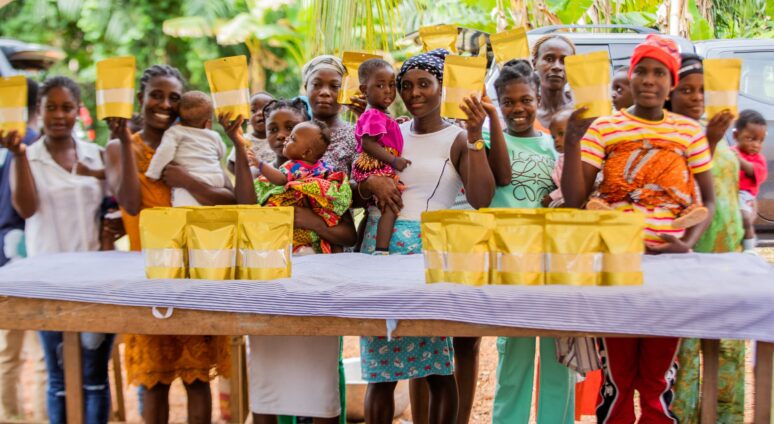
A key highlight of the event was a practical training session on the preparation of Celemix, a nutritious meal made from locally sourced ingredients such as rice, maize, and soybeans.
As a Ready-to-Eat Therapeutic Food (RUTF), Celemix is rich in essential nutrients and can help to address child malnutrition.
The training also sought to create economic opportunities for women by equipping them with a valuable skill that can be developed into a small business.
The theme served as a powerful reminder that communities themselves are at the heart of sustainable solutions to hunger.
While hunger is solvable, it persists because many people, particularly women, continue to face barriers to resources, decision-making, and economic opportunities.
"When communities have the vision, commitment, and opportunity to lead, they create lasting solutions. This World Hunger Day, we are reminded that ending hunger is not only about charity.
"It is about transforming systems, investing in people, and recognising that those closest to the challenge are also closest to the solution," said Mrs Agatha Quayson, Country Leader of The Hunger Project-Ghana.
Globally, an estimated one in twelve people lives with chronic hunger. In Ghana, food insecurity remains a significant challenge.
According to the Ghana Statistical Service, approximately 12.5 million Ghanaians were estimated to be food insecure in 2025, with a national food insecurity prevalence rate of 38 percent.
This means that nearly four out of every ten Ghanaians experience some level of food insecurity, with rural households disproportionately affected.
The Hunger Project Ghana works alongside communities to identify the root causes of hunger and develop locally led solutions that address the systems and barriers that perpetuate it.
By strengthening leadership and building the capacity of women, girls, and men in rural communities, the organisation supports communities to drive their own development and create lasting change.
Latest Stories
-
Ghana needs a law to sustain constitutional reforms – CDD-Ghana
2 hours -
COVID fumigation audit: Auditor-General has a lot of questions to answer – Akwatia MP
2 hours -
Stranded Ghanaian medical graduates in Cuba appeal to Mahama for immediate return
3 hours -
GNFS contains fire outbreak at Teshie Lekma Road near Lekma Hospital
9 hours -
Samia Nkrumah rejects the narrative that Ghanaians were happy after Nkrumah’s overthrow
10 hours -
A Mother’s pain: Tribute by Ivan Baidoo’s mother
10 hours -
‘Forgive us for staying away’ — Samia Nkrumah leads family back to Nkroful, pledges to preserve Nkrumah’s legacy
10 hours -
Ernest Nuamah scores twice as Lyon beat Rennes
10 hours -
‘My dear Ivan’ – A father’s tribute to a son tragically killed
10 hours -
GNPC Explorco advances Voltaian Basin drilling preparations with 13.5km access road
11 hours -
Cabinet approves facility manager for Borteyman Sports Complex – Kofi Adams
11 hours -
Sanitation is improving; critics may be ‘living in another world’ – Salaga South MP replies Bekwai MP
12 hours -
Government must do more to tackle sanitation crisis – Bekwai MP
12 hours -
World Cleanup Day: GFF begins sanitation education in local communities
12 hours -
EU Ambassador, IGP discuss stronger cooperation on policing and security
12 hours