

Audio By Carbonatix
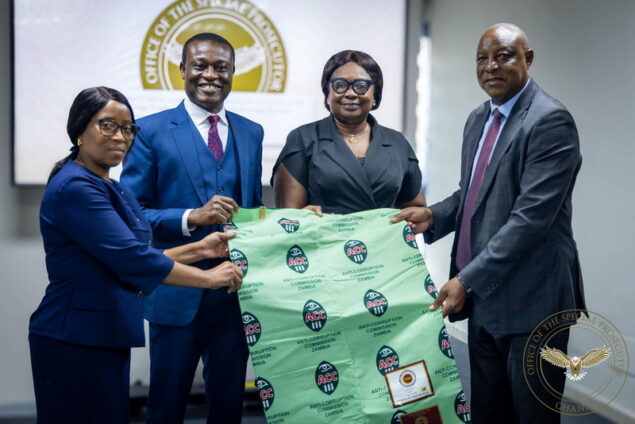
A delegation of senior officials from Zambia’s Anti-Corruption Commission has concluded a three-day study visit to Ghana’s Office of the Special Prosecutor, examining how the institution investigates high-level corruption, safeguards its operational independence and engages the public in anti-corruption efforts.
The visit brought together officials from both agencies for detailed discussions on investigative techniques, asset recovery, digital forensics and prosecution strategies.
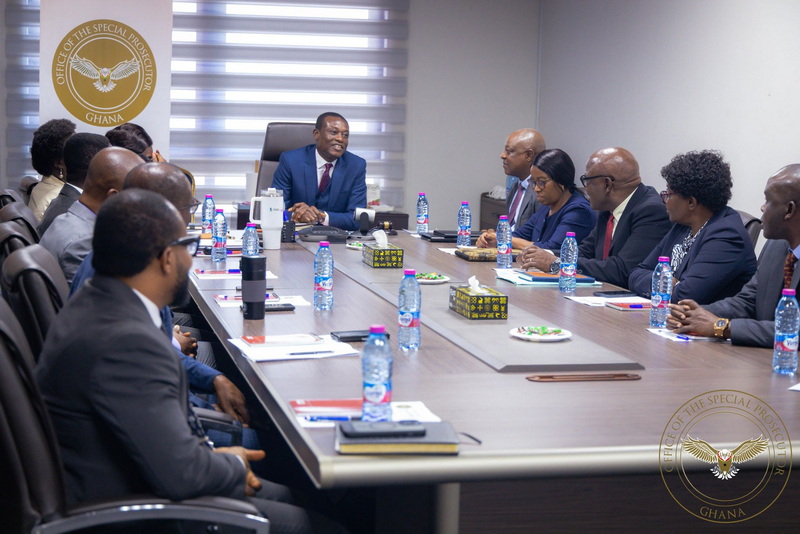
The exchanges also focused on the institutional architecture underpinning Ghana’s anti-corruption framework and the practical challenges of enforcing accountability in politically sensitive cases.
The delegation was received by the Special Prosecutor, Mr Kissi Agyebeng, the Deputy Special Prosecutor, Ms Cynthia Lamptey, directors of the Office and other senior officials.
In his remarks, Mr Agyebeng outlined the circumstances that led to the establishment of the Office of the Special Prosecutor, stressing its statutory independence and mandate to investigate and prosecute major corruption cases involving politically exposed persons and entities in the private sector.
He also highlighted the obstacles the Office has faced since its creation, including institutional resistance, resource constraints and attempts to undermine its prosecutorial authority.
Despite these challenges, he said the Office had established itself as a significant force within Ghana’s anti-corruption and governance landscape.
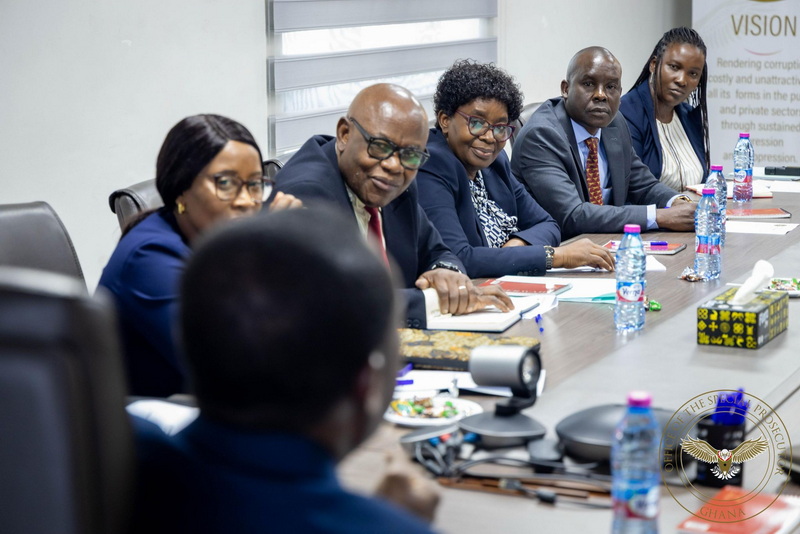
Directors and senior officials later presented on their respective areas of work, including prosecutions, investigations, asset recovery and management, strategy, research and communications, digital forensics and human resources.
Discussions also covered the Office’s Youth Against Corruption initiative and the use of digital platforms and data to support public engagement and corruption prevention efforts.
The discussions also revealed striking parallels between the two institutions. The delegation observed that both agencies are established on comparable legal foundations, with provisions safeguarding the tenure of their leadership, granting powers of arrest and asset recovery, and mandating public education and stakeholder engagement as part of their anti-corruption work.
Key differences, however, emerged in their prosecutorial arrangements. Unlike the Office of the Special Prosecutor, the ACC does not possess independent prosecutorial authority.
Significant cases must be referred to the Director of Public Prosecutions, an independent constitutional office separate from the Attorney General, whose remit is confined to civil matters.
The ACC nevertheless retains a cadre of seconded prosecutors who are authorised to handle less complex cases internally.
The delegation also highlighted several home-grown initiatives aimed at strengthening integrity and accountability. Among them is the introduction of undergraduate and master's degree programmes in anti-corruption and integrity studies at the Kwame Nkrumah University of Zambia, designed to build a pipeline of professionals equipped to address governance and corruption challenges.
Another flagship initiative is the Character is Destiny programme, a values-based educational framework embedded within the national school curriculum. The programme seeks to nurture ethical leadership, civic responsibility and integrity among young people, positioning character development as a cornerstone of Zambia's long-term anti-corruption efforts.
Following the presentations, the Zambian delegation toured the OSP's facilities, gaining first-hand insight into the office's operational environment and institutional infrastructure. The visit provided an opportunity to observe the systems and resources supporting the OSP's investigative and anti-corruption mandate.
A key highlight was the ongoing construction of an ISO-certified forensic laboratory and specialised interview and interrogation rooms.
The project, funded by the European Union and implemented by GIZ, is expected to strengthen the OSP's forensic and investigative capabilities, enhancing its capacity to handle complex corruption and financial crime cases in line with international standards.
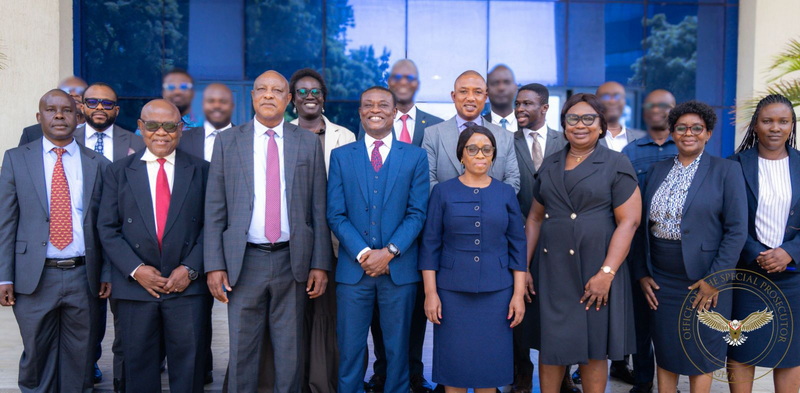
The delegation was led by Justice Evans Hamaundu (Board Chairman), accompanied by Board Members Engwase B. Mwale and Jack Kalala, the Director-General of the ACC Daphne Pauline Soko Chabu, the Director of Investigations, Gibson Chizanda, and the Acting Head of Corporate Communications, Chilufya Chisanga.
Latest Stories
-
Companies that delay AI adoption risk losing market opportunities – ALX Enterprise
51 seconds -
‘The future is bright’ – Gyan backs Black Princesses squad after U-20 World Cup exit
7 minutes -
We should treat AI has an opportunity rather than a threat – ALX Enterprise
15 minutes -
Malta and Ghana set sights on practical AI partnership
18 minutes -
2026 U-20 WWC: ‘Not all wishes come true’ – Gyan inspires Black Princesses after elimination
23 minutes -
‘I am not a magician’ – Zdravko Logarušić on Nations FC exit from Africa
36 minutes -
Three nights. 28 titles. Ultimate history made
47 minutes -
Ghanaian delegates at IYF 2026 could become bridges for stronger Russia ties – John Aggrey
51 minutes -
Nigeria: Over 30 dead, 50 hospitalised after consuming alcoholic substance in Ondo State
53 minutes -
UK lawmakers demand new law to address AI threat to human rights
1 hour -
WAFU B U-17 Girls Cup: Black Maidens depart Accra for tournament in Yamoussokro
1 hour -
Sweden’s center-left bloc narrowly ahead as election remains too close to call
1 hour -
GPL 2026/27: ‘We won ugly’ – Kotoko head coach unimpressed after Lions victory
1 hour -
7 out of 10 human trafficking cases in Ghana never reach prosecution — JoyNews Research
2 hours -
Music, football to converge at Music Meets Football Summit 2026 in Lusaka
2 hours