

Audio By Carbonatix
An accused person should not need a rich relative with landed property before enjoying the right to bail.
In Ghana, the courts, and, in some cases, EOCO as a condition for administrative bail, may require an accused person to produce several sureties, justify those sureties with landed property or other substantial assets, or satisfy other stringent bail conditions.
On paper, bail has been granted. In reality, the accused remains behind bars because the conditions are ‘impossible’ to satisfy.
That is not real bail.
The Constitution is clear. Article 19(2)(c) provides that "a person charged with a criminal offence shall be presumed to be innocent until he is proved or has pleaded guilty." If the law presumes a person innocent, then bail should not become punishment before trial.
Equally, Article 14 protects personal liberty, while Article 19(1) guarantees a fair hearing within a reasonable time. Bail must therefore strike a balance between liberty and the administration of justice.
The purpose of bail is simple. It is to ensure that an accused person appears before the court whenever required. It is not intended to punish poverty.
This principle is reflected in section 96 of the Criminal and Other Offences (Procedure) Act, 1960 (Act 30). The court considers whether the accused is likely to appear for trial, interfere with witnesses, commit another offence, or obstruct the course of justice. Ownership of landed property is not the constitutional objective of bail. Attendance at trial is.
The Supreme Court reinforced this principle in Martin Kpebu v. Attorney-General, where it emphasized that the constitutional presumption of innocence requires that courts carefully protect personal liberty before conviction. Likewise, in Gorman v. Republic [2003–2004] 2 SCGLR 784, the Supreme Court reminded the courts that bail is a matter of judicial discretion, and that discretion must be exercised judicially and reasonably.
Bail conditions should not become a disguised refusal of bail. This is where Ghana should begin thinking differently.
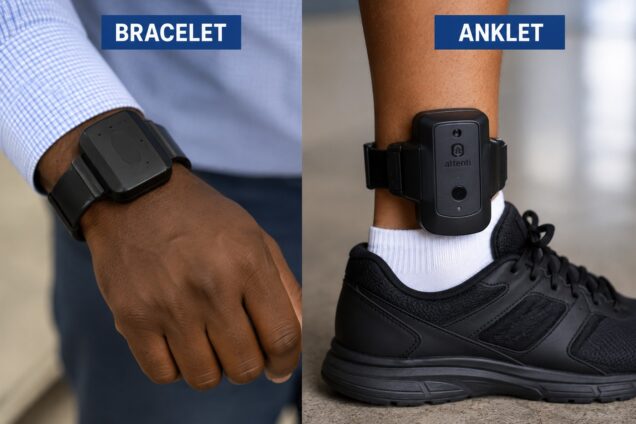
Instead of imposing onerous conditions, the country should consider electronic tracking bracelets or anklets in appropriate cases.
A tracking device worn on the wrist or ankle can monitor an accused person's movements. It can work alongside reporting conditions, curfews, travel restrictions or orders to stay away from certain places or persons. If the person tampers with the device, breaks a curfew or enters a prohibited area, the authorities are immediately alerted.
This approach answers the very question bail is designed to address: Will the accused return to court?
The United Kingdom and the United States already use electronic monitoring as part of their bail systems. GPS and electronic tags allow courts to supervise accused persons while preserving their liberty.
The person remains with family, continues working and prepares a defence, while the court remains assured that bail conditions are being obeyed.
Ghana can adopt the same approach through a carefully managed pilot programme involving the Judicial Service, the Ghana Police Service and the Ghana Prisons Service. Electronic monitoring should never replace judicial discretion. Nor should it apply to persons who pose a genuine danger to the public or are likely to interfere with witnesses. Each case must continue to be decided on its own facts.
Strong safeguards must also exist. The information collected should be protected by law and used only for the purpose authorized by the court. The cost should not become another burden that only the wealthy can bear.
The benefits would be enormous. Families would remain together. Businesses would survive. Jobs would be protected. Overcrowding in our prisons would reduce.
Most importantly, the constitutional promise that every accused person is innocent until proven guilty would become a practical reality rather than a beautiful statement on paper.
Justice must protect society, but it must also protect freedom.
A person should not remain behind bars simply because there is no land title to produce or wealthy surety to call. Where the real concern is whether the accused will attend court, technology offers a better answer than impossible bail conditions.
It is time for Ghana to modernize its bail system.
It is time for Ghana to let technology secure attendance while the law protects liberty.
Author: Richard Kwadwo Nyarko, a journalist and IT law researcher
Latest Stories
-
Todays Front pages: Monday, September 28, 2026
32 seconds -
WAFU B U-17 Girls Cup: Black Maidens finish tournament with 4-0 win over Cote d’Ivoire
5 minutes -
2026 Women’s Super Cup: FC Savannah to face Epiphany Warriors in final on September 29
19 minutes -
Ghana’s second chance: How President Mahama’s return offers historic opportunity for transformation
25 minutes -
AFCON 2027Q: Alexander Djiku ruled out of clash against Gambia
28 minutes -
RCI Immanuel Temple donates supplies to Motherly Love Orphanage
1 hour -
COCOBOD asks investors to fund cocoa purchases, but proceeds may also repay old debt
2 hours -
Gov’t hands over site for construction of 160-bed Savannah Regional Hospital
2 hours -
NCPTA clarifies GH¢200 cap on PTA dues and levies per parent
2 hours -
Asante Kotoko part ways with coach Eric Tinkler
2 hours -
GTA calls for ultra-modern Cocoa Museum in Western North
2 hours -
NPP says concerns over delegates’ register addressed ahead of October 3 polls
2 hours -
PwC Ghana appoints George Arhin as Country Senior Partner
2 hours -
New Economy will turn imports into opportunities for Ghanaian production – Ato Forson
2 hours -
Two Ada SHS students convicted, placed on 12-month good behaviour bond
2 hours