

Audio By Carbonatix
The plan
Iran were one of the first teams to secure qualification for the 2026 World Cup and, compared to previous campaigns, they had a relatively smooth path to the tournament. However, preparing the team for the competition has been anything but easy. Iran’s conflicts with the United States and Israel threw their involvement at the World Cup into serious doubt – all three of their group games take place in the US – and Amir Ghalenoei and his coaching staff have had to work hard to minimise disruption.
Nevertheless, in their two friendlies in March against Nigeria and Costa Rica, Iran showed that they have different plans in mind for the World Cup. In the first match against Nigeria, they lined up in a 3-6-1 formation – a setup Ghalenoei described as the team’s “defensive plan B”, likely designed for the group meeting with Belgium. In the second game against Costa Rica, Ghalenoei used a 4-4-2 formation, indicating that he intends to shift tactics depending on the opponent. The primary system remains 4-2-3-1, which Iran used in most of qualifying.
A few players can feel certain of their place in the starting lineup regardless of the formation. Alireza Beiranvand will be Iran’s first-choice goalkeeper for a third consecutive World Cup. Shojae Khalilzadeh is the only centre-back guaranteed a starting spot, while Saeid Ezatolahi, if fully fit, is the undisputed No 6 in midfield. Up front, whether Iran play with one striker or two, Mehdi Taremi – wearing the captain’s armband – will lead the line. Another star forward, Sardar Azmoun, has been left out. He is a divisive figure in Iran following the publication of photos with the ruler from the United Arab Emirates, who supported the USA and Israel during the war.
Despite the problems and controversies surrounding the national team, who moved their World Cup base camp from the US to Mexico just weeks before the tournament, Ghalenoei still believes his side are capable of achieving something special. “We've had many problems recently, but the players tried their best and made sacrifices. They worked so hard [through qualification] and sacrificed a lot, so it is my job to thank them. They can do something epic in the World Cup. They can do it, they have the technical potential to make this a World Cup to remember.”
The coach
Amir Ghalenoei was a diminutive midfielder who played mainly for Esteghlal, one of Tehran’s two biggest clubs. The most memorable moment of his playing career was a physical altercation in the Tehran derby that resulted in a six-month suspension. As a coach, Ghalenoei went on to become one of the most decorated managers in Iran, although his aggressive personality has prevented him from becoming universally popular. This is his second spell in charge of the national team. He first took over after the 2006 World Cup but was dismissed following Iran’s elimination from the 2007 AFC Asian Cup – an episode he still recalls bitterly. Success this summer would give Ghalenoei an opportunity to settle old scores with his long-time critics.
Star Player
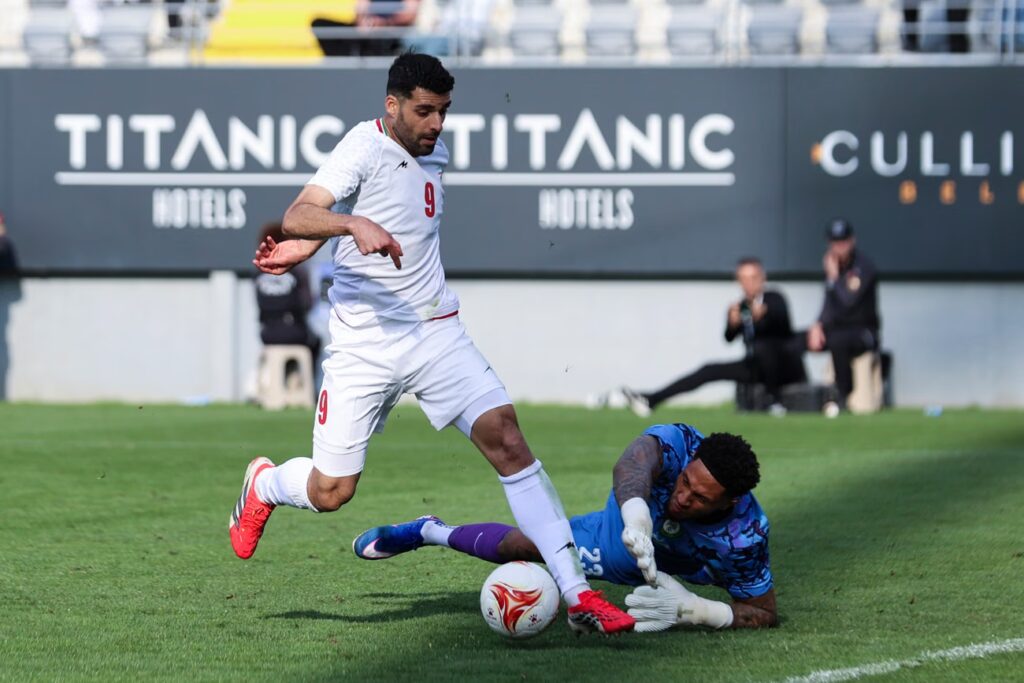
Mehdi Taremi has never truly been a fan favorite, but there is no doubt that if Iran are to achieve something significant at the World Cup, their hopes will rest on the form of a player who has delivered consistently for Porto, Inter, and Olympiakos. Having spent several years competing at the highest level in Europe, Taremi has developed confidence and authority, to the point that he is now influential in the team’s internal decisions as well. He is a hard-working striker who also contributes defensively. His greatest strength lies in making runs in behind the opposition’s defence and finding himself one-on-one with the goalkeeper. In those situations, he is always ready to either score – or go down at the slightest contact and win a penalty for his team.
One to Watch
Many in Iran expected Mehdi Ghayedi to develop into a major star, but controversy and off-field distractions seems to have followed him everywhere. So far he has failed to achieve the level of consistency and continuity that had been expected of him but he is only 27 and should be in his peak years. The lightning-fast Al-Nasr (UAE) winger could, in fact, become Amir Ghalenoei’s surprise weapon in North America. With his dazzling dribbling skills and precise finishing, Ghayedi is capable of producing eye-catching moments. After spending some time sidelined through injury, he marked his return to the national team with a stunning goal against Costa Rica in March.
Unsung hero
Since making his debut almost a decade ago, Saman Ghoddos has been a reliable, consistent member of the Iran squad. However, since he has never played for any Iranian club, he has not benefited from the traditional support of club fans, and as a result, has received less media attention. Nevertheless, thanks to his good character and professionalism, the former Brentford player – who can play almost anywhere on the pitch – is a well-liked figure within the team. Born in Malmö (Sweden), he left the Premier League for Kalba FC in the UAE in September 2024.
Probable starting XI
4-2-3-1: Alireza Beiranvand - Ramin Rezaeian, Shojae Khalilzadeh, Hossein Kanaanizadegan, Ehsan Hajsafi - Saeid Ezatolahi, Amir Mohammad Razzaghinia - Mohammad Mohebbi, Saman Ghoddos, Mehdi Ghayedi - Mehdi Taremi
What to expect from fans at games?
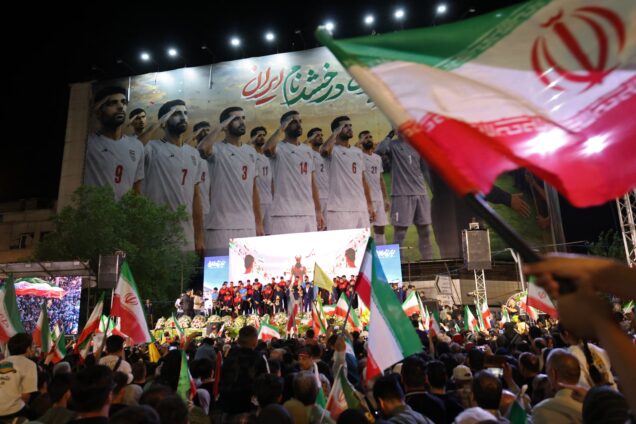
For the second consecutive World Cup, Iranians are deeply divided over the national team. On one side are the supporters who back Team Melli under any circumstances; on the other are those who oppose the Iranian government and therefore prefer to see the national team – which they view as representing the state – lose. Given the visa restrictions facing Iranians travelling to the United States, a large portion of Iran’s supporters at the tournament will likely be members of the diaspora already living in America, many of whom are opposed to the government in Tehran. Like in Qatar in 2022, Fifa is expected to ban the Shir-o-Khorshid (lion and sun) flag – Iran’s pre-revolutionary flag – from stadiums, but it would not be surprising to hear chants in support of Reza Pahlavi, the former crown prince of Iran. Likewise, if Iran concede goals or lose matches, sections of the crowd are likely to celebrate those moments openly.
Latest Stories
-
Teacher unions to meet government Monday over nationwide strike
13 minutes -
Photo story: Republic Bank-JoyNews Habitat Fair clinic wraps up after three days of housing solutions, expert engagement
16 minutes -
National Peace Council urges investment in youth to sustain Ghana’s peace
38 minutes -
Afenyo-Markin urges youth to speak up against injustice
49 minutes -
CAF annuls Edo Queens victory, orders WAFU B final to resume from extra time
1 hour -
Interior Minister urges traditional authorities to enforce anti-bushfire bye-laws
1 hour -
3rd Republic Bank-JoyNews Habitat Fair Clinic ends on a high note after three days of strong patronage
1 hour -
Ten climbers missing after avalanche hits Himalayan base camp
2 hours -
NPP had more permanent fuel relief measures than current GH¢2 diesel cut – Amin Adam
2 hours -
Photos from the 3rd Republic Bank-JoyNews Habitat Fair Clinic
2 hours -
Ethiopia’s army promises restraint amid fears of new civil war
2 hours -
Amin Adam calls for review of fuel taxes as diesel prices remain above GH¢18
3 hours -
World Vision Ghana, Ahafo districts sign MoU for universal WASH coverage
3 hours -
When the gold engine stutters: What Ghana’s Cedi and reserves are telling us about the new economic architecture
4 hours -
Two reportedly die after being trapped in mining pit at Juaboso
4 hours