

Audio By Carbonatix
Public attention has shifted to a high-stakes legal battle in the state-led criminal prosecution of The Republic v. Bernard Antwi Boasiako & 2 Others (the Samreboi/Akonta Mining case).
Lead Defence Counsel, Andy Appiah-Kubi, has filed an application to withdraw his representation for Bernard Antwi Boasiako (alias Chairman Wontumi). This comes at the most critical juncture possible: the trial has fully concluded, and the court is ready to deliver its final judgment.
Compounding the drama, the Attorney-General is raising preliminary legal objections to block the lawyer's exit. This setup raises fascinating legal and tactical questions that strike at the heart of our criminal justice system. The outcome and its aftermath will provide us with further learning.
The process is regulated by the Legal Profession Act, 1960 (Act 32) and the Legal Profession (Professional Conduct and Etiquette) Rules, 2020 (L.I. 2423).
The general rule: No walking away without "good cause"
In Ghana, a lawyer cannot simply abandon a client on a whim. Under Rule 85(1), "A lawyer shall not withdraw from representing a client except for good cause". Even when such a cause exists, Rule 85(2) mandates that the lawyer must provide formal notice directly to the client.
The law outlines when withdrawal is optional or mandatory:
• Optional Withdrawal (Rules 86 & 87(2)): A lawyer may seek to step down if there is a breakdown of confidence, or if a client fails to pay agreed fees after reasonable notice.
• Mandatory Withdrawal (Rule 87(1) & (7)): A lawyer must withdraw if continuing would violate professional ethics, the law, or if a physical/mental condition impairs their ability to represent the client.
The power of the Court to say "no"
The grand catch in the rules is that any attempt to step down is strictly "Subject to these Rules and the direction of the Court".
The court holds the ultimate veto. Rule 87(4) explicitly states:
"A lawyer shall continue to represent a client if ordered to continue to represent the client by a Court."
While the exact facts and specific points of law to be argued in the AG’s preliminary objection remain under wraps, the bare headings of their objection make it clear that the state is contesting the timing and legitimacy of this exit.
The tactical chessboard: Delaying Judgment & the impending vacation
In the legal community, observers can see right through the timing. With the legal vacation fast approaching, a sudden application to withdraw representation at the eleventh hour is highly suspected to be a calculated tactical scheme.
The goal? To "arrest" the judgment, disrupt the timeline, and push the delivery of the final verdict past the vacation threshold, buying the defence precious months for whatever purposes.
What happens if the Judge denies the withdrawal?
If the judge decides there is no "just cause" to grant the lawyer's withdrawal, the client is not entirely stuck. The client retains an absolute constitutional right to terminate the services of the lawyer at any time. Under Rule 87(1)(c), a lawyer must withdraw if they are discharged by the client.
If Chairman Wontumi exercises this right and sacks his counsel, the court would be legally obligated to grant him sufficient time to appoint a new lawyer. This new counsel would then need time to study the comprehensive record of trial proceedings and file the final written address.
The Court's Dilemma: While a trial court is not strictly bound by a lawyer's written address, proceeding to deliver a criminal judgment without giving a newly appointed counsel the chance to submit their final address would be a terrible, highly irregular move. It would open the door for claims that the accused was denied a fair trial.
The paradox: How a refusal could backfire
Here is the ultimate legal irony: forcing the lawyer to stay on record could actually feed right into a potential grand defence scheme.
If the judge refuses to grant the withdrawal, that very refusal gives the accused a potent legal weapon. The defence can immediately trigger appellate processes (appealing the interlocutory ruling) and/or fire off a petition to the Chief Justice. A petition would be targeted at the Judge and could see his recusal or replacement if sound reasons of misconduct are available. They may actually raise an issue bothering on conduct of bias by another application, all in furtherance of a genuine of a mischievous scheme.
By tying up the case in procedural appeals and petitions, the delivery of the main judgment could effectively be put on hold for a very long period, achieving the exact delay the defence wanted in the first place.
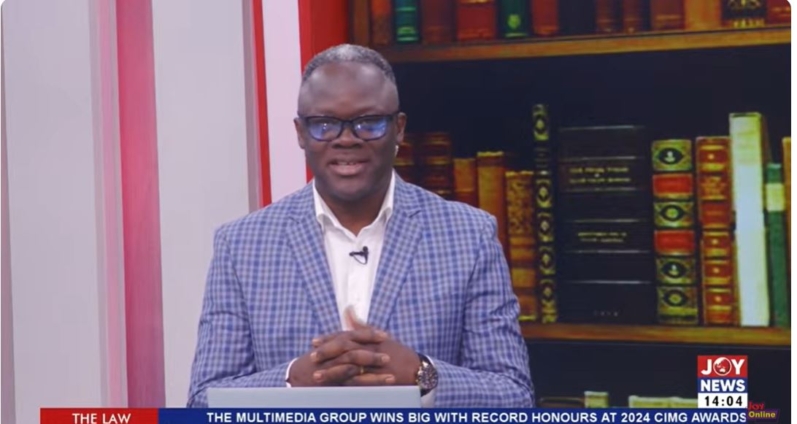
Join me on my weekly legal clinic, THE LAW show on the Joynews Channel every Sunday @ 2 pm.
Latest Stories
-
PSG sign World Cup winner Torres from Barcelona
7 minutes -
Odeneho Kwaku Appiah beats former EPA boss Kokofu, to emerge NPP Ashanti chair
11 minutes -
TDC defends statutory mandate, says its authority to develop Tema predates TMA
13 minutes -
Ignatius Kwesi Afrifa elected NPP Western Regional Chairman
17 minutes -
Galamsey will be a key issue for NPP’s 2028 campaign – Annoh-Dompreh
23 minutes -
Makafui Woanyah retains NPP Volta Regional Chairmanship
27 minutes -
Ghana Law Society announces maiden annual Bar conference for September 30
30 minutes -
Abronye DC retains NPP Bono East Regional chairmanship
45 minutes -
NSMQ 2026: Check out the 147 schools battling in 49 preliminary contests
49 minutes -
NPP rebuilding to reclaim parliamentary seats lost in 2024 – Annoh-Dompreh
1 hour -
GoldBod has not made GH₵1.7bn loss – Prof Ebo Turkson
1 hour -
Legal vacation trials involving politicians raise fair play concerns – Baffour Awuah
1 hour -
‘It should have been negotiated’ – Dafeamekpor on lawyers’ dispute with CJ over vacation hearings
2 hours -
Ablakwa announces special bonus for passport staff after GSS ranks service among least corrupt institutions
2 hours -
Mövenpick Ambassador Hotel will deepen community engagement as it marks 15 years – General Manager
2 hours