

Audio By Carbonatix
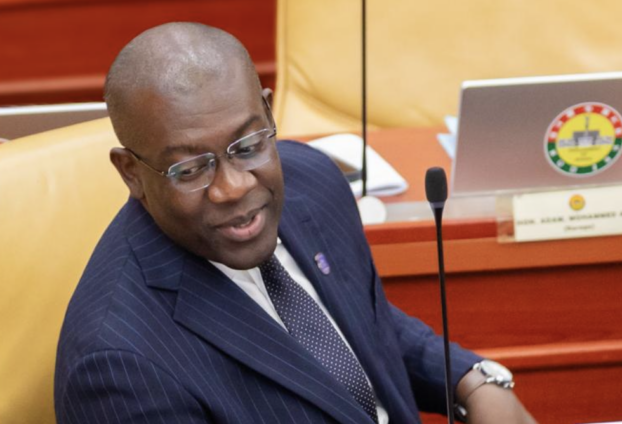
The opposition New Patriotic Party (NPP) is challenging the NDC government's repeated claim that it has reduced the cost of governance, according to Ofoase-Ayirebi MP Kojo Oppong Nkrumah.
He argued that the promised savings from appointing fewer ministers may have been offset by a growing number of diplomatic appointments abroad.
In a detailed analysis backed by documents obtained under the Right to Information (RTI) Act, Mr Oppong Nkrumah has raised questions about the financial implications of appointing several Deputy Ambassadors and Deputy High Commissioners, many of whom he claims are senior party figures previously considered for ministerial positions.
Since assuming office in January 2025, the NDC administration has consistently highlighted its decision to appoint fewer ministers than previous governments as evidence of its commitment to reducing the size and cost of government.
The administration has repeatedly pointed to its lean ministerial structure as a key measure to ease pressure on the public purse and promote fiscal discipline.
However, according to Mr Oppong Nkrumah, the debate over the true cost of government cannot be limited to the number of ministers alone.
He argues that while some prominent party officials may not have ended up in cabinet positions, many have subsequently been appointed to diplomatic posts abroad as Deputy Heads of Mission, creating a different but significant financial burden on taxpayers.
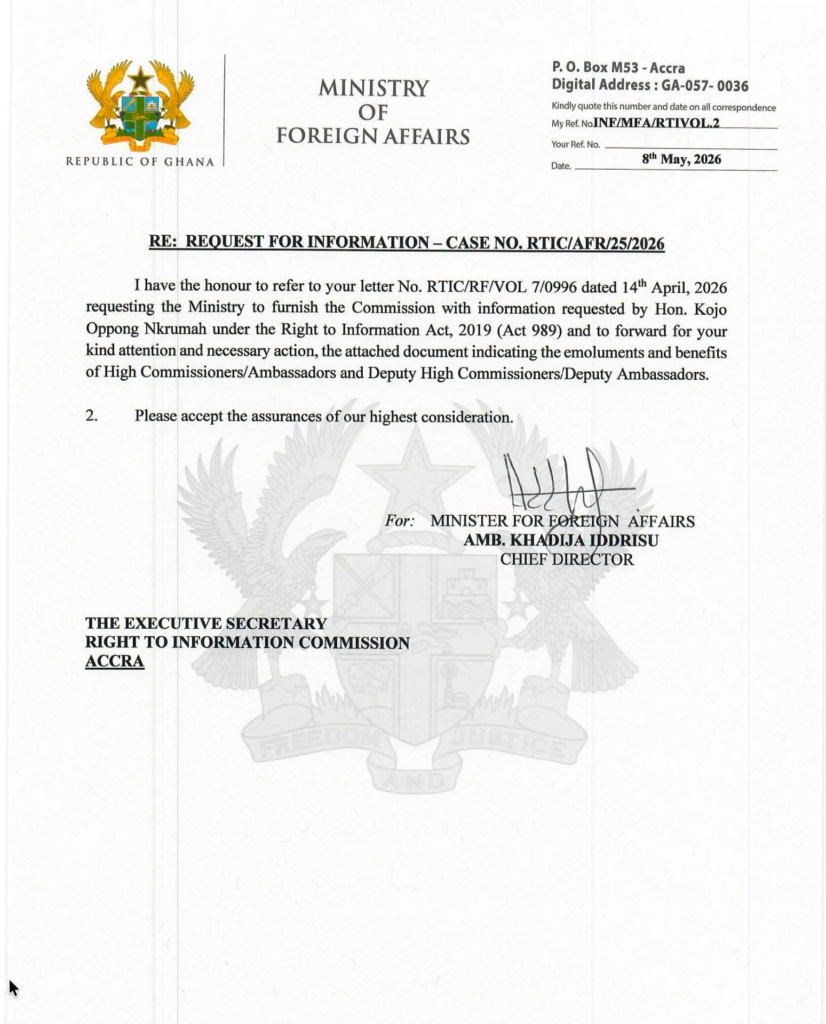
To ascertain the actual cost of these appointments, the former Information Minister filed a Right to Information request with the Ministry of Foreign Affairs in January 2026 seeking details on the salaries, allowances, benefits and conditions of service of Ambassadors, High Commissioners, Deputy Ambassadors and Deputy High Commissioners serving in the diplomatic missions abroad.
According to him, despite the straightforward nature of the request, the Ministry failed to respond within the statutory period required under the Right to Information Act, forcing him to pursue the matter through internal review mechanisms and eventually threaten legal action before a response was finally provided in May 2026 under Case No. RTIC/AFR/25/2026.
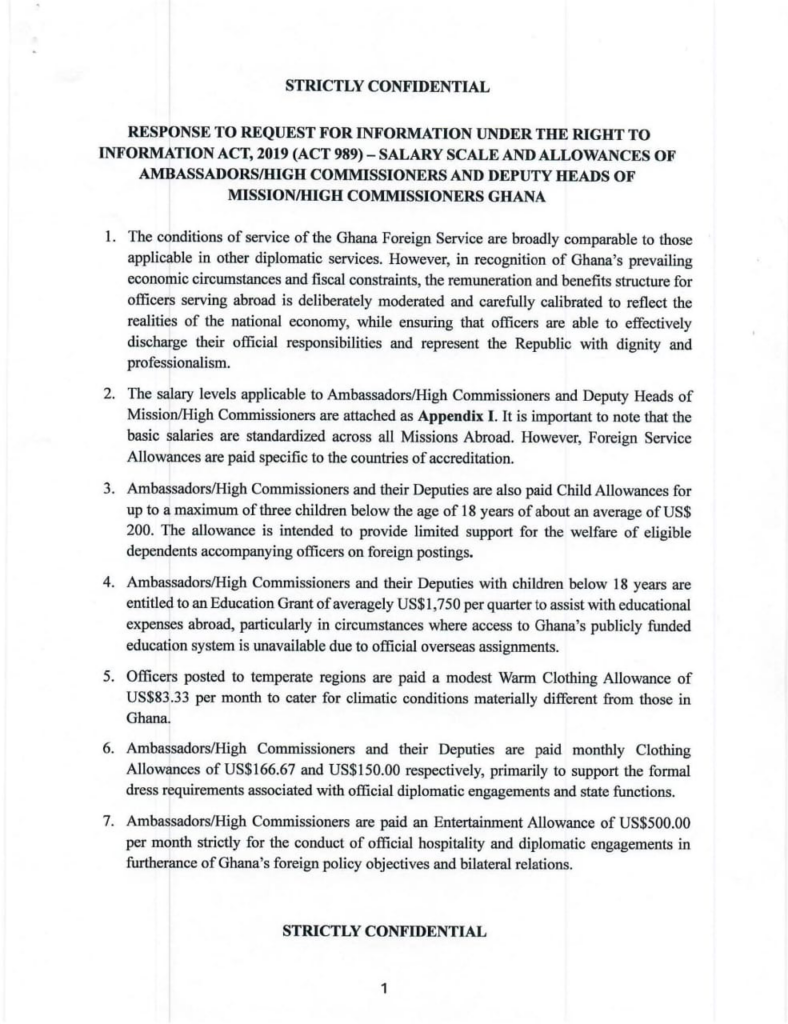
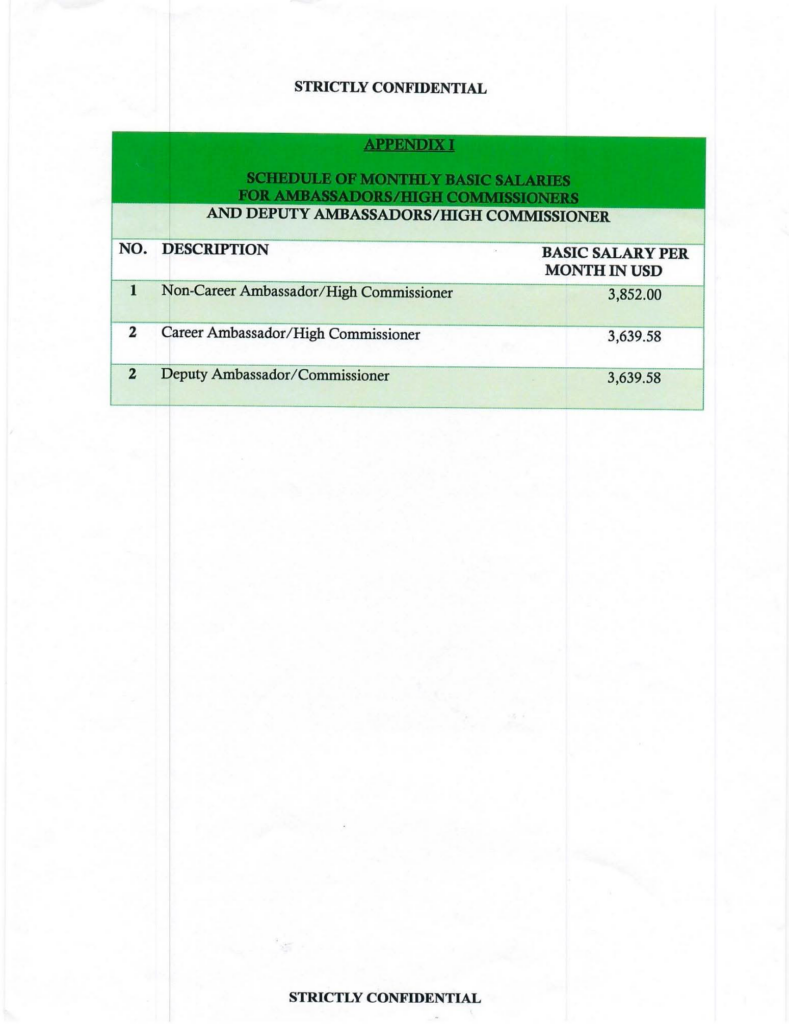
The documents released by the Ministry of Foreign Affairs reveal that every Deputy Ambassador or Deputy High Commissioner receives a standardised monthly basic salary of $3,639.58, regardless of the country of posting. In addition, each officer receives a monthly clothing allowance of US$150.
Based on these figures alone, Mr Oppong Nkrumah calculates that a single Deputy Head of Mission costs the Ghanaian taxpayer approximately US$45,475 annually, equivalent to about GH¢537,000 per year before other benefits are taken into account.
The Ministry's response further disclosed that deputy diplomats may receive child allowances of up to US$600 per month for up to three children under 18.
Eligible officers are also entitled to education grants averaging $1,750 per quarter, equivalent to about $583 monthly, while those serving in colder climates receive an additional warm clothing allowance of $83.33 per month.
Beyond the direct cash payments, the Ministry confirmed a range of state-funded benefits attached to the positions.
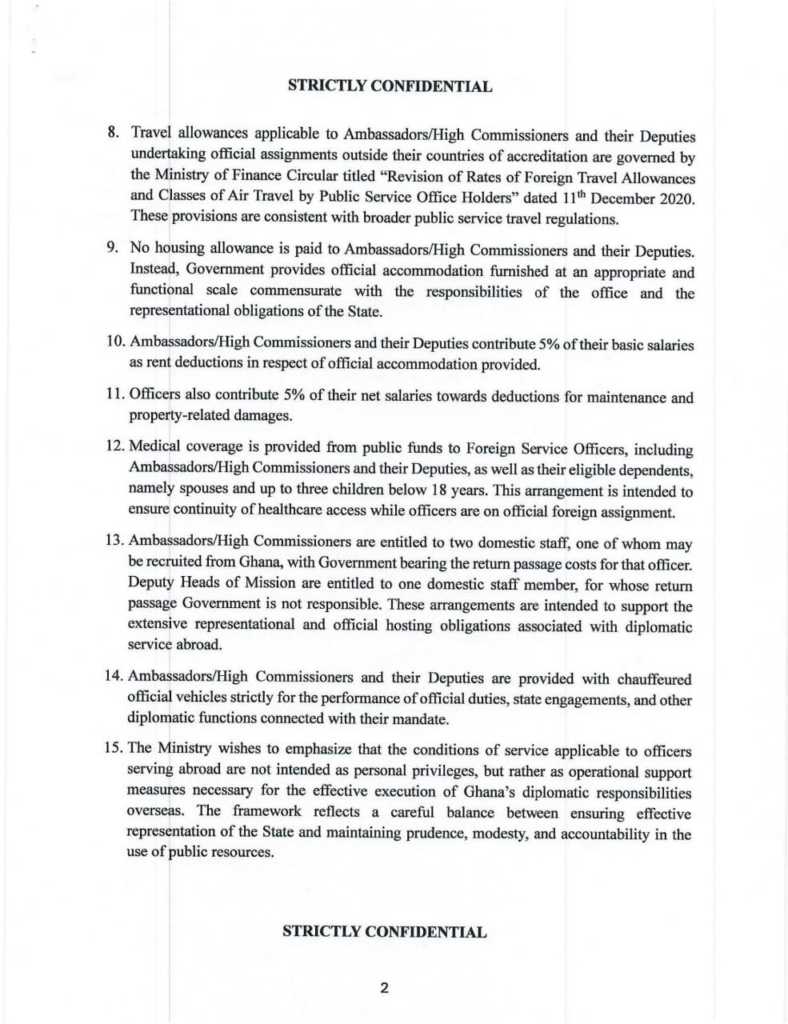
These include foreign service allowances that vary by country of posting, official furnished residences, medical coverage for officers and their eligible dependents, domestic staff support, official vehicles with drivers, fuel, and maintenance, as well as official travel and relocation support.
While the Ministry did not provide monetary estimates for many of these benefits, Mr Oppong Nkrumah argues that the cumulative cost is substantial.
Using the government's own figures, he estimates that the minimum annual cost of the 18 newly created Deputy Head of Mission positions is approximately GH¢9.7 million. This estimate includes only basic salaries and clothing allowances.
When additional cash benefits, such as child allowances, education grants, and warm clothing allowances, are factored in, the annual bill rises to approximately GH¢12.9 million.
He further estimates that once accommodation, foreign service allowances, official vehicles, medical benefits, domestic staff and other operational support costs are included, the annual expenditure could reach GH¢25.6 million.
According to him, these costs are recurring and will continue for as long as the officers remain posted abroad. The estimates also exclude relocation expenses and establishment costs associated with taking up diplomatic assignments.
The disclosure has reignited debate over government expenditure and transparency at a time when the administration is defending its economic management credentials and insisting that it has reduced the overall cost of governance.
The issue has become particularly significant against the backdrop of ongoing concerns about public sector spending, fiscal consolidation efforts, and the government's commitment to maintaining a lean administrative structure.
Mr Oppong Nkrumah argues that the central question Ghanaians must ask is whether the reduction in the number of ministers has genuinely lowered government expenditure or merely shifted costs from cabinet appointments to diplomatic missions abroad.
"The figures are not mine," he maintains. "They are the government's own figures released under the Right to Information Act."
Latest Stories
-
Florida picks nominees for governor, and other takeaways from US primaries
3 minutes -
Africa’s nuclear ambitions face critical workforce shortage – GAEC
4 minutes -
QNET announces new CEO and leadership team to drive next phase of growth
12 minutes -
Child labour-free zones emerge as Ghana’s new weapon against child labour
18 minutes -
Ghana must build nuclear talent, not just reactors – Lands Minister
23 minutes -
Israeli army orders criminal investigation into killing of Palestinian girl Hind Rajab in Gaza
24 minutes -
Gov’t is reviewing tax laws to keep pace with changing economy – Vice President
45 minutes -
Two remanded over alleged theft of GH¢932,040 fuel, tanker fire
56 minutes -
NPP lacks credibility to make impact in 2028 election – Mustapha Gbande
56 minutes -
Prudential Bank equips young professionals with practical personal finance skills at National Youth Mentorship Summit
57 minutes -
‘They found the wrong target’ – Sammy Gyamfi hits back at Afenyo-Markin
57 minutes -
GoldBod ‘losses’: I’m ready to face Parliament – Sammy Gyamfi
1 hour -
GJA to lead nationwide media tour of galamsey-affected communities
1 hour -
Ghana enters Phase 2 of IAEA nuclear power programme – Lands Minister
1 hour -
I’m not afraid of any intimidating tactics – Sammy Gyamfi fires back at critics
1 hour