

Audio By Carbonatix
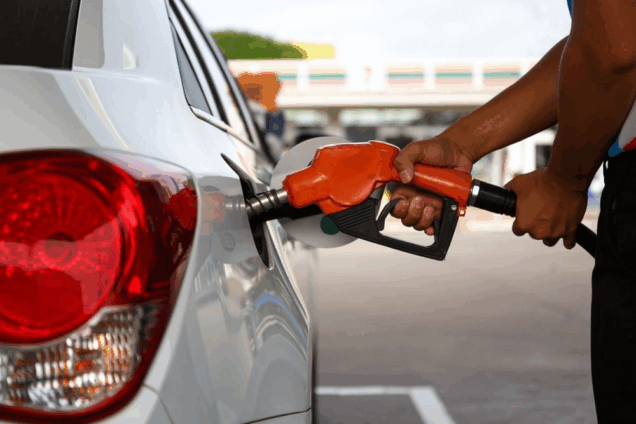
Fuel prices in Ghana are once again caught between global oil swings and the structure of domestic pricing. Crude markets have eased, but pump prices have not yet caught up.
Earlier in the year, before tensions between Iran, Israel and the United States escalated, Ghanaian consumers were briefly seeing relief.
Petrol was selling at about GH¢10 per litre, while diesel hovered between GH¢11 and GH¢12, among the lowest levels in months.
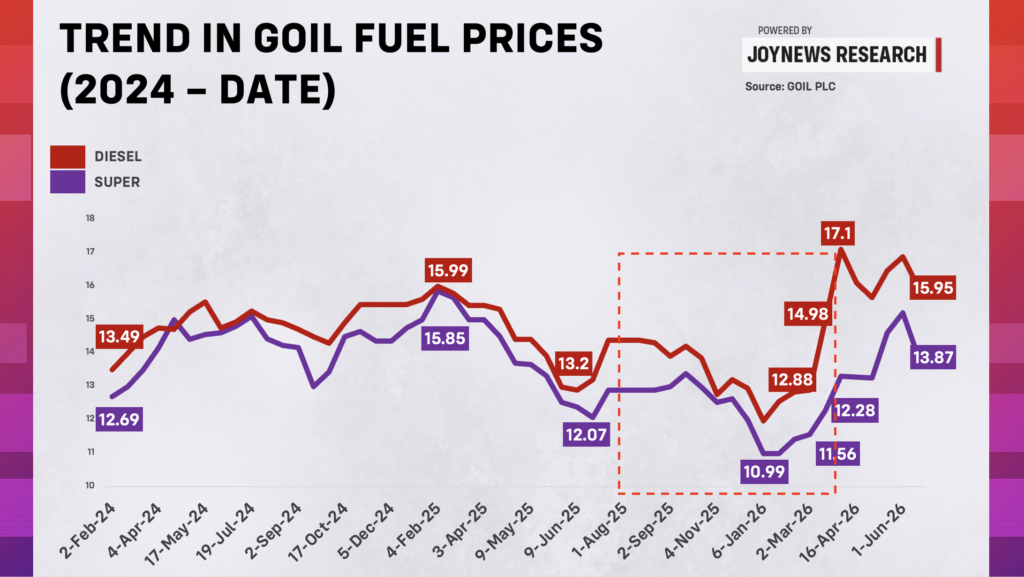
That stability tracked global oil prices, which were trading in a relatively narrow band of about $60 to $70 per barrel.
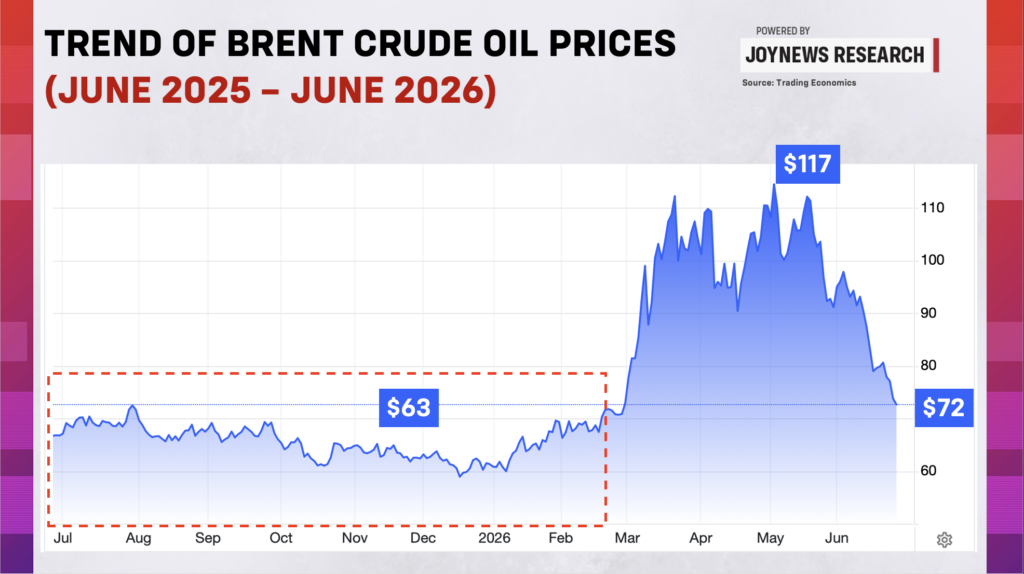
The situation shifted quickly when geopolitical tensions escalated. At the peak of the disruption, crude prices surged sharply, at one point approaching $120 per barrel. The impact filtered through to Ghana’s fuel market. Diesel prices rose above GH¢17 per litre at some stations, with petrol also moving higher across the country.
Now the direction has reversed again. With a ceasefire and easing tensions, crude oil has fallen back to around $72 per barrel.
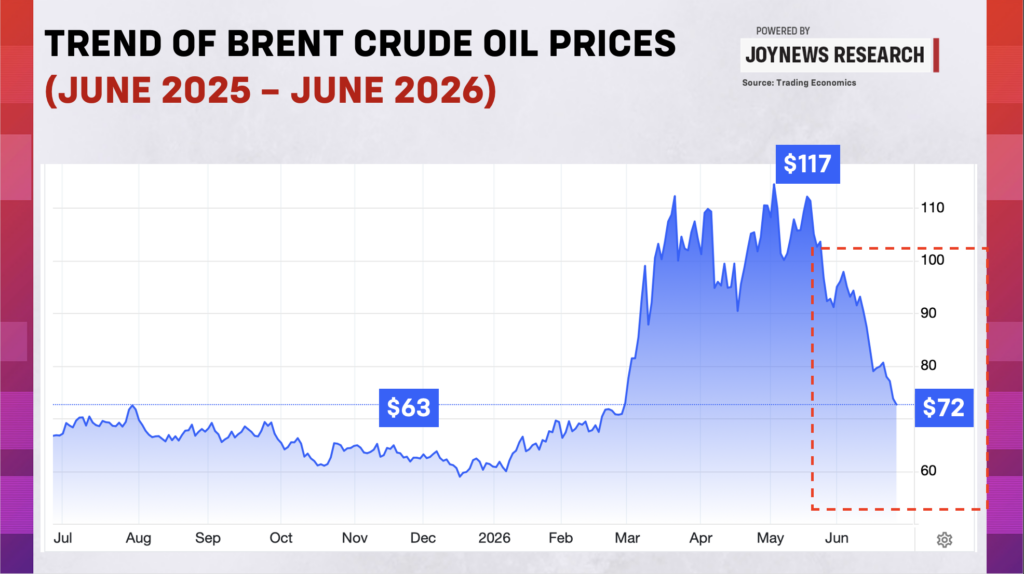
In theory, that should bring relief to consumers at the pump. In practice, it has not yet done so.
The reason lies in how Ghana’s petroleum pricing system is structured.
The National Petroleum Authority operates a two week pricing window for fuel pricing.

Within each window, oil marketing companies are bound by a price floor that cannot be undercut, even if international prices fall in the meantime.
The current pricing window runs until next Tuesday, June 30. That means the recent decline in crude prices is not yet reflected in domestic pricing decisions. The adjustment only takes effect once the window expires.
At that point, the NPA reviews global oil prices, exchange rate movements and other cost factors before setting new price floors for the next cycle.
That is when consumers are more likely to see changes at the pump, potentially from Wednesday, July 1.
There is also a timing lag driven by inventories.
Most oil marketing companies are not selling fuel at current international prices. Instead, much of the fuel at stations today was imported and stocked days or weeks earlier, when crude prices were higher.
As a result, firms need to recover the cost of existing stock before lower global prices can fully pass through to retail prices.
The adjustment process is already shifting, however.
Companies currently restocking are doing so at lower international prices, which means the next pricing window is more likely to reflect the recent decline in crude. The relative strength of the cedi is adding further support to potential price declines.
Taken together, the signal from global markets is already clear. Oil prices have eased, and cost pressures are declining. But Ghana’s pricing system transmits those changes with a delay.
The result is a familiar one for consumers.
Relief tends to arrive, but not immediately. It is absorbed first through pricing windows and inventory cycles before it reaches the pump.
For now, the key point is timing rather than direction. Prices are moving lower in the global market. Ghana’s pump prices are likely to follow, but only from the next pricing cycle, rather than immediately.
In other words, the adjustment is coming. It is just not here yet.
Latest Stories
-
Mahama calls for responsive healthcare regulation to improve patient safety
22 minutes -
IERPP accuses GoldBod of breaching transparency law, says quarterly trading reports removed from website
26 minutes -
Future of Energy Conference: Africa cannot industrialise in the dark – ECOWAS Bank President
27 minutes -
Help comes to Alajo as DirectAid brings relief items to flood victims
47 minutes -
“Somebody created the loss” – Haruna Mohammed backs Minority’s call for GoldBod probe
48 minutes -
Hope for agroecological farmers: Scientific Research supports urine-based weed management as safer alternative to glyphosate
49 minutes -
Israeli Film Festival returns to Accra with free screenings to boost cultural exchange
50 minutes -
SONABEL considers opening Bagré Dam spillway on Friday amid rising water levels
52 minutes -
Ghana Maritime Authority, Humanity First commission 4 boreholes in Wa to end water scarcity and keep children in class
1 hour -
In Photos: Day Two of ‘SYPALA 2026’ focuses on governance, economic freedom and youth leadership
1 hour -
Wontumi withdraws from NPP chairmanship race, urges support for Bawumia
2 hours -
UCC-IEPA, CEGRAD launches free digital skills programme to empower 1,000 women in education
2 hours -
NPP dismisses extortion allegation against Afenyo-Markin, says focus remains on GoldBod losses
2 hours -
Guinness Ghana DJ Awards 2026 set for December 4 as ‘All Out’ era begins
2 hours -
GhIE inducts 183 engineers, calls for stronger action on galamsey and infrastructure
2 hours