

Audio By Carbonatix
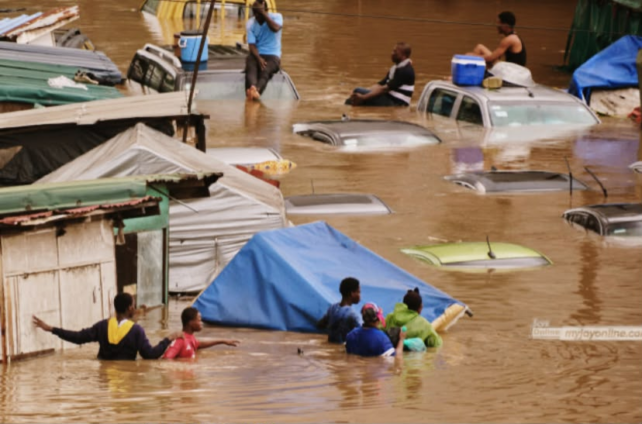
Flooding in Accra is often publicly framed as a drainage challenge, but a growing architectural critique is shifting attention towards deeper structural issues in how the city is designed, built and expanded.
During a recent discussion on the Loud and Green X Spaces platform, participants explored how urban design decisions—rather than drainage capacity alone—are significantly shaping the city’s vulnerability to flooding.
At the centre of the conversation was Bless Mawuwoe Gborglah, a Ghanaian writer, content creator and architectural thinker known for his advocacy of vernacular architecture and indigenous, climate-responsive African design principles.
He argued that many of Accra’s flooding challenges originate long before water enters drainage systems, beginning instead at the planning and design stage of buildings and neighbourhoods.
Mr Gborglah stressed that effective urban planning in Accra must be grounded in a strong understanding of the city’s natural geography, including elevation patterns, natural water pathways and existing drainage systems.
When these natural features are ignored, he said, the built environment begins to obstruct rather than support water flow, intensifying flood risks during heavy rainfall.
He pointed in particular to the growing prevalence of hard landscaping across the city, including widespread use of concrete surfaces, paved compounds and sealed plots.
These developments, he explained, significantly reduce the ground’s ability to absorb rainwater, forcing excess runoff into streets, drains and residential areas.
From an architectural perspective, this shift alters the natural behaviour of land—from absorption to surface runoff—placing greater pressure on drainage infrastructure that is often already under strain.
“Design considerations must include preserving natural drainage paths,” he said, stressing that once those pathways are blocked, water inevitably seeks alternative routes through streets and settlements.
Mr Gborglah also highlighted what he described as a persistent disconnect between architectural plans and what is ultimately constructed on the ground.
While many designs may initially account for environmental flow and drainage systems, he noted that execution frequently deviates due to cost pressures, informal modifications and weak enforcement of building regulations.
“Design is one thing and implementation is another thing entirely,” he noted, describing this gap as one of the major reasons well-intentioned urban plans fail in practice.
He argued that without stronger oversight and adherence to approved plans, even well-designed drainage-sensitive developments risk contributing to broader urban flooding challenges.
The architectural commentator further raised concerns about development approvals in flood-prone areas, questioning the rationale behind granting permits for construction on land that historically serves as natural waterways or water retention zones.
He suggested that in some cases, urban expansion has encroached on ecological systems that naturally manage rainfall, thereby increasing the scale and intensity of flooding in surrounding communities.
From an architectural standpoint, Gborglah proposed that addressing Accra’s flooding challenges requires more than expanding drainage infrastructure.
He called for a broader rethinking of how land is zoned, how buildings are oriented, and how materials are selected in relation to water movement and absorption.
His argument reframes flooding not merely as an engineering shortfall, but as a consequence of accumulated architectural and planning decisions over time.
As Accra continues to grow rapidly, he warned that the failure to integrate natural water systems into urban design could worsen flooding in the coming years.
Unless planning practices begin to prioritise ecological and geographical realities, he suggested, the city risks perpetuating a cycle in which the built environment intensifies the very flooding it is meant to withstand.
Latest Stories
-
Mac Allister ‘sad’ at no Liverpool contract offer
48 minutes -
Ghana pays $3.5m to University of Memphis over scholarship debt
57 minutes -
Fidelity Bank champions value chain approach to unlock Ghana’s agricultural potential
1 hour -
People don’t remember style of play – GFA Comms Director defends Quieroz appointment
2 hours -
Finance Ministry needs ‘refresher course’ in own records over GES recruitment – Adutwum’s spokesperson
2 hours -
Techiman 24-hour market project on course as Regional Minister inspects work, hails construction quality
2 hours -
Bono East Regional Fire Command engages master artisans in fire safety drive
2 hours -
Hitz FM’s Mr Haglah earns 2026 Ghana Entertainment Awards USA nomination
2 hours -
Accra Turf Club to hit the streets over Race Course demolition
2 hours -
Ashanti GJA launches 2025 regional media awards to celebrate excellence in journalism
2 hours -
From doubt to delight: Prang mother who thought GH¢1m win was a scam now celebrates
2 hours -
Energy Ministry says proposed private sector participation in ECG is not privatisation
2 hours -
Sparrow Studios, OldFilm Productions launch three movies for Ghana at 70
2 hours -
Mahama is doing well – UT Bank founder Prince Kofi Amoabeng pledges support
2 hours -
All 6,300 GES staff recruited without clearance have been paid – Finance Ministry
3 hours