

Audio By Carbonatix
The Energy Ministry has rejected claims that the government’s proposed private sector participation (PSP) in the Electricity Company of Ghana (ECG) amounts to privatisation.
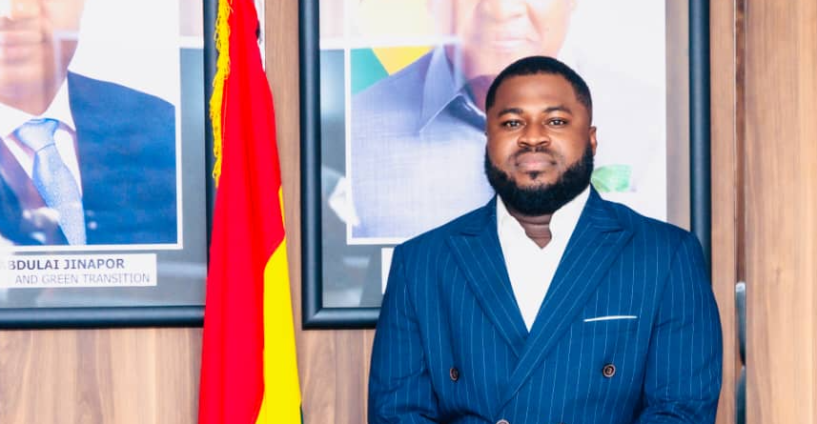
Speaking in an interview on Joy FM's Top Story on Tuesday, September 8, the spokesperson and Head of Communications at the Energy Ministry, Richmond Rockson, says the key distinction lies in ownership, arguing that the proposed PSP arrangement does not involve the transfer of ownership of ECG or the Northern Electricity Distribution Company (NEDCo).
“It's not semantics. When you talk about privatization, privatization involves transfer of ownership. When it comes to PSP, it is not necessarily a transfer of ownership,” Mr Rockson said.
He explained that government, with Cabinet approval in April 2025, had made it clear that it does not intend to transfer ownership of ECG or NEDCo to private operators.
According to Mr Rockson, the proposed arrangement is intended to introduce greater private sector involvement into the operations of the two state-owned electricity distributors without transferring ownership of their assets.
He noted that private sector participation already exists in parts of ECG and NEDCo’s operations, including electricity sales and, in some instances, revenue collection.
“What it wants to do is to bring in the private sector, which already there's some element of private sector participation in ECG and even NEDCo already when it comes to the sale of electricity, and even in some cases when it comes to collection,” he explained.
Mr Rockson’s comments come after the Trades Union Congress (TUC) insisted that PSP and privatisation are essentially the same and raised concerns about the implications of the proposed arrangement for ECG.
The Energy Ministry, however, maintains that the government’s focus is on addressing structural and financial challenges within the electricity distribution sector.
Mr Rockson cited reforms undertaken since the government assumed office in January 2025, including changes to ECG’s revenue management system.
He said ECG previously operated almost 50 bank accounts, making it difficult to effectively monitor revenues collected by the company.
“One of the first things the minister did was to collapse all these accounts to have a single holding account to ensure that the monies collected are according to those accounts,” he said.
He explained that the funds subsequently feed into the cash waterfall mechanism, through which revenues are distributed to various stakeholders in the power sector.
According to Mr Rockson, the reforms have contributed to improvements in revenue management and helped reduce concerns over payments to Independent Power Producers (IPPs) and other service providers.
“You would attest to the fact that for a very long time, we haven't heard the IPPs or any service provider in the power sector threatening that we are going to stop generation because we have not been paid,” he said.
He attributed this partly to what he described as prudent management of the cash waterfall mechanism.
Despite the improvements, however, Mr Rockson acknowledged that ECG and NEDCo continue to face revenue collection challenges.
He cited data from the Public Utilities Regulatory Commission (PURC), which he said indicates that ECG is expected to collect about GH¢2.5 billion each month, while NEDCo is expected to collect approximately GH¢400 million.
“As we speak, even though we've seen improvement as a result of the reforms and of course as a result of the work ethic of ECG, which we give credit to, we still have serious deficits each month,” he said.
He indicated that ECG’s monthly collections have in some instances been around GH¢1.92 billion to GH¢2.1 billion, leaving a significant gap between expected and actual revenue.
The Energy Ministry therefore argues that while reforms are yielding results, structural challenges within the electricity distribution sector remain and require further intervention.
Latest Stories
-
PHOTOS: Proposed Vice-Presidential Villa abandoned for 13 years after over $2.4m spent
5 minutes -
Buem MP Kofi Adams raises alarm over flooding, damaged roads in constituency
10 minutes -
Kotoko should hire best local coach available – Kojo Addae Mensah
15 minutes -
GPL 2026/27: Asante Kotoko, Coach Boadu and two players charged by GFA
20 minutes -
Hohoe flood: Over 700 residents seek shelter in classrooms, MP appeals for help
20 minutes -
Armah-Kofi Buah has not resigned from GoldBod – Lands Ministry
23 minutes -
Attacks on Lordina Mahama, Samira Bawumia reinforce unequal power – Victoria Hamah
38 minutes -
Ghana’s Starlets step up training ahead of second friendly with Morocco
1 hour -
COCOBOD says $1.4bn domestic funding is a strategic shift, not market exclusion
2 hours -
Richmond Quarcoo appointed Ghana’s Chef de Mission for 2028 Olympics
3 hours -
‘Our missing players are more important’ – Gambia coach fires shot at Ghana
4 hours -
Today’s front pages: Tuesday, September 29, 2026
4 hours -
Ghana ‘showing up differently’ on global stage – Joyce Bawah Mogtari
4 hours -
Ghana’s tuna industry in crisis as 20 hook-and-line vessels collapse
5 hours -
South Tongu MP launches apprenticeship programme for 159 young people
5 hours