

Audio By Carbonatix
The dream of a deep World Cup run evaporated under the bright lights of Lumen Field as the United States men’s national team suffered a crushing 4-1 defeat to Belgium. Despite playing on home soil and entering the knockout stage with significant momentum, the Americans were unable to overcome tactical errors and a clinical Belgian attack. The loss marks the fourth time in five World Cup appearances that the U.S. has been eliminated in the round of 16. What was intended to be a historic breakthrough ultimately served as a reminder of the gap that still exists between the U.S. and the world’s elite soccer powers.
Tactical Breakdown and Individual Errors
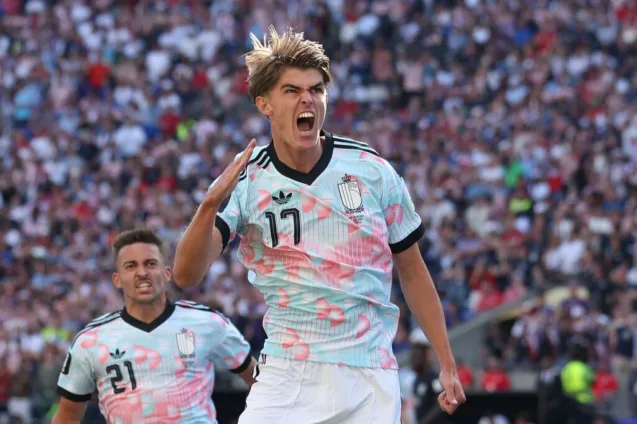
The Americans struggled to find their rhythm from the opening whistle, frequently appearing disorganised against a technically superior Belgian side. Belgium capitalised on defensive vulnerabilities early, controlling the tempo and forcing U.S. goalkeeper Matt Freese into difficult situations. While Malik Tillman provided a brief glimmer of hope by equalising with a spectacular free kick in the 31st minute, the U.S. defence conceded a second goal just 52 seconds later.
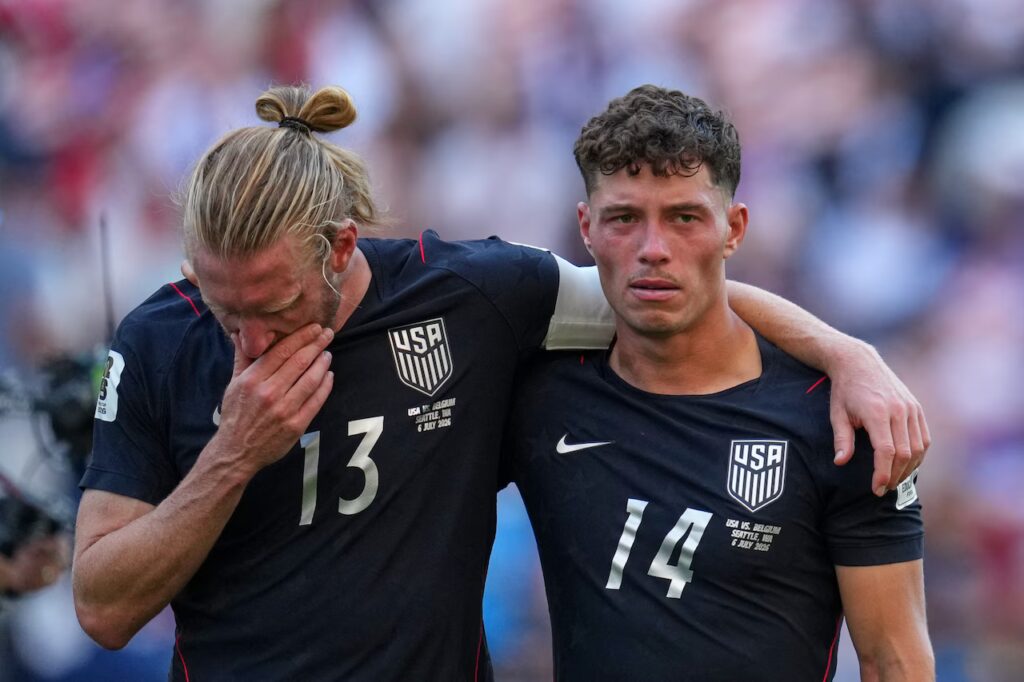
Individual struggles exacerbated the team's woes throughout the match. Christian Pulisic failed to exert his usual influence on the game, and Sergiño Dest was replaced at halftime after being repeatedly bypassed on the right flank. A pivotal mistake by Freese in the second half effectively extinguished any remaining hopes for a comeback. Reflecting on the poor display, midfielder Tyler Adams admitted that the performance fell short of expectations. He noted that conceding goals so easily against a team of that calibre made the path to victory nearly impossible, adding, "It was just a little bit too easy today. So again, this was a moment to have the opportunity to advance and really try and do something special, but we fell short."
The Weight of External Distractions
Much of the pre-match discourse centered on the controversial eligibility of U.S. striker Folarin Balogun. After receiving a red card in the previous round, Balogun was initially set to serve a one-game suspension. However, a late intervention by a FIFA disciplinary panel, following discussions involving President Donald Trump and FIFA president Gianni Infantino, cleared the forward to play.
The decision ignited a geopolitical firestorm, drawing protests from other nations and fueling intense media scrutiny. Players and coaching staff consistently rejected the idea that this saga served as a distraction. Captain Tim Ream insisted the team remained fully focused on the match, disregarding outside debates, noting, "We were fully focused on us as a group and as a team and fully focused on the game and not really worrying about what was being said or debated in the outside world." Adams echoed this sentiment, adding, "I don't think that noise or anything affected us by any means. If anything, it probably uplifted us in a sense." Regardless of the outside narratives, the team’s inability to translate that energy into a competitive performance on the field remained the primary focus for those in the locker room.
Assessing the Future of the Program
For head coach Mauricio Pochettino, the loss was an opportunity to reflect on a broader trajectory rather than just a single defeat. While expressing his frustration with the team's inability to match their earlier tournament form, he maintained a sense of pride in the squad's growth over the past year. Pochettino noted, "We were not the same team that during the tournament showed the quality. Very bad day. Wasn't our day in a collective and individual way. And we need to accept that sometimes this type of thing happens. But in a tournament like the World Cup, when that happens, you don't have another chance."
As the dust settles, U.S. Soccer faces critical questions regarding the future direction of the program. With a growing pipeline of talent playing in European leagues and significant financial resources recently committed to infrastructure, the federation must decide how to leverage this momentum before the next cycle. The future of Pochettino remains a point of speculation, though he indicated a desire to assess the tournament before engaging in further contract discussions.
Ultimately, the sting of this early exit serves as a sobering reality check for a program that had pinned its hopes on home-field advantage and a newly minted international pedigree. As players, staff, and fans process the disappointment, the central challenge remains clear: how to bridge the final, difficult gap between being a team with potential and becoming a consistent force on the global stage.
Latest Stories
-
Probe begins into why cargo plane overran Miami runway
22 seconds -
Germany’s far-right AfD wins historic victory, but falls short of majority in Saxony-Anhalt
51 seconds -
Engineers must reject shortcuts, corruption to protect public interest – IET-GH
58 seconds -
Tanzanian President Samia Suluhu Hassan’s husband dies in hospital
3 minutes -
SHS placement: Demand, not lack of vacancies, is the problem, Dr Apaak says
6 minutes -
Government negotiations secure more data and cheaper broadband – Sam George
7 minutes -
Big Push road works linked to half of Ghana’s fibre cuts – Sam George
13 minutes -
Ghana to begin 5G deployment by December 2026 – Sam George
15 minutes -
Accra to host 15th Africa Internet Governance Forum in November – Sam George
15 minutes -
Ghana secures African Telecommunications Union Council seat for 2027–2030 – Sam George
17 minutes -
Improved DStv packages still in force nearly a year on – Sam George
18 minutes -
Ghana opens continental market for local vaccine and drug manufacturers
19 minutes -
Fiifi Coleman to repackage ‘I Told You So’ for new movie
19 minutes -
Gov’t signs MoUs with 11 universities to embed digital certifications in degree programmes
22 minutes -
Sam George to chair AU ICT committee for two-years
25 minutes