

Audio By Carbonatix
Finance Minister Dr Cassiel Ato Forson says government is preparing to move Ghana’s economic management strategy from strict fiscal consolidation to a growth-focused agenda after months of difficult adjustment measures.
Dr Forson said the country had gone through what he described as “shock therapy” aimed at stabilising the economy and restoring confidence following major fiscal challenges.
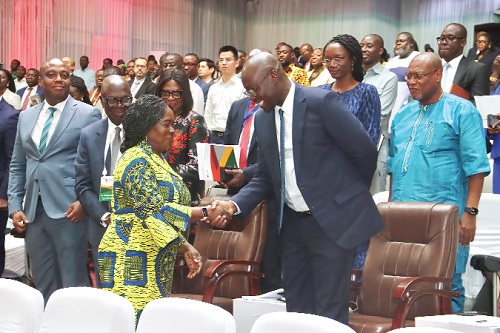
Speaking during a working visit by the Vice President, he said government had completed 18 months of a planned fiscal consolidation programme and had about six months remaining before a gradual shift towards policies focused on growth and employment.
“We are left with six months, and I’m sure after the six months we’ll have to change the course and move from shock therapy to what I call the new economy where growth and jobs would drive the new order,” he said.
According to the Finance Minister, the difficult measures implemented were necessary to address economic imbalances and create the foundation for long-term growth.
He said government had been aware that the economic challenges it inherited would require sustained fiscal discipline over two consecutive years.
“We needed to do what we had to do, and we’ve just done it, and now we can begin seeing growth,” he stated.
Dr Forson explained that the next phase of economic management would focus on expanding economic activity while maintaining fiscal responsibility.
He said the government plans to gradually relax fiscal adjustments by one per cent of Gross Domestic Product as it transitions into the next stage of its economic programme.
The Finance Minister stressed that the objective is to create an economy driven by growth and job creation rather than one dependent on borrowing.
He also warned against returning to an unsustainable fiscal path, arguing that excessive borrowing often creates temporary benefits but leads to long-term economic difficulties.
“Borrow, spend, you go happy one week, one day, and afterwards the hangover will be there for a long time, and everybody else will pay for it,” he said.
His comments come as the government continues efforts to rebuild economic stability following Ghana’s debt crisis, which led to a domestic debt restructuring programme and negotiations with external creditors.
The government has maintained that fiscal discipline, improved revenue mobilisation and responsible expenditure management remain critical to sustaining the recovery process.
Dr Forson’s remarks signal a possible transition in economic policy priorities, with the administration seeking to balance debt obligations with increased investment in sectors expected to drive growth and create employment.
Latest Stories
-
Bawumia’s destiny lies in the hands of God; not you – Muslim Forum for Peace and Unity replies Rev. Owusu Bempah
1 minute -
NPP NEC meets today to discuss and approve party’s position paper on Constitution Review proposals
7 minutes -
Today’s frontpages: Thursday, September 10, 2026
15 minutes -
Ghana Garden and Flower Show returns on Sept 11 with focus on green jobs, business and wellbeing
16 minutes -
Titus-Glover camp says Mustapha Salam wasn’t pressured to withdraw from National Organiser race
17 minutes -
Ghana’s acclaimed Christian – Muslim unity bigger than Owusu Bempah’s hatred and bigotry – Muslim Forum for Peace and Unity
20 minutes -
Karpowership lights up young minds on International Literacy Day
29 minutes -
Banking sector NPLs fall to GH¢19.9bn as asset quality improves
33 minutes -
Republic Bank Ghana, UPSA sign strategic MoU to advance professional development and industry-academia collaboration
37 minutes -
MTN 30th Anniversary CEO Invitational Golf Tournament set to tee off at Achimota
41 minutes -
Ghana woos Australian investors into critical minerals
54 minutes -
Akufo-Addo’s former legal counsel Kow Essuman, writes to Finance Minister to demand his ex-gratia payment
1 hour -
NSMQ Final: St Augustine’s get GH¢110,000 motivational package from old boys
1 hour -
AFCON 2027: Ghana has no business doing football if we can’t beat Somalia and The Gambia to qualify – George Afriyie
2 hours -
Starlets to face Togo on October 10 in U-17 AFCON qualifying campaign
2 hours